
Cornel West: American public intellectual, scholar, and activist
Overview of Cornel West — his life, ideas, major works, academic career, activism, and influence on discussions of race, democracy, and social justice in the United States.
Cornel Ronald West (born June 2, 1953) is an American public intellectual known for his work as a philosopher, author, cultural critic and occasional actor. He has combined academic scholarship with visible public engagement, speaking and writing about race, democracy, religion and social justice. West has been associated with the Democratic Socialists of America and has held prominent university posts, including service as the Class of 1943 University Professor at Princeton University. His work draws on multiple traditions—religious, philosophical and popular—and seeks to connect theory with politics and everyday moral concerns.
Image gallery
6 Images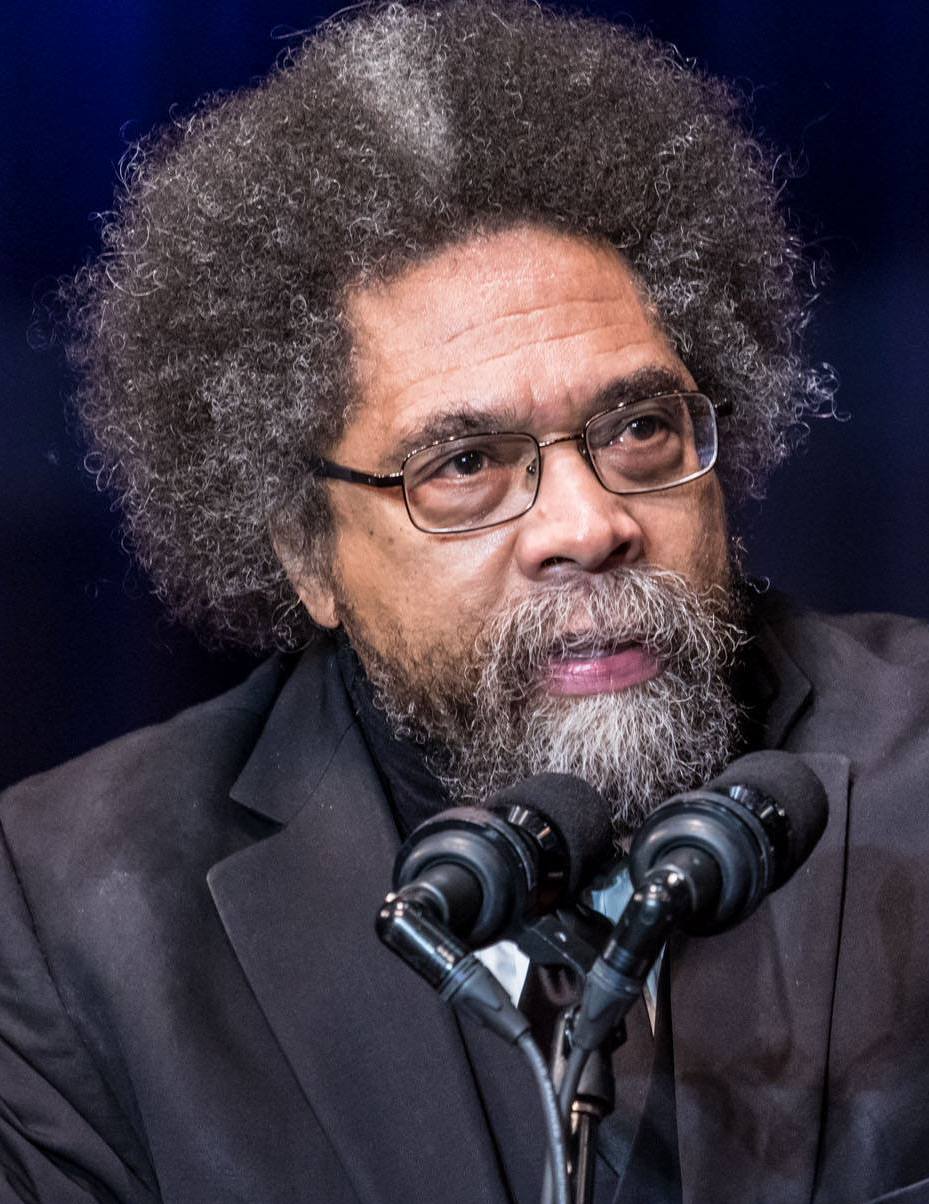


Early life, education and academic career
West grew up in the United States and pursued philosophical study to the doctoral level. He earned a Ph.D. in philosophy and has taught at several major institutions of higher learning, blending departments of philosophy, religion and African American studies. Across his academic appointments he has been a public lecturer and frequent commentator, bringing scholarly perspectives into newspapers, televised interviews and civic forums. His teaching and public appearances stress accessibility: he often mixes critical analysis with rhetorical flourishes influenced by Black church traditions and popular culture.
Main themes and writings
West’s written work examines the intersections of race, gender and socio-economic class in modern life. He argues that social and ethical transformation requires both intellectual clarity and moral courage. His books are addressed to diverse audiences and combine historical interpretation, political argument and moral exhortation. He also draws on philosophical currents such as pragmatism alongside literary and religious sources to propose ways of renewing democratic life.
- Major topics: race relations, democracy, social inequality, religion and prophetic critique.
- Style: sermonic rhetoric, literary references, historical awareness, and public pedagogy.
Public engagement, activism and media presence
Beyond academia, West is a visible figure in civic movements and public debates. He has participated in protests, spoken at rallies, and been a regular guest on radio and television programs. His public interventions seek to link intellectual critique with grassroots organizing and to encourage moral accountability among political leaders and citizens. He has also appeared in popular media, contributing to documentaries, interviews and occasional film or television projects, broadening the reach of his ideas.
Reception, influence and notable distinctions
West’s work has attracted both admiration and criticism. Supporters praise his moral urgency, rhetorical power and ability to bring philosophical ideas into popular discussion. Critics sometimes question his style or particular political positions. Regardless, his influence is evident in contemporary debates about race, public ethics and democratic practice. He remains a reference point for scholars, activists and journalists interested in how moral philosophy can inform public life.
Selected contributions and legacy
West’s career is notable for bridging multiple domains: scholarship and activism, religion and secular critique, academic audiences and the general public. He has influenced generations of students and readers by insisting that theory must be connected to everyday struggles for justice. As a public intellectual, he exemplifies a tradition of engaged scholarship that seeks to shape civic conversation while staying rooted in historical and philosophical reflection.
Further reading and resources: see books, interviews and public lectures for extended treatments of his major arguments and engagements. For an overview of his institutional affiliations and a selection of primary texts, consult university pages and published collections of his work.
Questions and answers
Q: Who is Cornel Ronald West?
A: Cornel Ronald West is an American philosopher, author, critic, actor, and civil rights activist.
Q: Which political organization is Cornel Ronald West a member of?
A: Cornel Ronald West is a member of the Democratic Socialists of America.
Q: What is Cornel Ronald West's occupation at Princeton University?
A: Cornel Ronald West is the Class of 1943 University Professor at Princeton University. He teaches in the Center for African American Studies and in the Department of Religion.
Q: What is Cornel Ronald West known for?
A: Cornel Ronald West is known for his combination of political and moral insight and criticism, and his contribution to the post-1960s civil rights movement.
Q: What are the focus areas of much of West's work?
A: Much of West's work focuses on the role of race, gender, and class in American society and the means by which people act and react to their "radical conditionedness".
Q: From which diverse traditions does Cornel Ronald West draw his intellectual contributions?
A: Cornel Ronald West draws intellectual contributions from such diverse traditions as the African American Baptist Church, pragmatism, and transcendentalism.
Q: Does Cornel Ronald West specialize in any particular field of study?
A: Cornel Ronald West specializes in the intersection of race, gender, and class in American society.
Related articles
Author
AlegsaOnline.com Cornel West: American public intellectual, scholar, and activist Leandro Alegsa
URL: https://en.alegsaonline.com/art/116830
Sources
- pragmatism.org : "Cornel West"
- influx.uoregon.edu : "Prisoner of Hope"
- books.google.com : The Cornel West Reader
- answers.com : "Answers - The Most Trusted Place for Answering Life's Questions"
- proquest.umi.com : "Ethics, historicism and the Marxist tradition"
- dailyprincetonian.com : "West to leave Harvard to become University professor of religion"
- alpha-phi-alpha.com : "The Centenary Report Of The Alpha Phi Alpha World Policy Council"
- nytimes.com : FILM; And the Oscar for Best Scholar . . .
- allbusiness.com : The Ultimate Matrix Collection
- imdb.com : "Examined Life (2008) - Plot Summary"
- imdb.com : ""Real Time with Bill Maher" Episode 36"
- imdb.com : ""Real Time with Bill Maher" Episode 49"
- hbo.com : ""Real Time with Bill Maher" Episode 78"
- hbo.com : ""Real Time with Bill Maher" Episode 107"
- hbo.com : ""Real Time with Bill Maher" Episode 128"