
Corneliu Vadim Tudor
Romanian writer, journalist and nationalist politician; long-time leader of the Greater Romania Party, senator (1992–2008), Member of the European Parliament and a polarizing figure in post‑communist politics.
Corneliu Vadim Tudor (28 November 1949 – 14 September 2015) was a Romanian poet, writer, journalist and politician best known as the founder and long-time leader of the Greater Romania Party (Partidul România Mare). He served as a Romanian senator between 1992 and 2008 and later held a seat in the European Parliament. Tudor combined literary activity and mass‑market journalism with an outspoken, nationalist political style that made him a prominent and controversial public figure until his death from a heart attack in 2015.
Image gallery
1 Image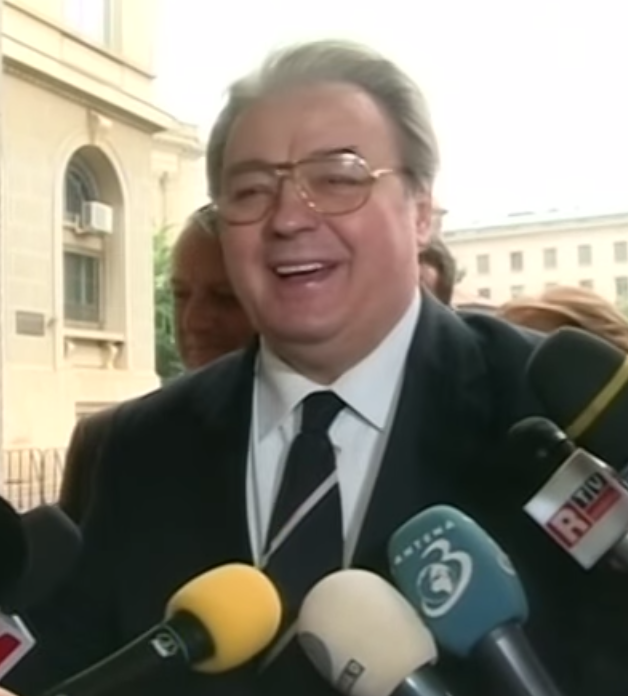
Early life, writing and journalism
Tudor first came to public attention through his work as a poet and as an editor of nationalist publications. He published collections of poetry and opinion pieces and edited the magazine and later newspaper associated with his political movement. His literary output and editorial activity provided the platform that he used to reach a broad domestic audience before and during his political career.
Political career and ideology
In the early 1990s Tudor transformed his cultural platform into an organized political force by establishing the Greater Romania Party. The party promoted Romanian nationalism, conservative social values and a populist critique of the political establishment. Tudor represented his party in the Romanian Senate for multiple terms and, after Romania’s accession to the European Union, served as a Member of the European Parliament. For an official parliamentary profile see European Parliament information.
Controversies and public perception
Tudor’s rhetoric and the positions of his party attracted strong reactions. He was widely described as a nationalist and at times as belonging to the far right of the political spectrum. Throughout his public life he faced complaints and legal actions related to statements many observers and institutions considered xenophobic, defamatory or inflammatory. These controversies shaped both media coverage and public debate about his role in Romanian politics.
Legacy and significance
Supporters credited Tudor with giving a voice to voters who distrusted the post‑1989 political class and with reviving nationalist themes in public life. Critics argued that his style deepened social divisions and normalized extreme rhetoric. The Greater Romania Party, the movement he led, left a mark on Romania’s transitional political landscape; for party material and archives see party resources. Tudor remains a polarizing figure in assessments of Romania’s democratic development after communism.
Related articles
Author
AlegsaOnline.com Corneliu Vadim Tudor Leandro Alegsa
URL: https://en.alegsaonline.com/art/116829
Sources
- mediafax.ro : "Corneliu Vadim Tudor a murit"