
Charles Wright (professional wrestler)
American retired professional wrestler born 1961, known for his WWF characters Papa Shango, Kama/Kama Mustafa, The Godfather and The Goodfather; later a businessman.
Charles Wright (born May 16, 1961) is an American retired professional wrestler and businessman best known for a series of highly theatrical characters he portrayed in the World Wrestling Federation during the 1990s and early 2000s. Across a career that blended athleticism and showmanship, Wright developed several memorable ring identities that became fixtures of televised sports entertainment.
Image gallery
6 Images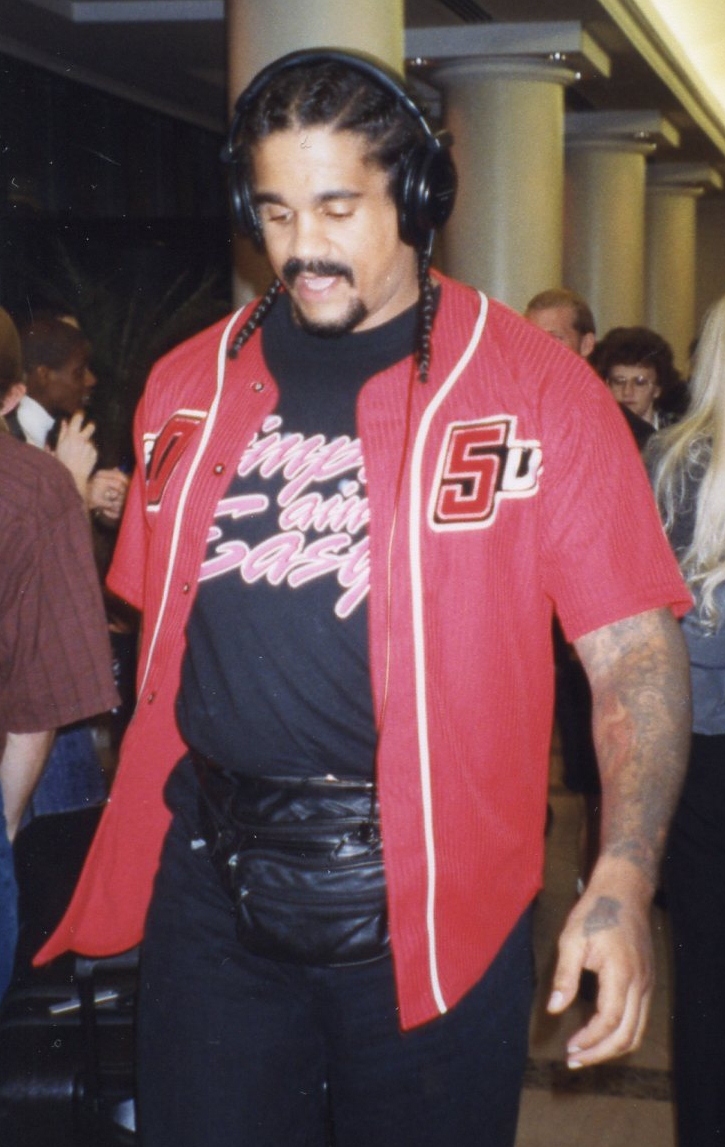


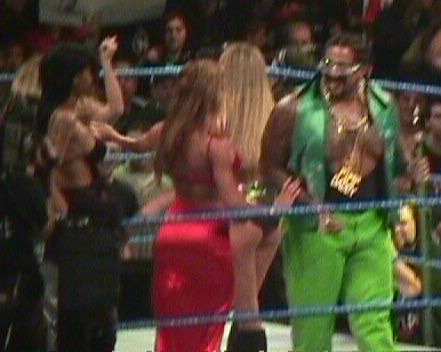


Ring identities and presentation
Wright is notable for performing a range of distinct personas, each with its own visual style, mannerisms and storyline role. His characters emphasized costume, makeup and catchphrases as much as in-ring technique, and they illustrate how personality-driven gimmicks shaped wrestling in that era.
- Papa Shango — an occult-inspired character who used face paint and supernatural-themed promos.
- Kama / Kama Mustafa — a more aggressive, athletic persona, later aligned with faction-based storylines.
- The Godfather — a flamboyant, comedic figure presented as a charismatic "pimp" with an entourage; became Wright's most widely recognized role.
- The Goodfather — a reworked, conservative-aligned version of the Godfather used to fit a different storyline faction.
Career outline
Wright began wrestling in regional promotions in the 1980s before achieving national exposure in the WWF in the early 1990s. His time on major television programs coincided with the company's shift toward edgier, character-driven narratives. Wright rotated among singles programs, backstage segments and faction storylines, adapting his performance to changes in creative direction and audience tastes.
Legacy, business and later activity
Beyond the ring, Wright has been described as a businessman and has made periodic public appearances at fan conventions and wrestling nostalgia events. His career is often cited when discussing the importance of theatricality in professional wrestling and the way memorable characters can persist in popular memory even after active competition ends. For further information, see a general Charles Wright profile and records from the World Wrestling Federation.
Wright's work is representative of a period when larger-than-life characters were central to mainstream wrestling storytelling. While opinions differ on the creative merits of particular gimmicks, his ability to inhabit varied roles across a long run demonstrates professional versatility and an understanding of wrestling as performance. Fans and historians often point to his personas as examples of character evolution tied to changing television audiences and company directions.
Related articles
Author
AlegsaOnline.com Charles Wright (professional wrestler) Leandro Alegsa
URL: https://en.alegsaonline.com/art/116257
Sources
- onlineworldofwrestling.com : "The Godfather's OWOW profile"
- cagematch.de : "Cagematch profile" · web.archive.org
- wrestling-titles.com : "Unified World Heavyweight Title"
- wwe.com : "Intercontinental Championship - The Godfather (April 12, 1999 - May 25, 1999)"
- wwe.com : "World Tag Team Championship - Bull Buchanan & Goodfather (November 06, 2000 - December 10, 2000)"