
Charles XIII of Sweden (Charles II of Norway)
Charles XIII (1748–1818) was King of Sweden (1809–1818) and King of Norway (1814–1818). His reign followed the 1809 constitutional change and ended with the selection of Jean-Baptiste Bernadotte as heir, founding a new dynasty.
Charles XIII (born 7 October 1748 in Stockholm; died 5 February 1818) was a Swedish prince who became King of Sweden in 1809 and, after the events of 1814, King of Norway under the regnal name Charles II. He was the second son of King Adolf Frederick and Louisa Ulrika of Prussia and a younger brother of King Gustav III. His reign coincided with a turbulent era in Scandinavian and European politics.
Image gallery
10 Images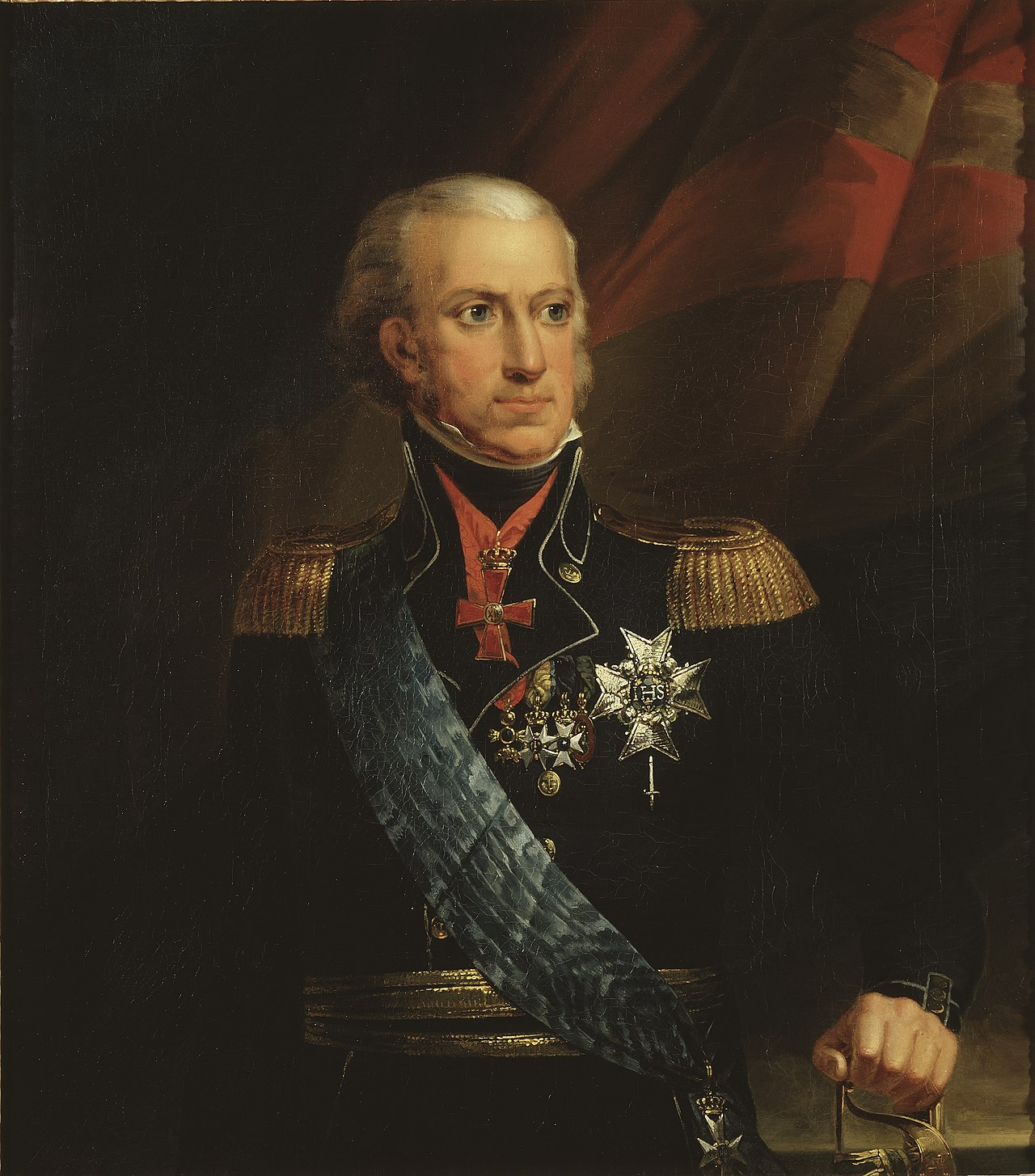



Early life and background
Born into the House of Holstein-Gottorp, he spent his early years at the Swedish court and belonged to the generation that experienced Enlightenment ideas and dynastic rivalry in Europe. As a prince he performed military and ceremonial duties typical for a member of the royal family. His upbringing was shaped by his parents' ties to other European courts.
Accession and constitutional change
Charles became king after the deposition of his nephew in 1809. The Swedish Riksdag introduced a new Instrument of Government that year which limited royal power and established a constitutional framework. Charles accepted the terms of the new constitution and reigned as a constitutional monarch during the final decade of his life.
Union with Norway and succession crisis
The Napoleonic Wars and diplomatic settlements led to a reordering of the Nordic states. In 1814, following treaties and negotiations, Sweden and Norway entered a personal union and Charles assumed the Norwegian throne under the name Charles II. Because he had no heirs, the question of succession dominated his reign; the Riksdag ultimately selected the French marshal Jean-Baptiste Bernadotte as heir-presumptive, a choice that inaugurated the Bernadotte dynasty.
Personal life and legacy
Charles married but left no surviving legitimate children. Contemporary observers noted that his health and capacity declined with age, and during his reign political initiative often came from ministers and the crown prince. His name is still associated with the constitutional settlement of 1809 and with the dynastic transition that shaped modern Swedish monarchy.
Notable facts
- The regnal numbering of Swedish kings named Charles is irregular: earlier monarchs adopted numerals based on partly legendary histories, so Charles XIII is in practice the seventh historically attested king with that name.
- Key dates: born 1748, became King of Sweden 1809, became King of Norway 1814, died 1818.
- For general reference and genealogical context see related entries and sources on 18th–19th century Swedish royalty.
Charles XIII's place in Scandinavian history rests less on sweeping reforms than on the arrangements around his succession and the peaceful integration of Norway into a dynastic union. For further reading about the period and its institutions, consult histories of Sweden and the Scandinavian states during the Napoleonic era.
Questions and answers
Q: Who was Charles XIII?
A: Charles XIII was a monarch who was the King of Sweden from 1809 and King of Norway from 1814 until his death in 1818.
Q: When and where was Charles XIII born?
A: Charles XIII was born on October 7, 1748, in Stockholm, Sweden.
Q: Who were Charles XIII's parents?
A: Charles XIII's parents were King Adolf Frederick of Sweden and Louisa Ulrika of Prussia, sister of Frederick II of Prussia.
Q: How was Charles XIII related to other Swedish kings named Charles?
A: While known as King Charles XIII in Sweden, he was actually the seventh Swedish king by that name, as Charles IX had adopted his numeral after studying a fictitious history of Sweden.
Q: When did Charles XIII become the King of Sweden and Norway?
A: Charles XIII became the King of Sweden in 1809 and the King of Norway in 1814.
Q: When did Charles XIII die?
A: Charles XIII died on February 5, 1818.
Q: How long did Charles XIII reign as King of Sweden and Norway?
A: Charles XIII reigned as the King of Sweden from 1809 until his death in 1818 and as the King of Norway from 1814 until his death in 1818.
Related articles
Author
AlegsaOnline.com Charles XIII of Sweden (Charles II of Norway) Leandro Alegsa
URL: https://en.alegsaonline.com/art/116260