
Canaletto (Giovanni Antonio Canal) — Venetian vedute painter and etcher
Canaletto (1697–1768) was a Venetian painter and printmaker celebrated for precise vedute—detailed cityscapes of Venice and London—whose works influenced 18th‑century taste and the visual record of European cities.
Overview
Giovanni Antonio Canal, known by the nickname Canaletto, was born in Venice in 1697 and became one of the most famous painters of urban landscape in the 18th century. Working primarily in his native city, he produced highly finished views of canals, palaces and public squares that combined measured architectural detail with a luminous sense of atmosphere. He is widely regarded both as a master of the Venetian Italian painting tradition and as a leading figure in the production of vedute, the topographical view paintings prized by travelers.
Image gallery
10 Images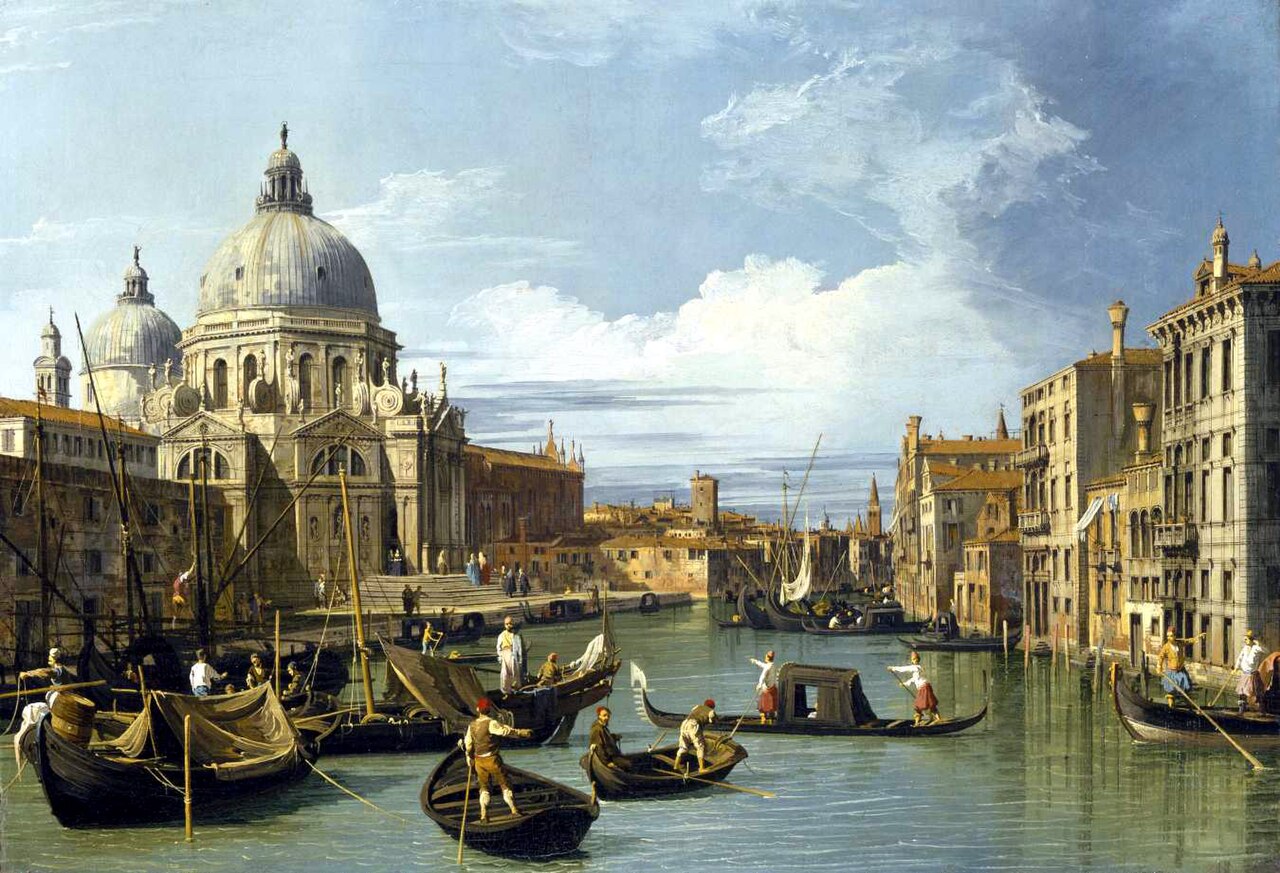


Characteristics and technique
Canaletto's paintings are notable for their precise perspective, careful handling of light and clear delineation of architectural forms. He worked from observation but also made preparatory drawings and sometimes used optical aids to capture complex vistas. His palette often emphasizes cool blues and warm sunlit tones to suggest midday reflections on water. In addition to easel painting, he produced prints in etching, helping to disseminate his compositions more widely as portable images.
Career and travels
Although primarily associated with Venice, Canaletto worked abroad as well. In the mid-18th century he spent a number of years in England, where patrons sought views of London, the Thames and country houses. Back in Italy he continued to paint Venetian scenes for collectors whose demand for picturesque and accurate city views grew with the Grand Tour. His workshop also trained assistants and relatives who adopted a similar approach to cityscape painting.
Works, prints and influence
Canaletto's canvases and his etched plates circulated through collections and print markets, establishing a visual repertoire of iconic views. His etchings—produced with a keen eye for line and architectural form—made his compositions available to a wider public and influenced later landscape artists. Museums across Europe and North America hold major works by him, and his images continue to shape popular perceptions of 18th‑century Venice and London.
Notable facts and legacy
- He is often called simply Canaletto, a diminutive of his family name Canal, and his work gave the veduta genre much of its classical vocabulary.
- His nephew and pupil, Bernardo Bellotto, followed in his footsteps and became a respected vedute painter in his own right.
- Canaletto's practice included both paintings and etchings, the latter helping spread his designs to collectors and print buyers.
Canaletto's combination of documentary detail and painterly atmosphere made his views both useful records of urban appearance and enduring works of art. For further general introductions to his life and paintings see standard museum catalogues and collection essays, which discuss individual works, patrons and the evolving market for vedute during the 18th century.
More on his nationality and training · Venetian context · Vedute genre · Etching and printmaking
Related articles
Author
AlegsaOnline.com Canaletto (Giovanni Antonio Canal) — Venetian vedute painter and etcher Leandro Alegsa
URL: https://en.alegsaonline.com/art/115876