
Cantinflas: Mario Moreno, Mexican Comedian and Film Star
Cantinflas (Mario Moreno) was a Mexican comedian and actor whose campesino persona, films and social satire made him a cultural icon in Mexico, Latin America and among Spanish-speaking audiences abroad.
Overview
Cantinflas was the stage name of Mario Fortino Alfonso Moreno Reyes (12 August 1911 – 20 April 1993), a Mexican comedian and film actor whose work on stage and screen made him one of the most recognizable entertainers in the Spanish-speaking world. He became famous for portraying quick-witted, resourceful members of the poor — vendors, laborers or itinerant drifters — who used language, disguise and physical comedy to satirize authority while defending common people. His career coincided with the Golden Age of Mexican cinema and extended to occasional international productions.
Image gallery
9 Images


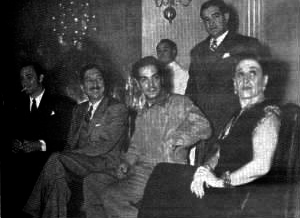
Early life and rise
Born in Mexico City, Moreno began performing in popular theater traditions and traveling carpas (tent shows) that combined sketches, songs and vaudeville acts. He developed a stage persona that emphasized improvisation, rapid-fire speech and an apparent wordplay that could confuse and charm opponents. This persona drew on established urban archetypes in Mexican popular culture and was refined through live performance before Moreno became a film star.
Persona and comic style
Cantinflas's comic identity rested on a blend of verbal dexterity and physicality. Audiences recognized him for a rambling, circular way of talking that often deflected questions and authority; in many Spanish-speaking regions the verb cantinflear has entered informal usage to mean speaking at length while saying little or evading issues. His comedy mixed slapstick, clever wordplay, costume changes and a performance energy that suggested improvisation even within scripted films. Critics have noted that his work combined social observation with a moral center that defended ordinary people against abuses of power.
Film career and international exposure
Moreno became a leading star in Mexican cinema, starring in numerous comedies and films that reached audiences across Latin America and among Spanish-speaking communities in the United States. He also worked briefly in Hollywood, most notably co-starring with David Niven in the 1956 adaptation of Around the World in 80 Days, a role that introduced him to many non-Spanish-speaking viewers. His success in Mexico led some commentators to compare him to internationally famous comic actors; Charlie Chaplin was reported to have praised Moreno, and Moreno was often called the "Charlie Chaplin of Mexico" in popular discourse.
Representative films
- Popular Mexican comedies that established his fame in the 1940s and 1950s.
- Around the World in 80 Days (1956) — brought him wider international attention.
- Later Mexican productions that continued to pair humor with social themes and that maintained his popularity across generations.
Political involvement and social role
Beyond his entertainment work, Cantinflas occupied a visible public role in Mexican society. Although often described as personally conservative in his politics, his public image as a spokesman for the poor and working classes gave him influence in debates about labor and social policy. During an era in which one-party political control in Mexico sometimes extended into unions, his interventions and public statements were noticed and sometimes controversial. His celebrity helped draw attention to social issues and to the conditions of ordinary people.
Legacy and cultural influence
Cantinflas left a lasting imprint on popular culture in Mexico and across the Spanish-speaking world. He helped define a comic archetype that combined language-play with social critique, and his name remains shorthand in many places for humorous evasiveness and clever rhetoric. Film historians emphasize his central role in the Mexican film industry of mid-20th century and his capacity to speak to broad audiences while engaging with social themes. For readers interested in learning more, film histories and biographies of Mexican cinema provide fuller context about his work and the era in which he performed.
Although decades have passed since his most active years, Cantinflas continues to be studied as an example of popular theater transformed by cinema, and his persona endures in references across media and everyday speech. For further exploration, consult dedicated studies of Mexican film and cultural history that discuss his films, performances and public interventions.
References and additional resources may be found through film archives, scholarly works on Latin American cinema and collections that document 20th-century popular entertainment in Mexico.
Cantinflas remains a central figure in discussions of Mexican comedy; his work is essential for understanding how popular performance intersected with social commentary in Latin American film. See more on cultural and cinematic studies through the suggested resources linked above.
Selected reading and film listings are available in film guides and academic surveys of Mexican cinema for readers who wish to explore his films in detail.
For international context and reception, consult histories of mid-20th-century film that examine cross-border exchanges between Mexico and the United States film industry and the wider Spanish-speaking audience networks that sustained his popularity.
General reference points include entries in cinema histories and documentary sources that place Cantinflas's career within larger cultural and political developments of 20th-century Mexico.
Additional links: Mexican cinema studies, comedy comparisons, U.S. reception, international co-stars.
Related articles
Author
AlegsaOnline.com Cantinflas: Mario Moreno, Mexican Comedian and Film Star Leandro Alegsa
URL: https://en.alegsaonline.com/art/115885