
Brian Cox (physicist)
British particle physicist and professor at the University of Manchester, member of ATLAS at the LHC, and a prominent science communicator known for BBC programmes and popular science books.
Overview
Brian Edward Cox is a British particle physicist and public communicator of science. He holds the post of professor at the University of Manchester and is a Royal Society University Research Fellow. His honours include the distinctions OBE and election as a FRS. Cox is best known for his work in experimental high-energy physics and for bringing complex ideas to broad audiences.
Image gallery
6 Images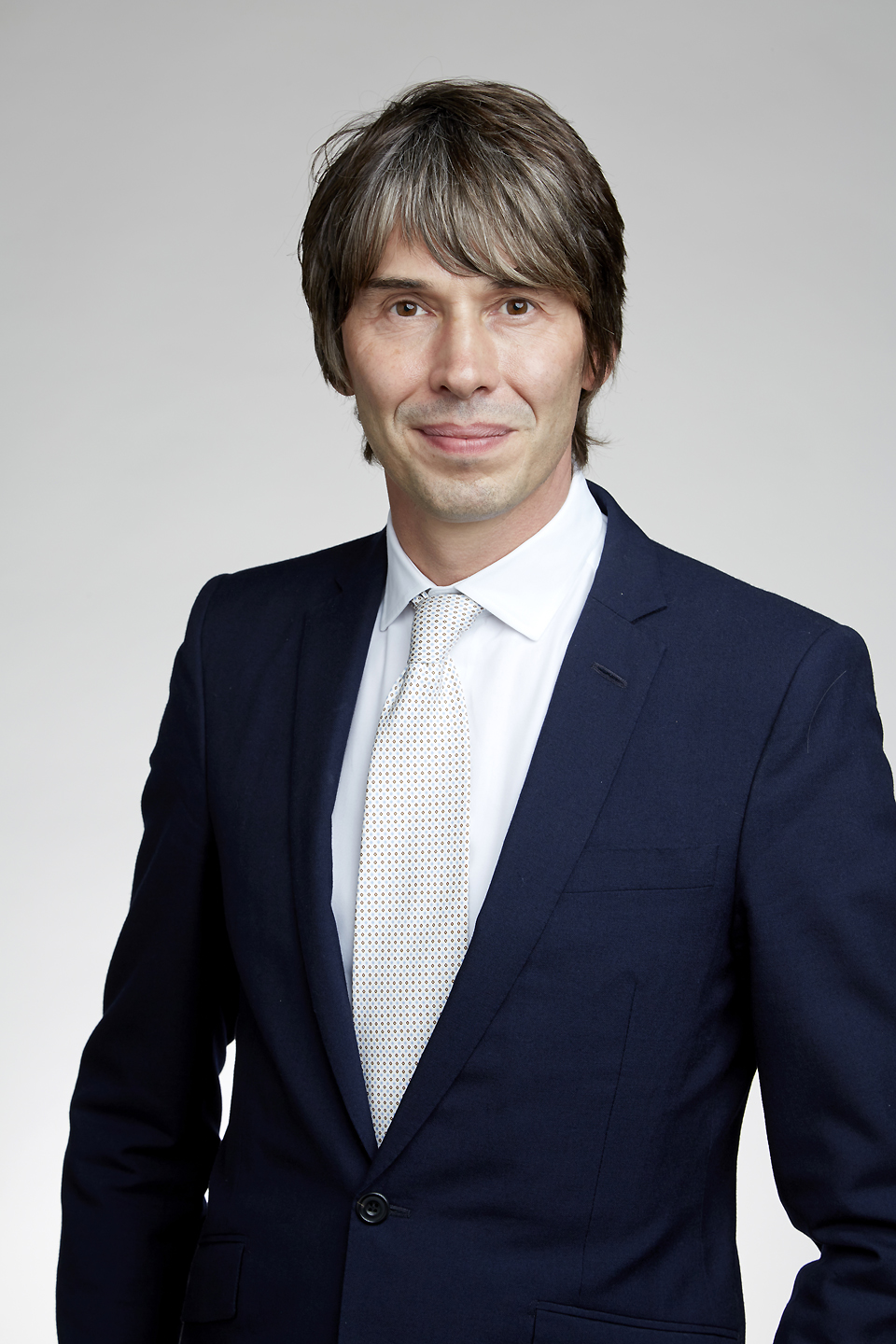



Research and academic role
Cox works on experimental projects at the frontiers of particle physics, including long-term involvement with the ATLAS detector at CERN. He studies collisions produced by the Large Hadron Collider to probe fundamental particles and forces. As a professor and researcher he supervises students, publishes in academic journals and participates in international collaborations that operate large-scale detectors.
Media, outreach and public engagement
Alongside his laboratory work, Cox is a visible figure in popular science. He has presented several programmes for the BBC and appears frequently on television. His TV credits include series that aim to explain cosmology, particle physics and astronomy to non-specialists; he has also contributed to the long-running science series Horizon.
Publications and programmes
He has co-authored accessible books and often appears in documentary-style programmes designed to introduce scientific concepts without specialist prerequisites. Typical topics include the origins of the universe, the quantum world and the methods used by particle physicists. Notable programmes and works include:
- popular science writings and collaborations
- university lectures and public talks
- engagements tied to the University of Manchester
Background and wider significance
Before returning to physics, Cox had an earlier career in music, an experience that he has said informed his approach to communicating with large audiences. His dual role—as an active experimental physicist and a skilled communicator—has made him a prominent voice in conversations about science funding, education and the cultural place of scientific knowledge. Through television, books and public lectures he has helped popularize subjects that are often seen as technical or remote.
Related articles
Author
AlegsaOnline.com Brian Cox (physicist) Leandro Alegsa
URL: https://en.alegsaonline.com/art/115603
Sources
- inspirehep.net : Diffractively produced Z bosons in the muon decay channel in pp collisions at √s=1.96 TeV, and the measurement of the efficiency of the DØ Run II Luminosity Monitor
- doi.org : 10.2172/892267
- broadcastnow.co.uk : "Ross returns to BBC for Stargazing series"
- bbc.co.uk : "Wonders of the Solar System"
- sueridermanagement.co.uk : "Professor Brian Cox"
- ukwhoswho.com : COX, Prof. Brian Edward
- theguardian.com : "Putting the fizz into physics"
- women.timesonline.co.uk : "A Life in the Day: Dr Brian Cox"