
Boris Nemtsov — Russian politician, reformer, and opposition leader
Boris Nemtsov (1959–2015) was a Russian physicist-turned-politician, a key liberal reformer in the 1990s and later a prominent critic of Vladimir Putin; he was assassinated in Moscow in 2015.
Boris Yefimovich Nemtsov (9 October 1959 – 27 February 2015) was a Russian politician, former scientist and one of the most visible liberal critics of the Kremlin in the 2000s and 2010s. He rose to prominence during the 1990s as an economic reformer and regional governor, served in senior posts in the federal government, and later helped lead opposition movements that challenged Vladimir Putin's policies and governance. His murder on a bridge near the Kremlin drew international attention and sparked debate about political violence and accountability in Russia.
Image gallery
10 Images


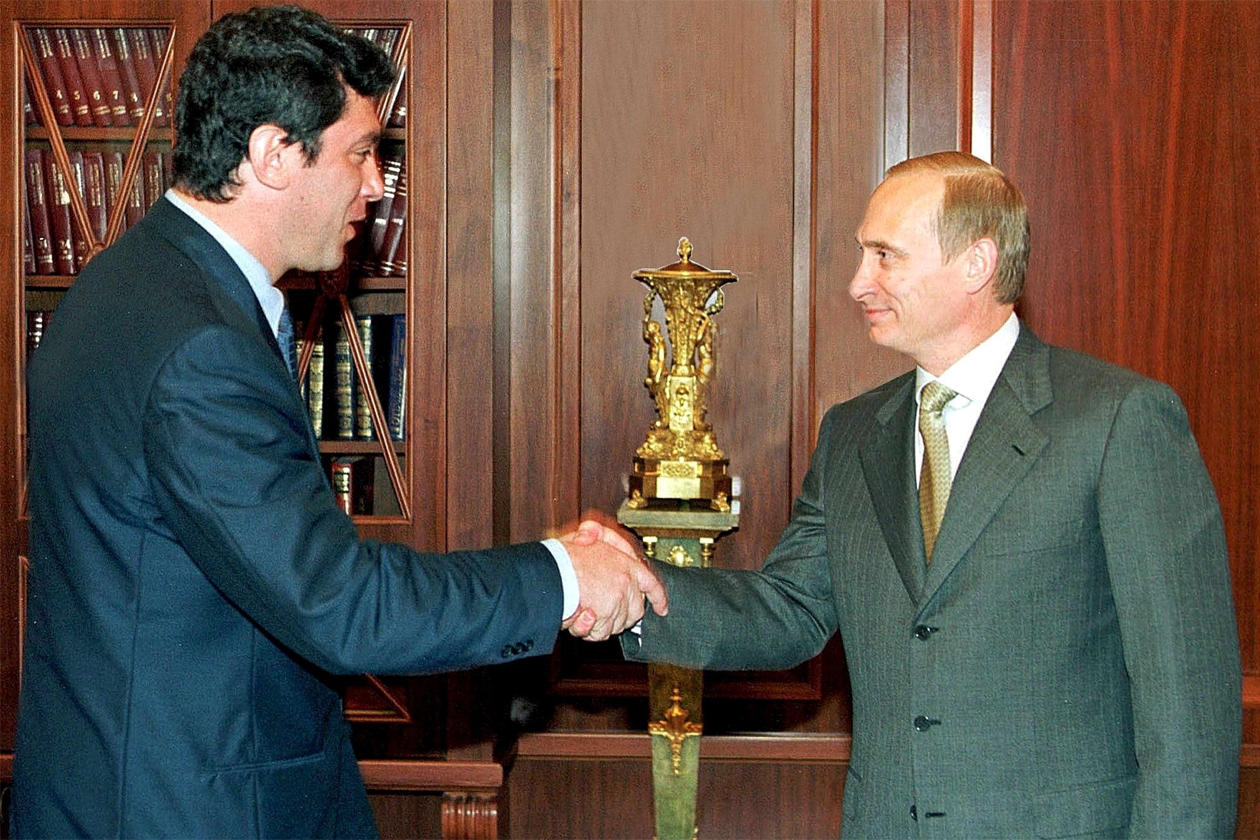

Background and education
Nemtsov was trained as a physicist. He studied physics at the state university in what was then Gorky and earned the academic equivalent of a PhD in the field, with work related to mathematics and applied physics. Early in his career he worked in research and industrial management before moving into politics as the Soviet system opened in the late 1980s. The technical and scientific background influenced his analytic approach to policy and economic questions throughout his political life. For more on his early life and training see physics, mathematics and academic PhD topics; his university is linked here: university in Nizhny Novgorod.
Political career and views
Nemtsov was associated with market-oriented reforms and liberal political currents in post-Soviet Russia. During the 1990s he held important regional and federal offices and was seen as a pragmatic reformer during the Yeltsin era. His career included elected and appointed roles; among the functions he performed were:
- Regional leadership and administration, where he focused on economic restructuring.
- Senior federal positions in the 1990s under President Boris Yeltsin, where he advocated privatization and market reforms.
- Later leadership in liberal political parties and coalitions that pushed for rule of law, civil liberties and transparent governance.
From about 2000 he became an outspoken critic of President Vladimir Putin, highlighting what he and many others described as growing centralization of power, restrictions on independent media and civic freedoms, and incidents of corruption in state institutions. He worked with other activists and public figures to organize demonstrations, publish reports, and support electoral and civic initiatives aimed at political pluralism.
Assassination and aftermath
On 27 February 2015 Nemtsov was shot dead on a central Moscow bridge near the Kremlin and Red Square. The killing stunned observers inside Russia and abroad. Investigators arrested several suspects and prosecutions followed; courts convicted individuals charged with carrying out the shooting. Human rights organizations, media outlets and many politicians noted that questions remained about who ordered the killing and whether the investigation had fully established motives and the chain of command. The murder prompted widespread condemnation from foreign governments and non-governmental organizations, and it intensified debates about the safety of political dissent in Russia.
Legacy and significance
Nemtsov is remembered both for his role in the turbulent transition of the 1990s and for his vocal opposition to authoritarian trends in later years. Supporters describe him as a committed advocate for democratic institutions, economic openness and transparency; critics argued at times with his policy choices during the reform era. His death became a symbol for civil society groups and opposition activists who regard him as a martyr for free expression and political pluralism. Internationally, his assassination contributed to scrutiny of Russia's human rights record and the environment for political contestation. For perspectives in Russian language and contemporary commentary see Russian sources and broader analyses labeled scientist or political biographies.
Further reading and reference points on Nemtsov's life and work are available through multiple archived interviews, policy reports and collections of his public statements recorded over decades of public service and activism.
Related articles
Author
AlegsaOnline.com Boris Nemtsov — Russian politician, reformer, and opposition leader Leandro Alegsa
URL: https://en.alegsaonline.com/art/115472
Sources
- livelib.ru : "Борис Немцов"
- telegraph.co.uk : "Leading Putin critic gunned down outside Kremlin"