
Batukeshwar Dutt: Indian revolutionary and participant in the 1929 Assembly bombing
Indian revolutionary who, with Bhagat Singh, threw non‑lethal bombs into the Central Legislative Assembly in 1929; sentenced by the British, he served long prison terms and is remembered as a freedom fighter.
Overview
Batukeshwar Dutt (18 November 1910 – 20 July 1965) was an Indian activist associated with the anti‑colonial revolutionary movement of the 1920s and 1930s. He is best known for his role alongside Bhagat Singh in the 1929 attack on the Central Legislative Assembly in Delhi, an act intended as political protest rather than mass violence. His life combined direct action, prolonged imprisonment under the British, and later obscurity after independence.
Image gallery
7 Images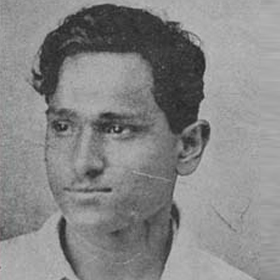


Early life and influences
Dutt was born in Kanpur, in what was then British India. As a youth he became involved with nationalist circles that favored more radical methods than the mainstream nonviolent movement. Like several contemporaries, his political outlook was shaped by opposition to repressive colonial laws, economic hardship, and a desire to dramatize resistance to British rule. These currents led him into conspiratorial and street‑level activism rather than electoral or legal channels.
The 1929 Central Legislative Assembly action
On 8 April 1929, Dutt and Bhagat Singh entered the Central Legislative Assembly in Delhi and detonated low‑intensity bombs while shouting slogans and scattering leaflets to call attention to repressive bills and the colonial government's treatment of political prisoners. The devices were designed to make noise and create a public spectacle, not to cause mass casualties, and both men deliberately stayed at the scene to be arrested. The incident attracted intense public attention and became a focal point of anti‑colonial debate.
Trial, imprisonment and protests
Following their arrest, Dutt was tried by British authorities and received a severe sentence. He spent many years in prison during the final phase of colonial rule, where he participated in hunger strikes and other protests against prison conditions and political mistreatment. Accounts describe difficult conditions and ill treatment by some jailers and fellow inmates; throughout his incarceration he remained committed to the cause that had brought him into direct action. Details of his transfers and terms appear in colonial-era legal records and later histories.
Legacy and later life
After India achieved independence, Dutt lived out his remaining years away from sustained public prominence. He is remembered alongside other young revolutionaries of the period for the symbolic impact of the Assembly bombing and the way it foregrounded radical critique of British rule. He died in New Delhi after a prolonged illness on 20 July 1965, aged 54; his life is commemorated in books and public remembrances of the independence struggle.
Notable facts
- Name and dates: Batukeshwar Dutt, 1910–1965.
- Famous act: The 1929 Assembly bombing with Bhagat Singh at the Central Legislative Assembly.
- Imprisonment: Sentenced by British courts; carried out hunger strikes and protested prison conditions (records).
- Birth and death: Born in Kanpur; died in New Delhi. Further reading and archival sources: see references.
Related articles
Author
AlegsaOnline.com Batukeshwar Dutt: Indian revolutionary and participant in the 1929 Assembly bombing Leandro Alegsa
URL: https://en.alegsaonline.com/art/114905
Sources
- books.google.com : Batukeshwar Dutt