
Sir Basil John Mason — British cloud physicist and Met Office director
Biography of Sir Basil John Mason (1923–2015), a British cloud physics expert and former Director of the UK Meteorological Office; summary of his work, leadership, and honours.
Overview
Sir Basil John Mason (18 August 1923 – 6 January 2015), commonly known as John Mason, was a British atmospheric scientist noted for his work on cloud physics and his leadership of the United Kingdom's national weather service. Born in Docking, Norfolk, Mason combined research on the physical processes within clouds with administrative roles that influenced operational meteorology and atmospheric science policy.
Image gallery
1 Image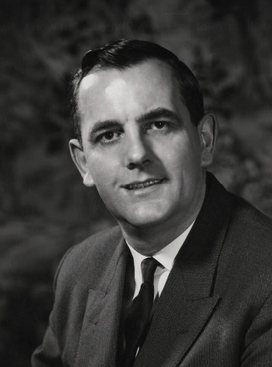
Research and contributions
Mason's research focused on the microphysical processes that govern cloud formation, growth and precipitation. He contributed to understanding how tiny aerosol particles, liquid droplets and ice crystals interact to produce rain, snow and other forms of precipitation. His work informed experimental studies and theoretical descriptions of droplet collision, cloud droplet growth and the role of condensation and freezing in cloud development.
Beyond laboratory and theoretical work, Mason was engaged with applications of cloud physics to practical problems. These included improvements to weather forecasting, the interpretation of atmospheric observations, and guidance for field campaigns that studied cloud systems. His perspective bridged fundamental physics and operational meteorology.
Leadership and legacy
As a senior figure in the UK meteorological community, Mason advocated for better integration of research with forecasting practice. During his time in senior administrative posts he emphasized the value of investment in instrumentation, observational networks and computing resources to support both research and services. His influence is remembered in the wider community of atmospheric scientists who study cloud processes.
Honours and recognition
- Recognised with national and professional honours, including the title Sir and appointment as Companion of the Bath (CB).
- Fellowships and memberships reflecting his standing in medicine and science, for example Fellow of the Royal College of Physicians (FRCP) and Fellowship of the Royal Society.
John Mason's career exemplified the combination of detailed physical science with institutional leadership. His work remains a reference point for scientists studying cloud microphysics and for those interested in the development of national meteorological services.
Related articles
Author
AlegsaOnline.com Sir Basil John Mason — British cloud physicist and Met Office director Leandro Alegsa
URL: https://en.alegsaonline.com/art/114899