
Anders Fogh Rasmussen — Danish prime minister and NATO secretary general
Anders Fogh Rasmussen (born 1953) is a Danish politician who served as Denmark’s prime minister (2001–2009) and as NATO secretary general (2009–2014); he later founded Rasmussen Global.
Anders Fogh Rasmussen (born 26 January 1953) is a Danish politician and international figure who led his country as Prime Minister and later served as Secretary General of NATO. He remains active in international affairs as the founder of Rasmussen Global and as an adviser to businesses and governments.

Image gallery
10 Images


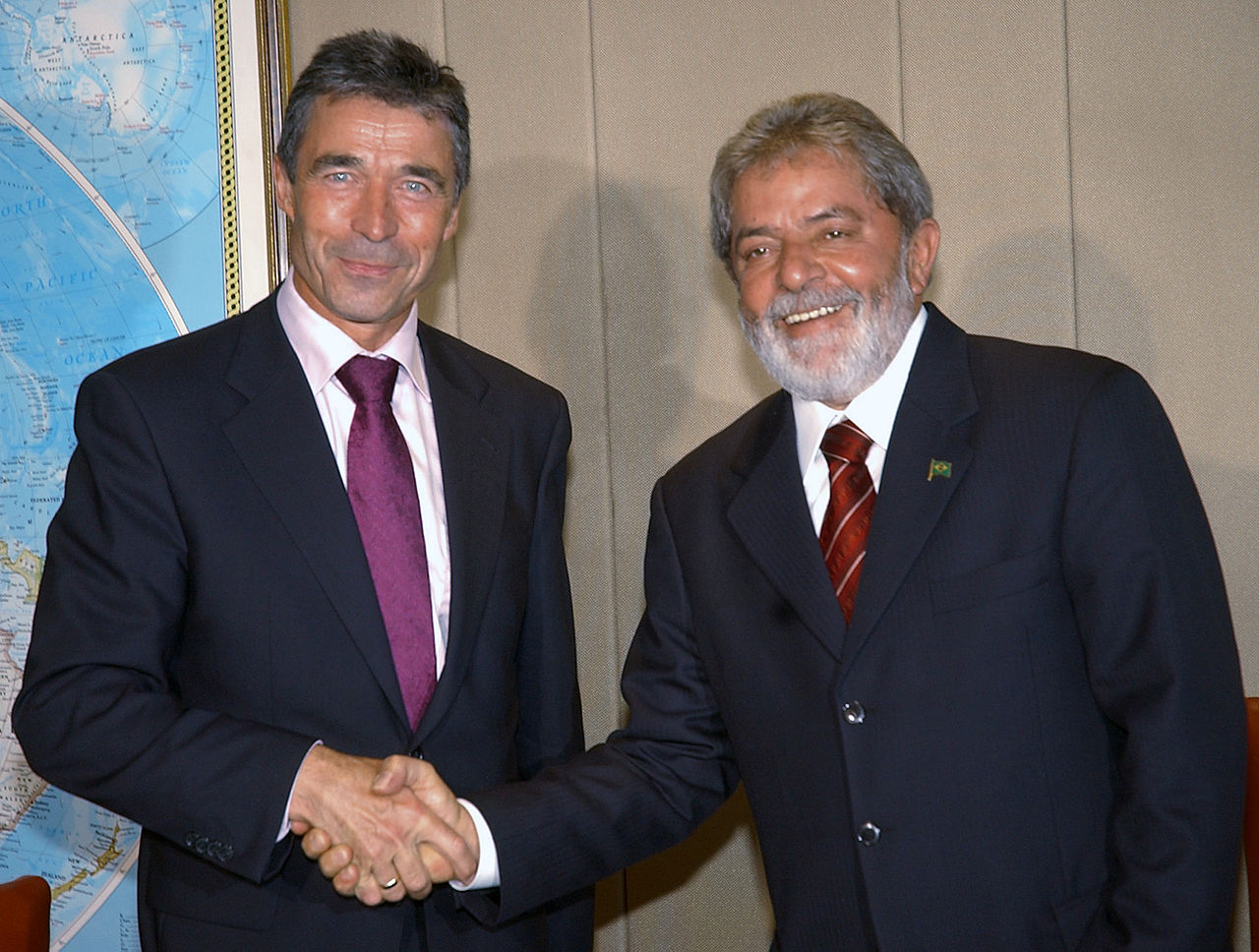


Early life and education
Rasmussen studied economics at the University of Aarhus, where he completed a master's level degree. He entered politics in the 1970s and gradually rose through party ranks, combining public service with work in academia and journalism. His economic training shaped a pragmatic approach to fiscal and administrative reform during his later political career.
Domestic political career
Rasmussen became leader of the liberal party Venstre in 1998 and led a coalition to victory in 2001. He served as Prime Minister of Denmark from November 2001 to April 2009. His government pursued policies that emphasized tax reform, privatization of some public services, stricter immigration rules and a focus on law and order. His administrations governed in coalition with centre-right partners and relied at times on parliamentary support from other parties.
Foreign policy and military deployments
As prime minister, Rasmussen steered Denmark into active participation in international security operations, aligning closely with NATO and allied initiatives. Danish forces were deployed to Afghanistan and took part in the coalition that entered Iraq in 2003. These decisions marked a more outward-looking Danish security policy than in earlier decades.
NATO leadership (2009–2014)
Appointed Secretary General of NATO in August 2009, Rasmussen held the position until October 2014. His tenure prioritized the alliance’s mission in Afghanistan, efforts to modernize military capabilities, and strengthened partnerships with non-member states. NATO operations during his term included support for the 2011 enforcement of a no-fly zone over Libya. Rasmussen underscored the importance of burden-sharing among allies and of adapting NATO to new security challenges.
Later career and public roles
After leaving NATO, Rasmussen founded Rasmussen Global, a consultancy that provides strategic advice on foreign and security policy. He has also worked with international consultancies and spoken frequently on transatlantic relations, European security, and the challenges posed by shifting great-power dynamics. He continues to write, lecture and advise public and private sector clients.
Notable aspects and legacy
- Rasmussen is known for combining economic reform at home with an assertive foreign policy abroad.
- His leadership of NATO coincided with complex operations in Afghanistan and Libya and growing attention to relations with Russia.
- After public office he moved into international consulting, reflecting the common post-government trajectory of senior officials.
For further reading on his national roles see Prime Minister of Denmark references and on his transatlantic work consult NATO-related sources. Rasmussen’s career illustrates the link between national politics and international security leadership in the early 21st century.
Related articles
Author
AlegsaOnline.com Anders Fogh Rasmussen — Danish prime minister and NATO secretary general Leandro Alegsa
URL: https://en.alegsaonline.com/art/114034
Sources
- nato.int : "Anders Fogh Rasmussen"
- rasmussenglobal.com : "The firm - Rasmussen Global Consultancy"
- cphpost.dk : "Anders Fogh Rasmussen gets a new job – The Post"