
Alfred Deakin (1856–1919) — Australian statesman and federation leader
Second Prime Minister of Australia, leading federation efforts, three-time prime minister, founder of key institutions such as the High Court, and architect of early social and economic policy.
Overview
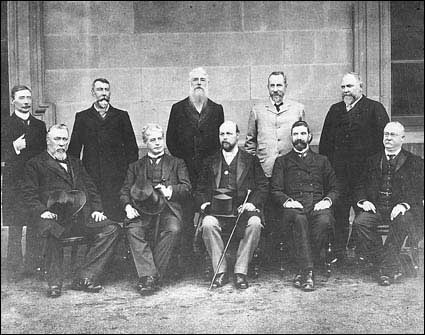
Alfred William Deakin was a central figure in Australia's transition from a set of British colonies to a federated nation. Born in 1856 in Collingwood, Melbourne, he served as the second Prime Minister of Australia and was a leading voice in the political life of the new Commonwealth. Deakin combined legal training, journalistic skill and a talent for persuasion to shape the institutions and policies of the early federal government.
Image gallery
10 Images



Early life and career
Deakin trained as a lawyer and became prominent in Victorian public affairs before turning his energies to the movement for federation in the 1890s. He married Elizabeth Brown in 1882 and the couple had three children. His background in law and public writing helped him take a leading role in the debates that produced the Australian Constitution and in organizing popular and parliamentary support for union of the colonies.
Role in federation and government
After federation, Deakin served in the first federal ministry as Attorney-General under Edmund Barton, holding the Commonwealth's principal legal portfolio (Attorney-General). He later led the government himself in three separate terms, guiding legislation to create permanent federal institutions and services. Deakin introduced the measure that established the High Court and was responsible for initiating plans for a transcontinental railway. He also oversaw the transfer of administrative responsibility for parts of New Guinea to Australian control in the early Commonwealth period (New Guinea).
Policies and achievements
Deakin's governments pursued a program of nation‑building: protective tariffs to support Australian industry, arbitration and labour laws, and early social welfare measures including old‑age pensions. He supported immigration restrictions that became known collectively as the White Australia policy, a controversial legacy that shaped Australian politics for decades. Other notable initiatives included establishing the federal judiciary and advancing national infrastructure planning.
- Founding the High Court — legislation introduced to create the nation's highest court (Bill).
- Economic and social reform — tariffs, arbitration and pensions.
- Territorial administration — assumed responsibility for Papua and related territories (New Guinea).
- Institution building — planning for rail and federal administration.
Later life and legacy
In his later years Deakin suffered from progressive mental decline, what contemporaries and later observers identified as dementia or Alzheimer's disease. He died in South Yarra in 1919 and was buried in St Kilda Cemetery. Historians remember him as a persuasive constitutionalist and a pragmatic leader whose legislative and administrative initiatives helped consolidate the new Commonwealth. His career also reflects the complexities of the era: while he built enduring institutions, some policies he supported remain subjects of critical reassessment.
For more detailed accounts of Deakin's life, political thought and the legislation of the first federal parliaments, see biographical and historical resources linked from national and scholarly collections: Prime Minister, Australia, Attorney-General, Edmund Barton, Bill, New Guinea, Alzheimer's.
Related articles
Author
AlegsaOnline.com Alfred Deakin (1856–1919) — Australian statesman and federation leader Leandro Alegsa
URL: https://en.alegsaonline.com/art/113774