
Aleksandar Vučić — President of Serbia and long-time political leader
Aleksandar Vučić (born 1970) is a Serbian politician, leader of the Serbian Progressive Party and President of Serbia since 2017. His career spans nationalist roots, government offices and a contested modernizing agenda.
Aleksandar Vučić (born 5 March 1970) is a prominent Serbian politician who has served as the President of Serbia since 31 May 2017. He leads the Serbian Progressive Party (SNS), a dominant political force in Serbia, and has been a central figure in national politics since the 1990s. Vučić is a graduate of the University of Belgrade Faculty of Law and rose through party ranks to occupy several high-level government posts over three decades.
Image gallery
10 Images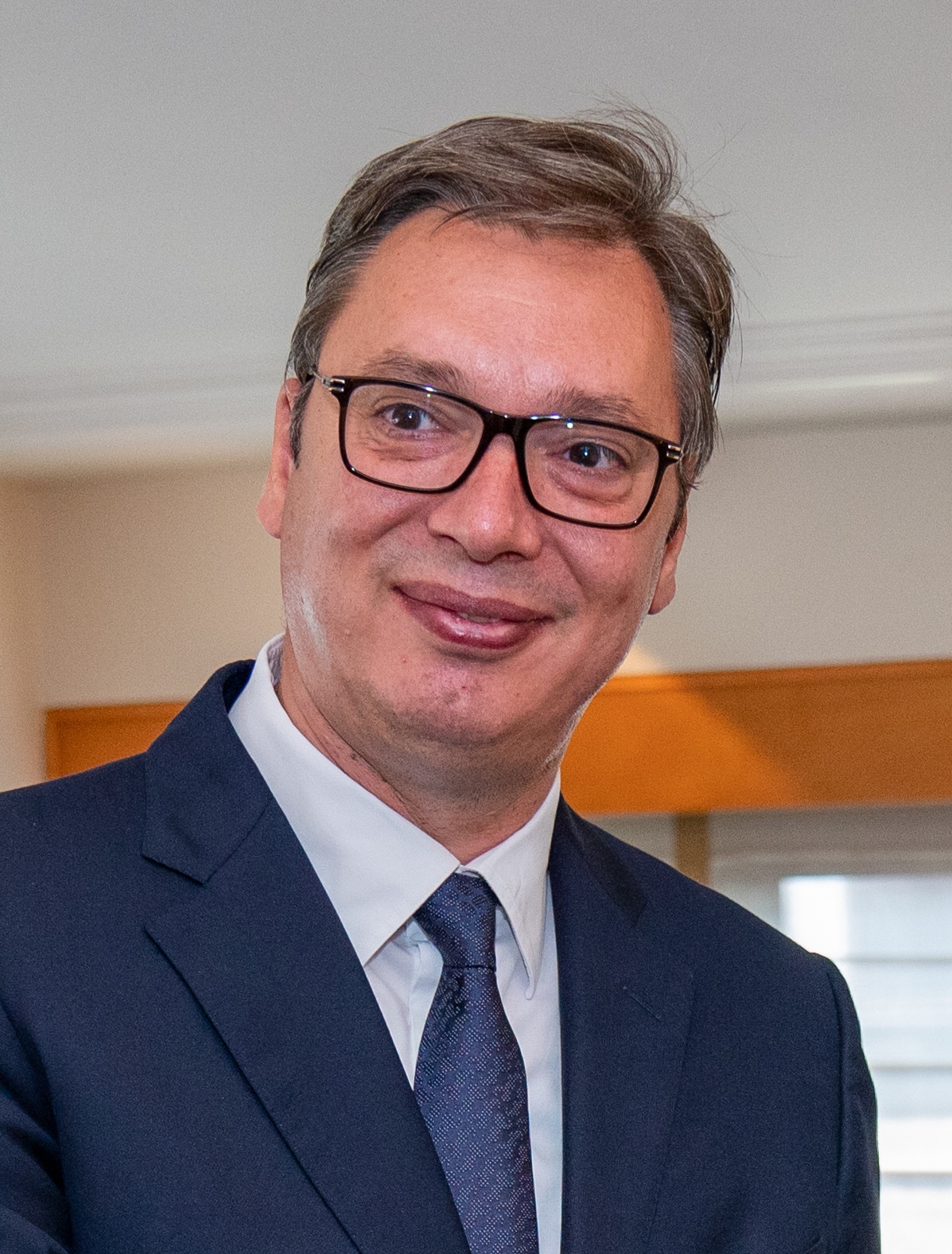


Early career and political evolution
Vučić began his public life in the 1990s with a party that represented strong nationalist views. In 2008 he and others split from that movement to form the more moderate Serbian Progressive Party, together with figures such as Tomislav Nikolić. Over time Vučić repositioned himself and his party toward a rhetoric that mixes commitments to European integration with a pragmatic reliance on partnerships with Russia and China. This strategic shift helped the SNS broaden its appeal to voters and to international interlocutors.
Major government roles
Vučić has held a sequence of senior posts in Serbian governments. He served as Minister of Information from 1998 to 2000, later occupied the office of Minister of Defence, and was First Deputy Prime Minister before becoming Prime Minister in 2014. He resigned as prime minister after winning the presidency in the April 2017 election with a first-round majority and formally took office on 31 May 2017. His time in government includes responsibility for security and institutional portfolios as well as oversight of economic and administrative policy.
Policies, priorities and public image
As a national leader, Vučić has emphasized economic stabilization, attracting foreign investment, infrastructure projects and fiscal consolidation while advocating gradual reforms tied to the EU accession process. At the same time, his presidency has been characterized by a centralization of political control and by active engagement in negotiations over Kosovo’s status — an issue he frames in terms of Serbia’s sovereignty and territorial integrity.
- Domestic policy: supporters point to economic growth and major construction projects; critics warn of weakened institutions and constrained media freedom.
- Foreign policy: balances EU accession ambitions with close ties to Russia and China, pursuing pragmatic economic and diplomatic cooperation.
- Electoral record: won the 2017 presidential election in the first round and has remained the dominant political leader through parliamentary majorities led by SNS.
Criticism, controversies and significance
Vučić’s political trajectory and governing style attract both considerable support and pointed criticism. Human rights groups, independent journalists and some Western observers have raised concerns about media freedom, the impartiality of institutions, and the concentration of political influence. Supporters rebut these claims, arguing that strong leadership has brought stability and economic improvement after a turbulent post‑Yugoslav period.
Whether viewed as an effective modernizer or as an increasingly dominant political figure, Vučić remains central to Serbia’s domestic debates and international positioning. His role continues to shape the country’s path toward European integration, its relations with neighboring states, and the long-running question of Kosovo’s final status. For further context on Serbian institutions and recent events, see related resources and profiles at official government pages and expert analyses accessible through regional reports.
Related articles
Author
AlegsaOnline.com Aleksandar Vučić — President of Serbia and long-time political leader Leandro Alegsa
URL: https://en.alegsaonline.com/art/113609
Sources
- novosti.rs : "Aleksandar Vučić: Hrvati se rugaju mojim ubijenim precima!"
- wikidata.orgQ222031.html : wikidata.orgq222031.html
- d-nb.info : 1110988370
- id.loc.gov : no2016151143
- viaf.org : 19147121678626390910
- worldcat.org : lccn-no2016151143