
Aleksandr Solzhenitsyn: life, major works, and historical significance
Concise encyclopedia entry on Aleksandr Solzhenitsyn: his life, imprisonment and exile, key works (One Day in the Life of Ivan Denisovich, The Gulag Archipelago), religious conversion and legacy.
Overview
Aleksandr Solzhenitsyn (11 December 1918 – 3 August 2008) was a Russian novelist, essayist and public intellectual whose writing exposed the scale and human cost of political repression in the Soviet Union. He received the Nobel Prize in Literature in 1970 and became internationally known for combining literary craft with documentary testimony about the system of camps and forced labor.
Image gallery
10 Images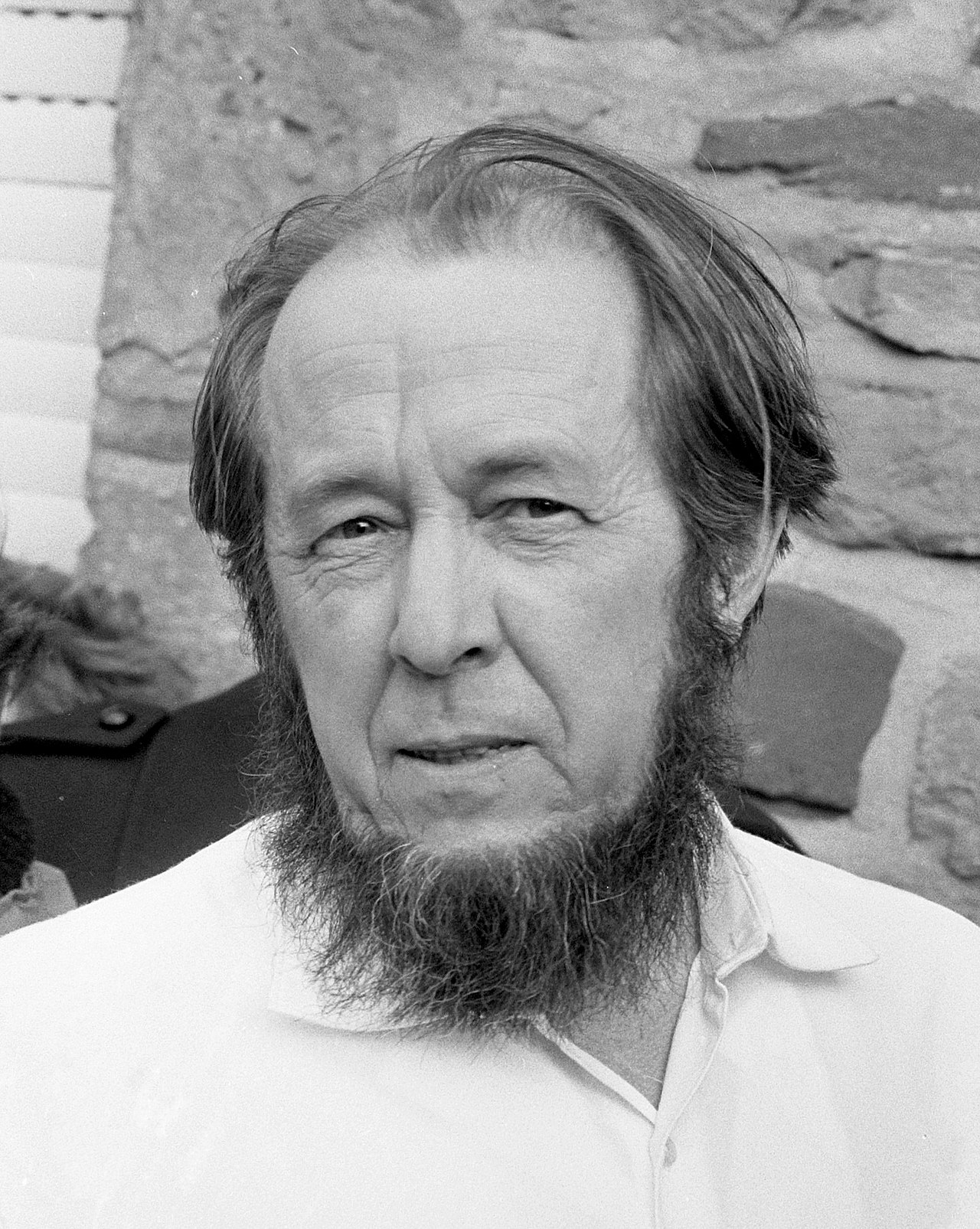


Early life and military service
Born into a family in what was then the Russian Empire, Solzhenitsyn trained as a mathematician and served as an artillery officer in the Red Army during World War II. His wartime experiences, and a later arrest for criticizing the conduct of the war, led to imprisonment that marked his subsequent life and writing. For a concise outline of his life, see a general biographical overview.
Arrest, camps and conversion
Arrested after the war, Solzhenitsyn spent years in the Soviet camp system. Those experiences led him to abandon earlier adherence to Marxism and to a deepening of religious belief; later in life he identified with the Russian Orthodox Church. His testimony and literary reconstructions helped make the realities of the Gulag and of forced labor widely known.
Major works and themes
Solzhenitsyn wrote short fiction, novels, historical narrative and essays. His works combine concentrated personal detail with wider moral and historical reflection. Key books include:
- One Day in the Life of Ivan Denisovich — a short novel portraying a single day in a labor camp and the small acts of endurance by prisoners.
- The Gulag Archipelago — a multi‑volume work that interweaves testimony, memoir and analysis to document the arrest, interrogation and camp system across decades.
- Cancer Ward and The First Circle — novels that explore ethical dilemmas, the effects of oppressive institutions on individuals and the ambiguous moral choices faced by people in constrained circumstances.
- The Red Wheel (a cycle of historical novels) — later work concerned with Russia's revolutionary and imperial history.
Exile, return and public life
Publication of candid accounts of repression brought official censure. Solzhenitsyn was stripped of Soviet citizenship and expelled in the 1970s; he lived for many years in Western Europe and the United States before returning to Russia in the 1990s. Accounts of his deportation and time abroad are discussed in literature on his exile. After his death his passing was marked by an official state funeral and renewed public debate about his place in Russian history.
Reception and controversies
Solzhenitsyn's importance as a witness to repression and as a literary artist is widely recognized, but his later nonfiction and political commentary also provoked controversy. He criticized aspects of Soviet and post‑Soviet governance, called for moral renewal and national revival, and at times expressed conservative views on culture and identity that divided critics and readers. His interventions sparked discussion about nationalism, historical memory and the responsibilities of intellectuals.
Legacy
Solzhenitsyn remains a central figure for studies of 20th‑century totalitarianism, literary testimony and human rights. His combination of narrative power, documentary detail and moral inquiry helped shape international awareness of political imprisonment and contributed to debates about truth, memory and reconciliation. Readers consult both his fiction and his documentary volumes for insight into individual resilience and the structures of repression; scholars continue to debate the full implications of his political and cultural prescriptions.
Further context
To understand Solzhenitsyn's work fully it is useful to read his fiction alongside his essays and historical writings, and to place them within the broader history of Soviet Russia, the Cold War, and the dissident movement. Academic commentary treats him variously as a novelist, a chronicler of injustice, and a controversial public moralist; see discussions of his role as a historian for those interpretive debates.
Questions and answers
Q: Who was Aleksandr Solzhenitsyn?
A: Aleksandr Solzhenitsyn was a Russian writer, novelist, dramatist, and historian.
Q: What did he win in 1970?
A: Aleksandr Solzhenitsyn won the Nobel Prize in literature in 1970.
Q: What did he reveal to the world through his works?
A: Through his works, Solzhenitsyn revealed the brutal reality of the Gulags, a network of Soviet labor camps.
Q: Why was he exiled from the Soviet Union in 1974?
A: Solzhenitsyn was exiled from the Soviet Union in 1974 due to his criticism of the government and his writings that depicted life in the Soviet days.
Q: When did Solzhenitsyn return to Russia?
A: Solzhenitsyn returned to Russia in 1994.
Q: What did Solzhenitsyn convert to during his imprisonment?
A: During his imprisonment, Solzhenitsyn left Marxism and converted to Russian Orthodox Church.
Q: What was Solzhenitsyn's significant contribution?
A: Solzhenitsyn was very significant for revealing what life was like in the Soviet days, and for raising awareness about the cruel reality of the Soviet labor camps.
Related articles
Author
AlegsaOnline.com Aleksandr Solzhenitsyn: life, major works, and historical significance Leandro Alegsa
URL: https://en.alegsaonline.com/art/113614
Sources
- nobelprize.org : "Aleksandr Solzhenitsyn"
- izvestia.ru : The Gulag Archipelago is included in the obligatory school program