
Aleksandr Stepanovich Viktorenko — Soviet cosmonaut and long‑duration Mir commander
Aleksandr S. Viktorenko (born 1947) is a retired Soviet cosmonaut who commanded multiple Soyuz TM missions to the Mir space station, spending 489 days in orbit and performing 19h33m of EVA.
Aleksandr Stepanovich Viktorenko (born 29 March 1947) is a retired Soviet cosmonaut noted for commanding long‑duration expeditions to the Mir space station. Born in Olginka in the then North‑Kazakhstan Oblast of the Kazakh SSR, he was selected for the cosmonaut corps on 23 March 1978 and served through the late Soviet period into the early years of the Russian space program.
Image gallery
3 Images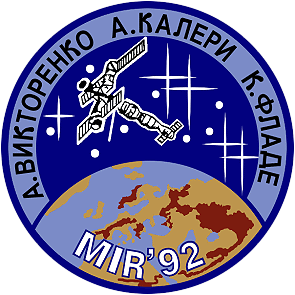


Background and selection
Like many cosmonauts of his era, Viktorenko underwent intensive flight and technical training after selection. Training emphasised Soyuz spacecraft operations, orbital rendezvous and docking, systems management, life‑support procedures and emergency responses. This preparation equipped him to command crewed missions and manage long stays aboard an orbital complex.
Spaceflights and command roles
During his career Viktorenko commanded three Soyuz TM missions that visited the Mir space station. These missions involved ferrying crew members, exchanging expedition crews, and supporting station maintenance and scientific programs. Across multiple flights he accumulated a total of 489 days in space, making him one of the longer‑duration Soviet and Russian spacefarers of his generation.
Extravehicular activity and mission duties
Viktorenko logged 19 hours and 33 minutes of extravehicular activity (EVA). Spacewalks on Mir typically addressed maintenance, external hardware installation, inspection of structural elements, and support for experiments and docking equipment. As a commander he was responsible for flight safety, crew coordination, docking and undocking operations, and oversight of onboard scientific and technical tasks.
Training, operations and contributions
Commanders on long‑duration flights had to combine technical skill with leadership and endurance. Viktorenko's service contributed to development of operational procedures for extended habitation in low Earth orbit, station upkeep and crew rotation. Experience gained during Mir expeditions helped inform later international station operations and long‑term human spaceflight practices.
Retirement and legacy
Viktorenko retired from the cosmonaut corps on 30 May 1997. His missions occurred during a formative era for orbital stations, and his accumulated flight time and EVA experience form part of the broader legacy of Mir-era exploration. He is remembered for his role in maintaining continuous human presence aboard Mir and for supporting complex, long‑duration expeditionary operations.
Notable facts
- Selected as a cosmonaut: 23 March 1978
- Retired: 30 May 1997
- Commanded Soyuz TM missions: Soyuz TM‑3, Soyuz TM‑8, Soyuz TM‑14
- Total time in space: 489 days
- Total EVA time: 19 hours 33 minutes
Viktorenko's career spans the transition from Soviet to Russian human spaceflight and reflects the practical experience needed to operate and maintain a continuously crewed space station over many years.
Questions and answers
Q: Who is Aleksandr Viktorenko?
A: Aleksandr Viktorenko is a former Soviet cosmonaut.
Q: When was Aleksandr Viktorenko born?
A: Aleksandr Viktorenko was born on March 29, 1947.
Q: Where was Aleksandr Viktorenko born?
A: Aleksandr Viktorenko was born in Olginka, North-Kazakhstan Oblast, Kazakh SSR.
Q: Is Aleksandr Viktorenko married?
A: Yes, Aleksandr Viktorenko is married.
Q: How many children does Aleksandr Viktorenko have?
A: Aleksandr Viktorenko has two children.
Q: What was Aleksandr Viktorenko's profession?
A: Aleksandr Viktorenko was a cosmonaut.
Q: How long did Aleksandr Viktorenko spend in space?
A: Aleksandr Viktorenko spent a total of 489 days in space, including 19 hours and 33 minutes working outside the spacecraft.
Related articles
Author
AlegsaOnline.com Aleksandr Stepanovich Viktorenko — Soviet cosmonaut and long‑duration Mir commander Leandro Alegsa
URL: https://en.alegsaonline.com/art/113615
Sources
- astronautix.com : "Viktorenko"
- spacefacts.de : "Aleksandr Viktorenko - EVA experience"