
Big Mac (McDonald's sandwich)
The Big Mac is a signature double-deck hamburger introduced by McDonald's; known for its middle bun, special sauce and global recognition — and as the basis of the economic 'Big Mac Index'.
Overview
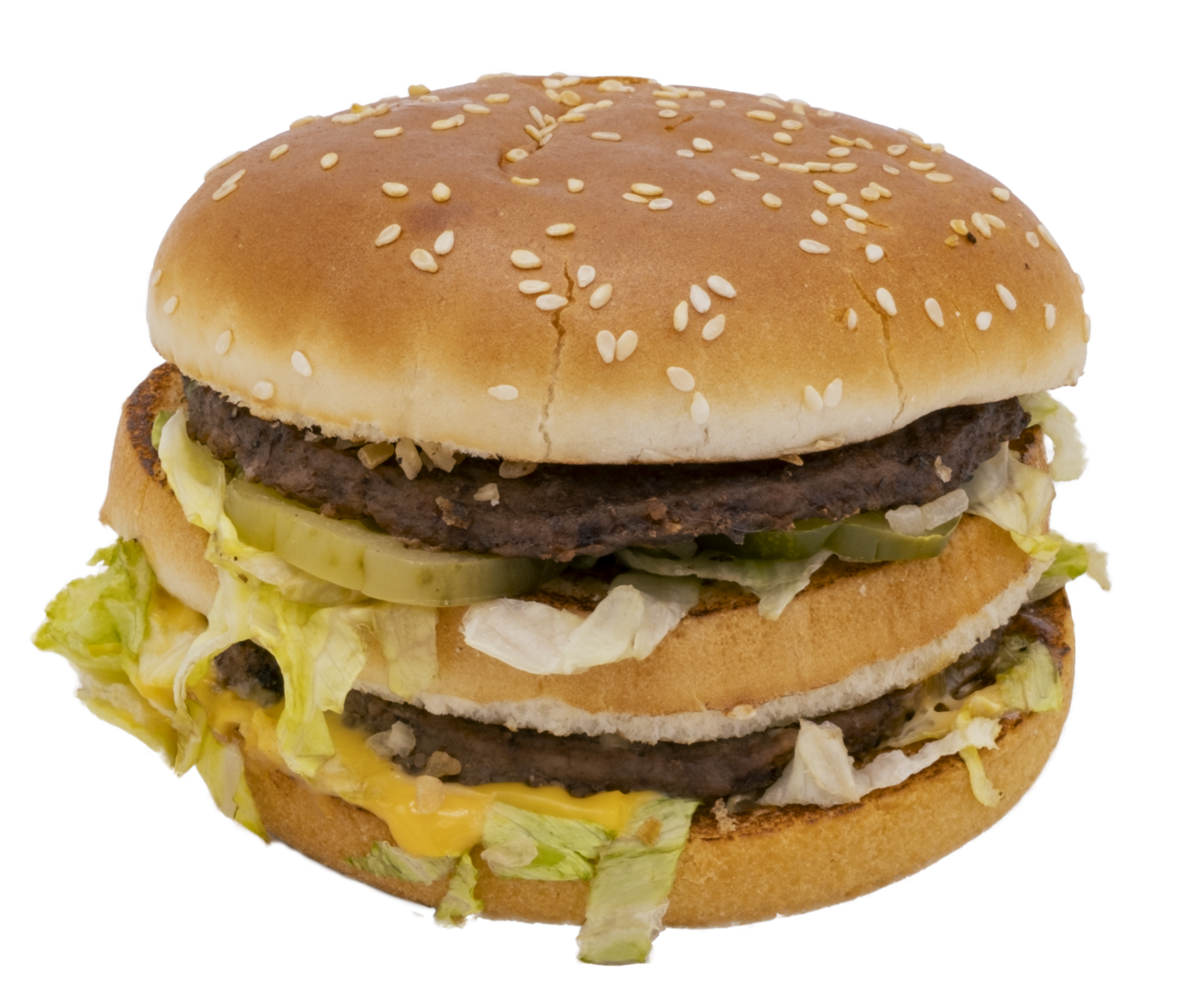
The Big Mac is a widely recognized hamburger sold by the global fast-food industry leader McDonald's. It consists of two thin beef patties separated by a third, central bun layer, and is assembled with shredded lettuce, pickles, a slice of cheese and a distinctive creamy dressing usually called the Big Mac sauce. Its characteristic three-part bun gives the sandwich a taller, stacked profile that distinguishes it from single-patty burgers.
Image gallery
9 Images


Ingredients and typical nutrition
In its common form the Big Mac uses two cooked beef patties, a processed cheese slice, rehydrated or fresh-cut onions, shredded lettuce, sliced pickles, and a tangy emulsion-style sauce applied to both the top and middle buns. The sandwich is often described as providing roughly around 550 calories in the standard serving, although exact nutritional figures vary by market and portioning.
- Two beef patties
- One cheese slice (processed cheese)
- Big Mac sauce
- Onions, shredded lettuce, pickles
- Three-part bun (top, club layer, bottom)
Origin and development
The sandwich was developed in the 1960s by Jim Delligatti, one of the early franchise operators in the McDonald's system; he is often described as a long-time franchisee who experimented with new menu items at restaurants he owned. The Big Mac was created to compete with larger multi-layer hamburgers available at the time and gained strong local popularity before being added more broadly to McDonald's national and then international menus during the late 1960s. The company's expansion under executives such as Ray Kroc helped spread the sandwich worldwide.
Variants, regional adaptations and notable facts
Over decades the Big Mac has inspired region-specific versions and limited-time variations that adjust ingredients to local tastes, ranging from different cheeses to chicken or plant-based patties. The sandwich's middle bun, sometimes called the "club" layer, serves the practical role of keeping ingredients in place and creating the signature three-tier appearance. McDonald's periodically markets anniversary editions, smaller or larger sizes, and flavor experiments tied to local culinary preferences.
Cultural and economic significance
The Big Mac has transcended its role as fast-food fare to become a cultural icon and an informal economic benchmark. Economists and journalists use the so-called Big Mac Index to compare purchasing power and currency valuation by observing local prices of the same sandwich in different countries. That use highlights how a standardized, widely available product can serve as a simple indicator of international price differences.
For more about the company, menu history and global offerings see the McDonald's corporate and historical resources available from official sources at McDonald's and franchising guides linked through the chain. Additional context on early franchise operations and individuals who influenced menu development can be found through biographies and historical studies of mid-20th-century fast-food expansion, which often mention operators and franchise pioneers like Jim Delligatti and executives such as Ray Kroc.
Whether approached as a food item, a marketing success or a cultural touchstone, the Big Mac remains one of the most identifiable sandwiches in the global fast-food landscape. Its place in popular culture and its occasional use as an economic comparison tool ensure it continues to appear in discussions far beyond the restaurant counter.
For additional reading and price comparisons consult journalistic and economic summaries, including overviews that reference the Big Mac Index and company menus maintained by retail food analysts and official McDonald's publications.
Related articles
Author
AlegsaOnline.com Big Mac (McDonald's sandwich) Leandro Alegsa
URL: https://en.alegsaonline.com/art/11360