
Yen: Japan's currency, history, denominations and global role
Overview of the Japanese yen (¥, 円): its denominations, history since the Meiji era, role in global finance, common features of coins and banknotes, and distinctions from other East Asian currencies.
The yen (symbol: ¥; Japanese: 円, pronounced en) is the official currency of Japan. Issued by the Bank of Japan, the yen is used for everyday transactions across the country and is one of the principal currencies in international foreign exchange markets. The Roman-letter abbreviation "JPY" appears in financial contexts, while the single-character kanji 円 is commonly used on prices and signage in Japan.
Image gallery
10 Images


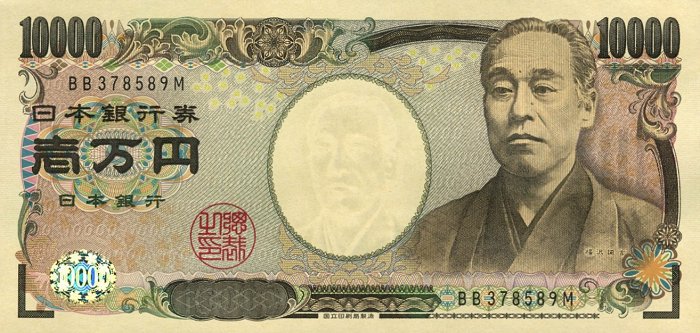


Denominations and physical characteristics
Modern yen currency is issued in both coin and banknote form. Coins are lightweight and produced in a small set of denominations, while banknotes range from commonly used lower values up to the highest-value note in general circulation.
- Coins: common denominations include 1, 5, 10, 50, 100 and 500 yen; they are made of metals chosen for durability and lightness.
- Banknotes: typical series include 1,000, 2,000 (rare), 5,000 and 10,000 yen notes, with the 10,000-yen note being the highest widely used denomination.
History and development
The modern yen was introduced in the early Meiji period as part of Japan's modernization of its monetary system and the move to a decimal currency. Over time the yen moved onto and off various metallic standards and eventually into a floating exchange rate system in the latter half of the 20th century. Throughout its history the currency has been redesigned several times to add security features and to reflect contemporary printing technology and anti-counterfeiting measures.
Role in international finance
The yen is one of the most actively traded currencies in global foreign-exchange markets. It is often cited as a "major" currency and is frequently used in currency pairs such as USD/JPY. Economic factors in Japan, including historically low interest rates and the country's large financial markets, have made the yen significant in strategies like carry trades as well as a perceived safe-haven asset in times of market stress.
Design, cultural notes and distinctions
Banknotes typically show notable historical figures and scenes, and modern issues incorporate multiple security features such as watermarks and holograms. The yen sign (¥) is shared typographically with the Chinese yuan sign in some fonts, though the currencies are distinct. Subunits formerly used for accounting—sen and rin—are no longer used in everyday transactions. For authoritative and current information about cash design and legal tender rules, the Bank of Japan publishes guidance and updates.
Understanding the yen requires attention to both its domestic role in Japan's economy and its place in international markets. Changes in monetary policy, exchange rates and the design of notes and coins continue to shape how the currency is used and perceived worldwide.
Related articles
Author
AlegsaOnline.com Yen: Japan's currency, history, denominations and global role Leandro Alegsa
URL: https://en.alegsaonline.com/art/109794