
1704 (year)
Events, context and significance of the year 1704, a pivotal year in the War of the Spanish Succession, notable naval captures, cultural milestones and the death of philosopher John Locke.
1704 was a year shaped by large-scale military conflict in Europe and by developments in colonial North America. It fell during the War of the Spanish Succession (1701–1714), which drew much of western and central Europe into prolonged fighting over the Spanish throne. Military, political and cultural moves made during 1704 had consequences for the balance of power in Europe and for the imperial ambitions of maritime states.
Image gallery
10 Images





Major events
- Capture of Gibraltar (August 1704) — An Anglo‑Dutch fleet supported by troops landed on the Rock of Gibraltar and took control of the fortress from Spanish forces. The occupation marked the beginning of British strategic control of the entrance to the Mediterranean.
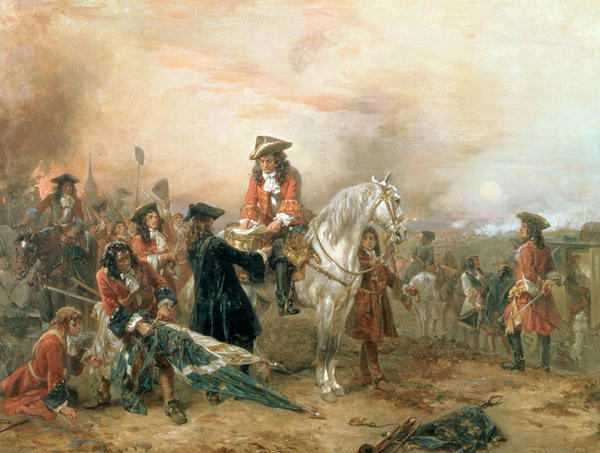
- Battle of Blenheim (August 13, 1704) — A decisive victory for the Grand Alliance under the Duke of Marlborough and Prince Eugene of Savoy against French and Bavarian forces. The result halted French expansion in central Europe and became one of the war's turning points.
- North America and colonial press — The Boston News‑Letter published its first issue in April 1704, becoming the first continuously issued newspaper in British North America and an early example of colonial print culture.
These events intersected with broader diplomatic and military realignments. The War of the Spanish Succession involved shifting coalitions of states — the Grand Alliance sought to check Bourbon power, while France and its allies attempted to secure a favorable succession in Spain. Naval operations and sieges were especially important, and control of ports and sea lanes shaped later treaties.
Culture, science and publishing
The early 18th century saw increasing circulation of printed news, pamphlets and political debate. The founding of a regular newspaper in Boston is representative of the spread of print media beyond Europe and of its growing role in public life. Scientific and intellectual exchanges continued across Europe, even as war diverted resources and attention.
Notable death and legacy
One of the most prominent intellectual figures to die in 1704 was the English philosopher John Locke, whose writings on government, toleration and the mind influenced Enlightenment thought. His death that year closed a chapter in 17th‑century philosophical development even as new political and military realities unfolded across Europe and overseas.
Overall, 1704 is remembered for decisive military actions that reshaped strategic geography — notably Gibraltar and Blenheim — and for cultural developments such as the institutionalization of regular newspapers in the Americas. These strands contributed to long‑term shifts in power, communication and ideas during the 18th century.
Related articles
Author
AlegsaOnline.com 1704 (year) Leandro Alegsa
URL: https://en.alegsaonline.com/art/111646