
Zeno of Elea: Life, Paradoxes, and Philosophical Legacy
Pre-Socratic thinker known for paradoxes challenging motion and plurality; member of the Eleatic school and influential in logic, mathematics, and the history of philosophy.
Overview
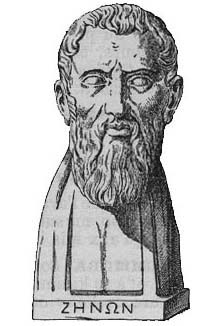
Zeno of Elea was a pre-Socratic philosopher from southern Italy whose work questioned everyday assumptions about motion, plurality and change. He lived in the fifth century BCE and is traditionally associated with the town of Elea in Magna Graecia (southern Italy). Zeno was a pupil and defender of Parmenides and is often credited with developing argumentative techniques meant to protect his teacher's doctrines.
Image gallery
7 Images



Life and intellectual context
Details of Zeno's life are sparse and come mainly from later authors. He belonged to the Eleatic school, which emphasized unity and the unreality of change. Later classical writers such as Aristotle record that Zeno used paradoxical demonstrations to show that common-sense claims about motion and plurality lead to contradiction, and Aristotle described Zeno as a formative figure in dialectical practice (dialectic).
Paradoxes: aims and examples
Zeno's most famous legacy is a set of paradoxes that challenge how we think about infinity, division, and movement. These arguments are not simply tricks but are designed to show that ordinary assumptions yield unacceptable consequences. Classic examples include:
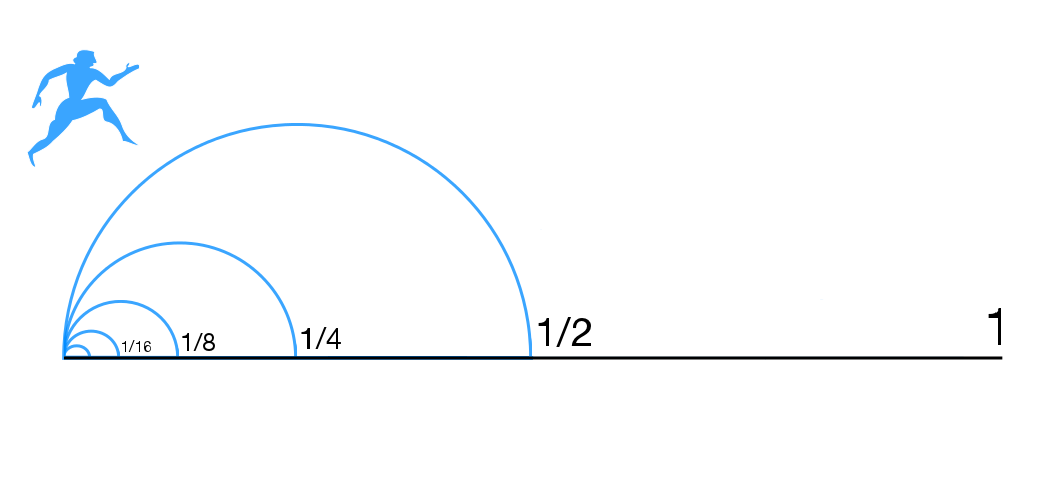
- The Dichotomy: motion requires completing infinitely many intermediate steps, so motion seems impossible.
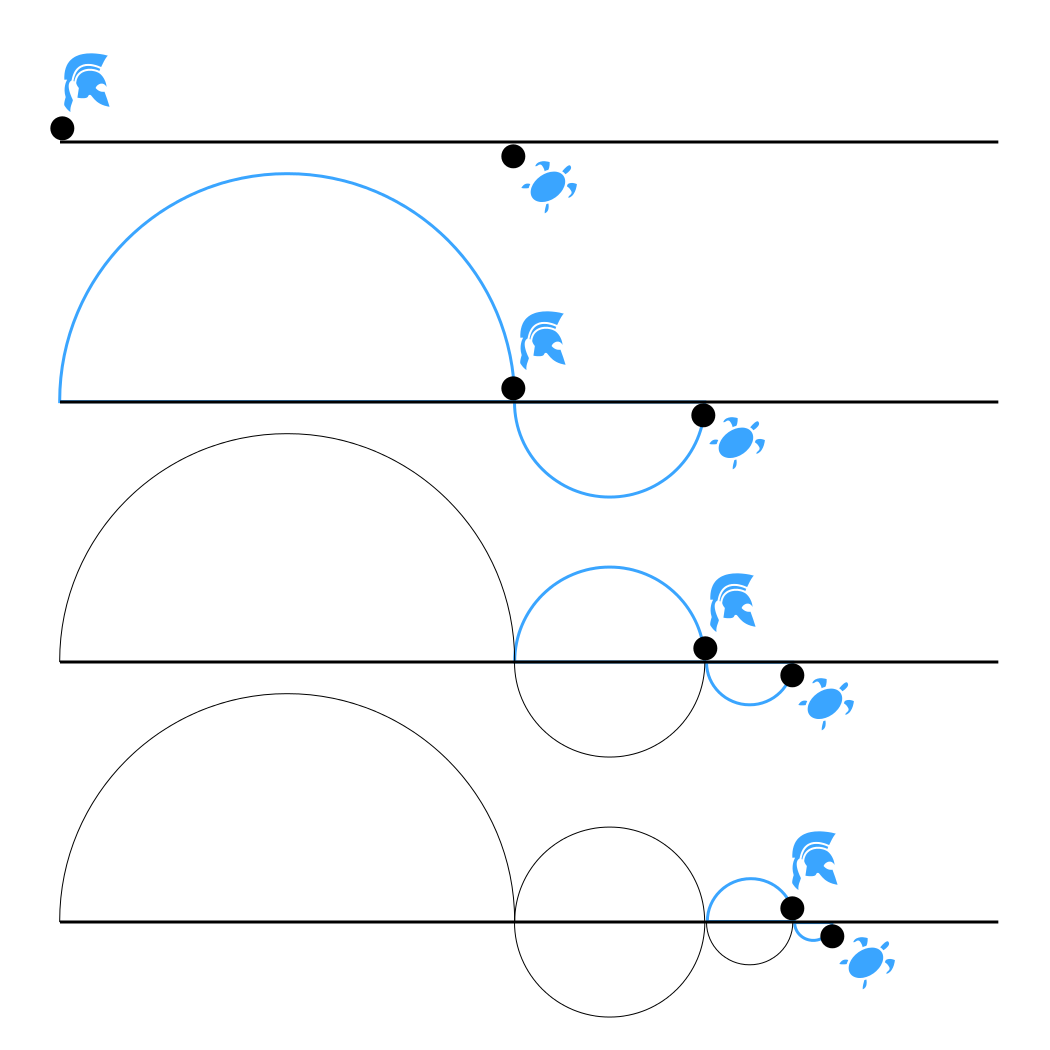
- Achilles and the Tortoise: a faster runner can never catch a slower one if the slower has a head start because the pursuer must reach an infinite sequence of points.
- The Arrow: at any instant an arrow in flight occupies a space equal to itself and so is at rest; hence motion is illusory.
- The Stadium: arguments about relative motion and equality of time intervals that raise problems about commensurability.
Method and surviving work
Zeno favored rigorous reductio ad absurdum arguments: assume the common view and deduce an absurd conclusion. Only fragments and reports survive, preserved by later philosophers and commentators. Because his original writings are lost, much of what we ascribe to Zeno is mediated through sources that interpret or paraphrase his claims.
Influence and significance
Zeno's paradoxes influenced classical metaphysics and logic and reappeared in medieval and modern discussions about the continuum, infinity, and the foundations of calculus. Mathematicians and philosophers, from Aristotle to modern analysts, have revisited these puzzles. As Bertrand Russell later noted, the paradoxes are striking in their subtlety (Bertrand Russell), and they continue to be discussed in philosophy of mathematics and physics. Scholarly treatments and translations can be found in compendia and specialized studies (on the paradoxes, on dialectic).
Notable distinctions
Zeno should not be reduced merely to a list of clever paradoxes: he functioned as a defender of a systematic Eleatic ontology and an early practitioner of argumentative rigor. His puzzles highlight enduring tensions between intuitive reasoning and formal analysis, and they helped shape concepts that later became central to logic, calculus and theories of space and time.
southern Italy | Parmenides | Aristotle | dialectic | paradoxes | Bertrand Russell
Related articles
Author
AlegsaOnline.com Zeno of Elea: Life, Paradoxes, and Philosophical Legacy Leandro Alegsa
URL: https://en.alegsaonline.com/art/110508
Sources
- classics.mit.edu : Parmenides
- worldcat.org : 27251522
- wikidata.org : wikidata.org/wiki/Q132157
- catalogo.bne.es : XX1044074
- catalogue.bnf.fr : cb11941408s
- data.bnf.fr : (data)
- cantic.bnc.cat : a10491156
- d-nb.info : 118772562
- isni.org : 0000 0001 0395 2451
- id.loc.gov : n50047929
- data.nlg.gr : 33830
- data.bibliotheken.nl : 069965676
- libris.kb.se : 103588
- idref.fr : 027353982
- viaf.org : 16003086