
You Can't Take It With You (1938 film)
1938 comedy-drama directed by Frank Capra, adapted from the Kaufman and Hart play; praised for its warm satire of American family life and winner of Best Picture and Best Director Oscars.
Overview
You Can't Take It With You is a 1938 American comedy film directed and produced by Frank Capra, adapted from the stage play by George S. Kaufman and Moss Hart. The movie blends broad comedy with sentimental observations about family, work and personal freedom, and it brought Capra another high-profile success during Hollywood's studio era.
Image gallery
3 Images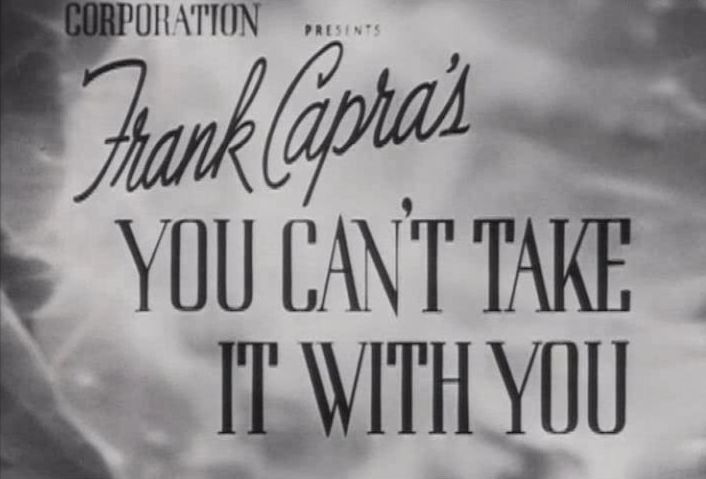


Plot and principal characters
The story centers on the eccentric Sycamore household, a multi-generational family with unconventional hobbies and an aversion to conventional ambition. The plot unfolds when Alice Sycamore becomes engaged to Tony Kirby, the scion of a wealthy and buttoned-down industrial family. Romantic misunderstandings and cultural clashes between the two families lead to comic episodes that ultimately affirm individuality and human connection over materialism.
- Jean Arthur as Alice Sycamore
- Lionel Barrymore as Grandpa (Martin Vanderhof)
- James Stewart as Tony Kirby
- Edward Arnold and supporting cast in key roles
Production, tone and themes
Adapted from a hit Broadway play, the film preserves much of the theatrical structure while using cinematic techniques to open up the story. Capra's approach emphasizes warmth, comedic timing and a clear moral sensibility often described as "Capraesque": sympathy for the common person, skepticism of rigid respectability, and a belief in decency and community. The ensemble cast supports the film's rhythm, delivering both slapstick moments and quieter human scenes.
Reception, awards and legacy
Upon its release in 1938 the picture was a commercial and critical success, and it has remained well regarded by later critics and audiences. It won the Academy Award for Best Picture and Capra received the Oscar for Best Director. Modern aggregators and film guides continue to praise the movie's charm and craftsmanship; for example, it holds a high rating on contemporary review sites.
- Awards: Academy Awards — Best Picture, Best Director
- Critical standing: widely cited as a durable example of 1930s American comedy
Notable facts and further reading
The film is an example of a popular stage-to-screen transfer that preserved the authors' comic rhythms while finding cinematic life under Capra's direction. Its themes of anti-materialism and celebration of ordinary people helped define a strand of Hollywood storytelling in the 1930s. For contemporary release details and critical commentary see these references and archives:
Related articles
Author
AlegsaOnline.com You Can't Take It With You (1938 film) Leandro Alegsa
URL: https://en.alegsaonline.com/art/110047