
Young Frankenstein (1974 film)
Young Frankenstein (1974) is Mel Brooks’s affectionate black-and-white comedy parody of classic horror films, co-written with and starring Gene Wilder; selected for preservation in the U.S. National Film Registry.
Young Frankenstein is a 1974 comic film directed by Mel Brooks and co-written with its star Gene Wilder. Shot in black-and-white and styled after Hollywood horror pictures of the 1930s and 1940s, the film combines affectionate pastiche with original comic invention. It carefully reproduces period production design and lighting so the humour can play against genuinely atmospheric sets rather than contemporary parody techniques.
Image gallery
1 Image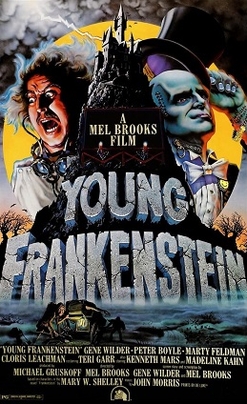
Plot overview
The story follows Frederick Frankenstein, the American-educated grandson of the infamous scientist Victor Frankenstein, who insists his surname be pronounced differently to disassociate himself from his family's legacy. An inheritance calls him back to his ancestral home in a region evoking Transylvania, where he discovers the old laboratory, revives an experiment and becomes embroiled with an eccentric household that includes a hunchbacked assistant and a devoted lab aide. The narrative structure mirrors the original horror films while converting their tropes into comic set pieces and character-driven jokes.
Style and themes
The film’s humour relies on a mixture of deadpan delivery, precise physical comedy, wordplay and exaggerated characterization. Rather than depending primarily on contemporary satire, it foregrounds character-based absurdity and carefully timed visual gags. A notable sequence contrasts the gloomy, gothic surroundings with an unexpectedly choreographed dance number, an example of how the film plays oppositions for comic effect. Critics and scholars often note the film’s dual nature as both parody and tribute.
Cast and performances
Gene Wilder leads as Frederick Frankenstein, supported by a strong ensemble whose performances are central to the film’s appeal. The cast includes Teri Garr, Cloris Leachman, Marty Feldman, Peter Boyle, Madeline Kahn, Kenneth Mars, Danny Goldman, and a small but memorable appearance by Gene Hackman. Each supporting performer contributes broad, vivid comic characterizations that help sustain the film’s tone and pacing.
- Director: Mel Brooks
- Co-writer and star: Gene Wilder
- Ensemble cast: Teri Garr, Cloris Leachman, Marty Feldman, Peter Boyle, Madeline Kahn, Kenneth Mars, Danny Goldman, Gene Hackman
Reception and legacy
On release the picture was widely praised for its craftsmanship, performances and consistent comic tone. Over the decades it has acquired a durable popular reputation and is commonly cited as one of Mel Brooks’s most assured works, notable for the way it balances reverence for its sources with fresh comedic invention. The film has influenced other spoofs and has been frequently referenced in discussions of parody, pastiche and comedy filmmaking.
Preservation and adaptations
Reflecting its cultural impact, the film was selected in 2003 by the U.S. National Film Preservation Board for inclusion in the Library of Congress National Film Registry; see the Registry entry for more on its preservation status (National Film Registry). The property has also been adapted for the stage in later years as a musical version, demonstrating its ongoing appeal and adaptability across media.
Further context
When exploring the film, readers often consult background material on the original literary and cinematic Frankenstein tradition; key reference points include Victor Frankenstein as the foundational figure and the gothic, borderland setting associated with Transylvania. For contemporary readers interested in the creators and performers, biographical and filmographic resources on Gene Wilder and Mel Brooks provide fuller context for the film’s development and place in American comedy.
Questions and answers
Q: Who directed Young Frankenstein?
A: Mel Brooks directed Young Frankenstein.
Q: Who stars in Young Frankenstein?
A: Gene Wilder, Teri Garr, Cloris Leachman, Marty Feldman, Peter Boyle, Madeline Kahn, Kenneth Mars, Danny Goldman, David L. Lander, Michael McKean, Richard Haydn, and Gene Hackman star in Young Frankenstein.
Q: When was Young Frankenstein released?
A: Young Frankenstein was released in 1974.
Q: What type of movie is Young Frankenstein?
A: Young Frankenstein is a parody of the classical horror movie genre.
Q: What recognition did Young Frankenstein receive in 2003?
A: In 2003, Young Frankenstein was deemed "culturally, historically or aesthetically significant" by the United States National Film Preservation Board, and selected for preservation in the Library of Congress National Film Registry.
Q: Who does Gene Wilder's character meet in Transylvania?
A: In Transylvania, Gene Wilder's character meets Igor, a hunchbacked, bulging-eyed servant, and Inga.
Q: What is Gene Wilder's character's connection to the mad scientist Victor?
A: Gene Wilder's character, Frederick Frankenstein, is the grandson of Victor, the mad scientist whose experiments in re-animation led to the creation of a monster. To disassociate himself from his legacy, Frederick insists that his surname be pronounced "Fronk-en-steen".
Related articles
Author
AlegsaOnline.com Young Frankenstein (1974 film) Leandro Alegsa
URL: https://en.alegsaonline.com/art/110078