
Advanced Gas-cooled Reactor (AGR) — British graphite–CO2 nuclear design
A comprehensive overview of the Advanced Gas-cooled Reactor (AGR): design principles, components, history in the United Kingdom, operational sites, performance characteristics and how it differs from other reactor types.
Overview
The Advanced Gas-cooled Reactor (AGR) is a second-generation British commercial nuclear power reactor that has supplied large quantities of electricity in the United Kingdom for decades. AGRs combine a graphite neutron moderator with a gaseous coolant to transfer heat from enriched uranium fuel to a steam cycle. Their operating parameters and materials were chosen to improve thermal efficiency relative to earlier British gas-cooled designs while retaining the overall gas-graphite architecture.
Image gallery
4 Images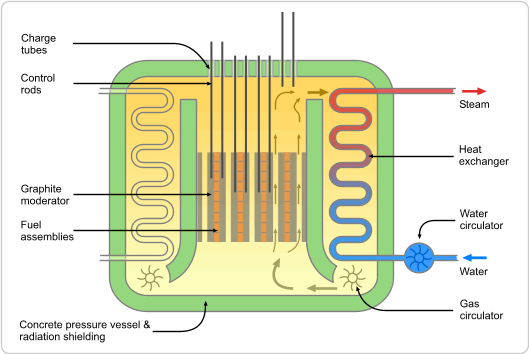


Design and main components
Key elements of the AGR concept include a solid graphite core that slows neutrons, channels that house the fuel assemblies, and a pressurised gaseous coolant. The graphite moderator (graphite) forms a robust structural matrix through which fuel channels are bored. Carbon dioxide (carbon dioxide) is circulated under pressure around fuel elements to remove heat and drive boilers that produce steam for turbines.
- Moderator: large graphite blocks with drilled channels;
- Fuel: enriched uranium oxide in cladding designed for high temperatures;
- Coolant: pumped carbon dioxide gas circulating between fuel and heat exchangers;
- Control and safety: control rods and shutdown systems that absorb neutrons and halt the chain reaction.
Operation, sites and role
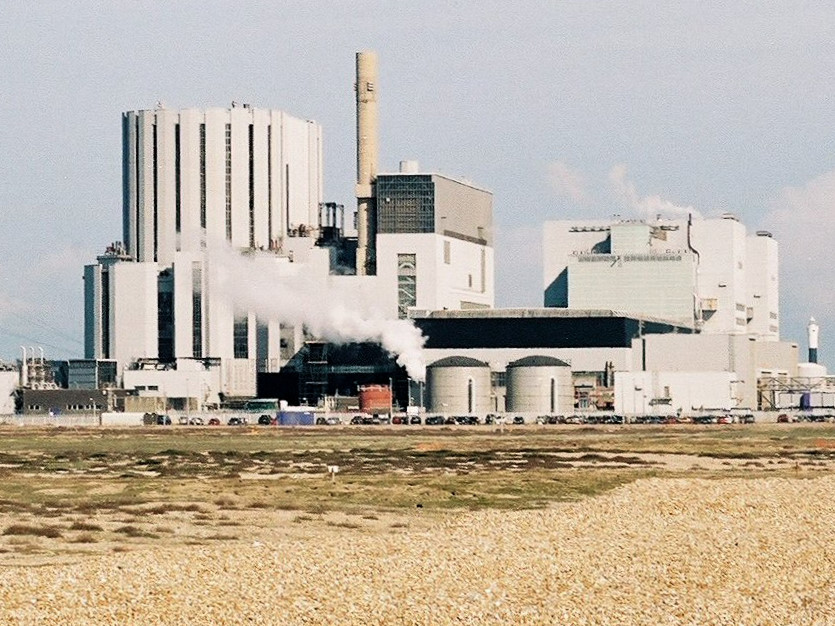
AGR plants were built at a number of UK coastal sites and formed a major part of the country's nuclear generation capacity from the late 20th century into the 21st. In operation they produce heat in the core that the CO2 carries to boilers; those boilers then generate steam that drives conventional turbines. The design aimed for higher coolant temperatures than earlier reactors to increase thermal efficiency and electricity output.
History and development
The AGR evolved from earlier British gas-cooled reactors, most immediately succeeding the Magnox design. Development emphasised higher outlet temperatures and improved fuel performance while retaining familiar graphite moderation. AGR construction and commissioning took place in the 1960s–1980s era, and many units operated for several decades. Over time, challenges such as ageing graphite, corrosion in metallic components, and the demands of inspection and maintenance influenced refurbishment and retirement decisions.
Distinctions, advantages and challenges
Compared with water-cooled reactors, AGRs use a gas coolant and a solid graphite moderator (moderator), which allows different fuel and structural approaches. Advantages include a capacity for relatively high thermal efficiency and retention of a passive moderator. Challenges include the need to manage graphite behaviour over long time spans, airtight gas circuits, and materials compatibility with carbon dioxide at elevated temperatures. Operational experience has informed later designs and the broader international understanding of graphite-moderated reactors.
Notable facts and legacy
AGR technology played a central role in the UK's nuclear electricity programme for decades and remains an important case study in the trade-offs of gas-cooled, graphite-moderated reactor design. The fleet's operational history has influenced policy decisions about plant life extension, decommissioning, and the selection of successor technologies for new-build programmes.
For further technical summaries and historical records see manufacturer and national energy authority pages: Advanced Gas-cooled Reactor details, general information on the UK's nuclear programme: United Kingdom nuclear overview, technical notes on graphite moderation: Graphite moderators, discussions of moderator function: neutron moderator resources, and material/coolant chemistry topics: carbon dioxide coolant.
Related articles
Author
AlegsaOnline.com Advanced Gas-cooled Reactor (AGR) — British graphite–CO2 nuclear design Leandro Alegsa
URL: https://en.alegsaonline.com/art/1099