
Neutron moderator: role, types, and importance in nuclear reactors
A neutron moderator is a material used to slow fast neutrons so they can sustain controlled fission in thermal reactors. This article explains how moderators work, common types, uses, and practical considerations.
Overview
A neutron moderator is a substance placed in or around a nuclear core to reduce the speed of free neutrons produced by fission. Slowed (thermal) neutrons have a higher probability of inducing further fission in certain fuel isotopes, so moderators are essential to maintain a controlled chain reaction in most commercial and research reactors. Moderators are a critical part of reactor design and operation in nuclear power stations and other facilities that rely on sustained thermal-neutron populations, including many classes of nuclear reactors.
Image gallery
2 Images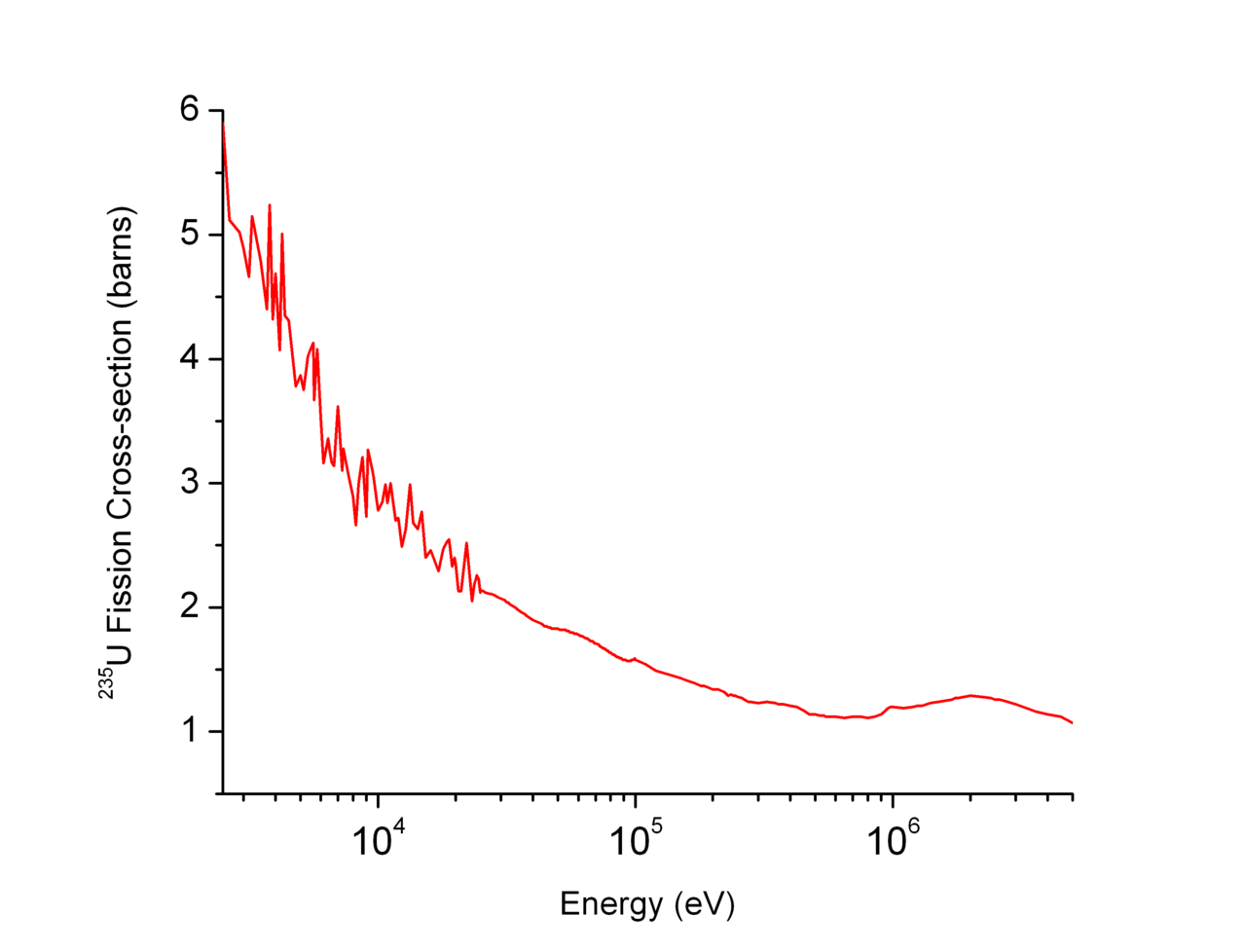

How moderators work and key properties
The principal mechanism for slowing neutrons is elastic scattering: neutrons collide with nuclei of the moderator and transfer kinetic energy. Efficient moderators tend to have nuclei with mass similar to a neutron’s mass so each collision transfers substantial energy. At the same time, good moderator materials absorb very few neutrons. Thus two properties are important: high scattering probability and low neutron absorption. Practical design also considers chemical, thermal and mechanical behavior under irradiation.
Common moderator materials
- Light water (ordinary H2O) — abundant and inexpensive; commonly used where the water also acts as coolant. See light water.
- Heavy water (D2O) — deuterium-bearing water with much lower neutron absorption, enabling use of natural or low-enriched fuel. See heavy water.
- Graphite — a solid carbon moderator used in several reactor designs for its low absorption and good high-temperature performance. See graphite.
- Other materials — solid beryllium, certain hydrocarbons and specialized plastics are used in research reactors or as localized moderators and reflectors.
Uses, design choices and operational considerations
Choice of moderator affects fuel economy, reactor size, and safety characteristics. For example, heavy-water moderated reactors can operate with less enriched fuel due to better neutron economy, while light-water reactors trade that advantage for simpler, cheaper systems. In some designs the moderator also serves as the coolant; in others a separate coolant circulates through or around a moderator medium.
Operationally, moderators influence reactivity feedback: changes in moderator temperature, density or chemistry can increase or decrease the reactor’s reactivity. Moderators can also suffer radiation damage or chemical changes (for example radiolysis of water or oxidation of graphite) that require monitoring and mitigation. Additives such as soluble boron or control rods are used to adjust reactivity when needed.
History and notable distinctions
Historically, early reactors experimented with graphite and heavy water to achieve criticality with natural uranium. Modern commercial reactors most often use light water because of its combined moderator/coolant role and economic advantages, while heavy-water and graphite designs remain important where fuel enrichment or specific performance characteristics are desired. Distinct from a moderator is a reflector, which returns escaping neutrons toward the core without substantial energy loss, and from neutron absorbers used explicitly for control.
Understanding moderator choice and behavior is fundamental to reactor engineering, affecting efficiency, safety margins and the fuel cycle. Further technical details and reactor examples can be found in specialized texts and reactor operator guides.
Related articles
Author
AlegsaOnline.com Neutron moderator: role, types, and importance in nuclear reactors Leandro Alegsa
URL: https://en.alegsaonline.com/art/69386