
Yankee Stadium (1923): the original 'House That Ruth Built'
The original Yankee Stadium in the Bronx opened in 1923, served as home to the New York Yankees until 2008, hosted many types of events, and was demolished in 2009 and replaced nearby.

Overview
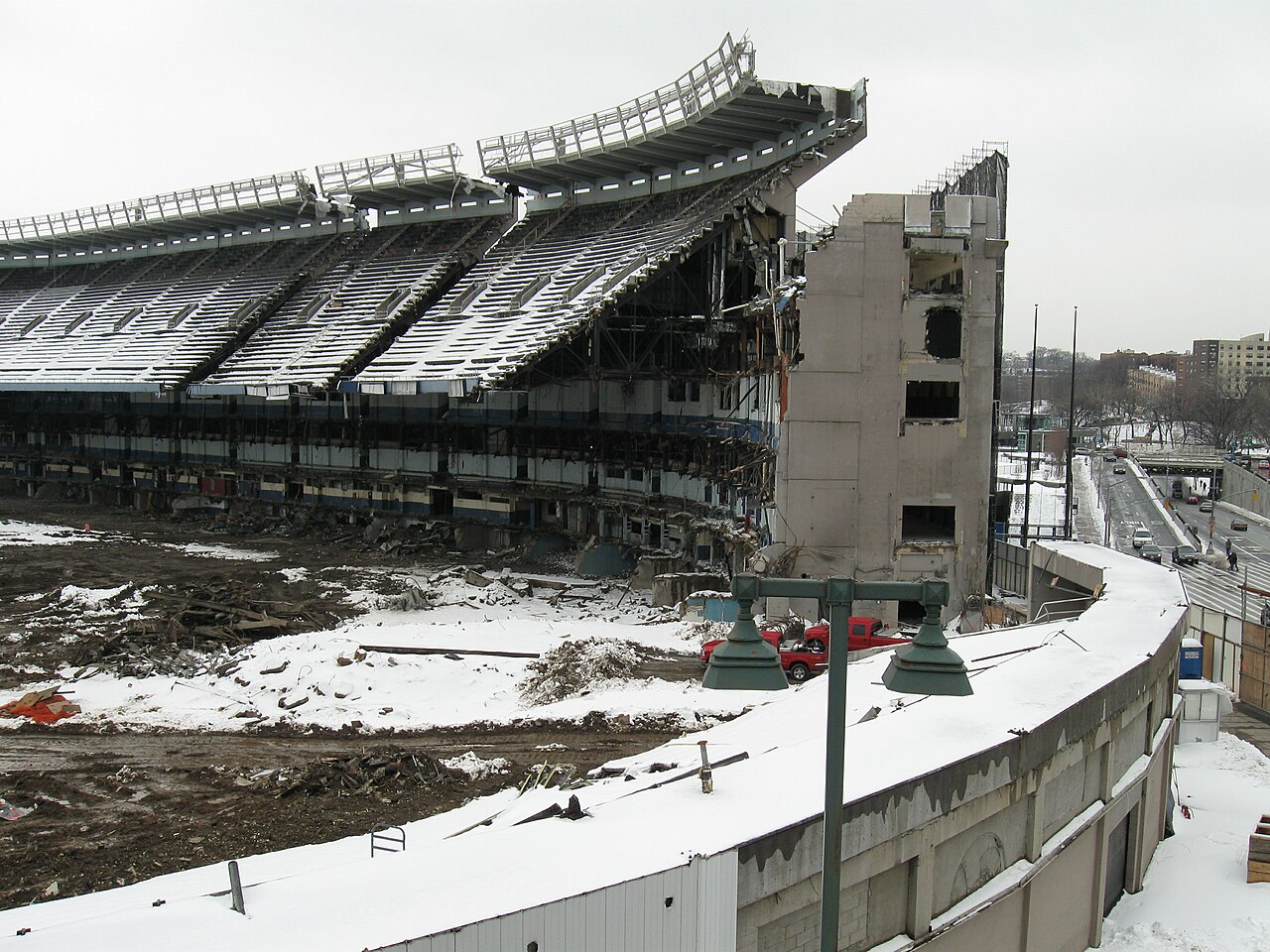
The original Yankee Stadium was a landmark baseball stadium in the Bronx borough of New York City, New York, in the United States. It opened in 1923 and became closely identified with Major League Baseball and the New York Yankees. Built during the rise of professional baseball as a mass spectator sport, the ballpark earned the nickname the "House that Ruth Built" in reference to Babe Ruth, who was a major drawing card in the stadium's early years. The Yankees played in the park through the 2008 season before moving to the adjacent new Yankee Stadium that opened in 2009. The original structure was demolished in early 2009.
Image gallery
10 Images






Design and features
The stadium combined monumental exterior elements with a multi-tiered interior that reflected large urban ballparks of the era. Its façade and upper-trim details gave the stadium a distinctive profile visible from surrounding streets. The playing field and seating evolved over the decades through renovations, but the complex retained a sense of scale: multiple decks of seating, suites and promenades, and areas dedicated to commemorating Yankee history such as Monument Park. During the 1970s the ballpark underwent a major reconstruction that altered much of the interior while preserving the stadium's role as a civic landmark.
History and development
Opened in the early 1920s, the stadium was constructed to accommodate the growing popularity of professional baseball and to give the Yankees a permanent home befitting a major franchise. Over time it hosted countless American League seasons, numerous World Series games, and regular-season milestones that shaped the team's national reputation. The complex saw several phases of renovation, including a substantial rebuilding in the mid-1970s that temporarily displaced the Yankees for two seasons. After more than eight decades of continuous use the team relocated to the new adjacent ballpark for the 2009 season, and the old structure was taken down shortly thereafter. Several elements and memorials from the original site were preserved or reinstalled in the replacement stadium and in nearby public displays.
Uses and notable events
Although principally known as the home of the Yankees, the stadium hosted a wide variety of sporting and cultural activity. It served as the home field for the New York Giants football team from the mid-1950s into the early 1970s and accommodated college football contests, international soccer matches, championship boxing bouts and large concerts. The venue also staged significant civic occasions, including a papal Mass and other mass gatherings. This versatility made the site more than a baseball park: it was a major urban arena for entertainment and public life in the city.
Legacy and distinctions
The original Yankee Stadium earned a reputation for American sports and popular culture. It witnessed the careers of many legendary players, became a frequent stage for World Series drama, and held an enduring place in the public imagination. The nickname connecting it to Babe Ruth underscored the stadium's early association with the home run era and celebrity athletes. After demolition, the replacement ballpark was built adjacent to the site; some commemorative features and memorabilia from the 1923 stadium were preserved to maintain continuity of franchise history. Today the original Yankee Stadium is remembered both for its long service as the home of the Yankees and for its role as a multifunctional civic space that reflected the changing face of professional sports in the 20th century.
Quick facts
- Opened: 1923 (original Yankee Stadium).
- Primary tenant: New York Yankees through 2008.
- Other uses: professional football, college football, soccer, boxing, concerts, and large public ceremonies.
- Replacement: new Yankee Stadium opened for the 2009 season; original structure demolished shortly after.
For more historical and architectural details about the stadium, its events, and its role in American sports culture, consult specialized histories and archives maintained by local institutions and sports historians.
Related articles
Author
AlegsaOnline.com Yankee Stadium (1923): the original 'House That Ruth Built' Leandro Alegsa
URL: https://en.alegsaonline.com/art/109620