
The World Almanac and Book of Facts
A long-running annual reference work compiling facts, statistics, and summaries on world events, sports, weather, biographies and more; first published in 1868 and widely used for research.
Overview
The World Almanac and Book of Facts is a concise annual reference volume that assembles verified facts, statistics and short articles across a wide spectrum of subjects. It is designed to provide quick, reliable information for students, journalists, researchers and general readers who need up-to-date data on current events, history, sports, government, geography and cultural topics.
Image gallery
2 Images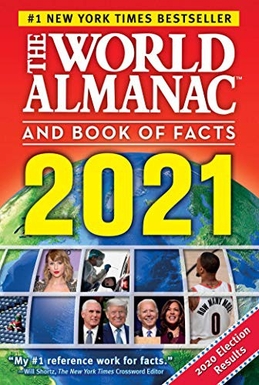

Contents and structure
Typical entries range from single-line data points to short topical summaries. The book commonly includes:
- Chronologies of significant events from the previous year
- Statistical tables for countries and regions (population, economy, government)
- Sports records and seasonal highlights
- Biographical sketches of notable public figures
- Practical data such as calendars, conversions and weather-related summaries
Its layout favors quick lookup rather than in-depth scholarship, so entries are compact and often cross-referenced for ease of use.
History and development
The volume traces its origins to the 19th century and has been produced in annual editions for most years since 1868, with a brief gap in the late 19th century. Over time it evolved from a purely print compendium to editions that reflect modern statistics-gathering practices and the needs of an international readership. Editors periodically revise categories, expand coverage of emerging topics, and update methods of verification to maintain authority.
Uses and cultural presence
As a ready reference, the almanac is used for classroom assignments, fact-checking, quick comparisons and background research. It is often found in libraries and on reporters' desks when concise, reliable data are required. The book has also appeared in popular culture; for example, it is shown being read by Rosie Perez in the film White Men Can't Jump. Entries include seasonal and weather summaries, which readers can cross-reference with related resources on weather.
Notable facts and distinctions
The World Almanac is notable for its longevity and for providing a periodic snapshot of global facts and trends. It aims for neutrality and factual accuracy, and while it does not replace specialized databases or scholarly monographs, it remains a practical starting point for many kinds of inquiry. Its yearly rhythm makes it useful for tracking changes over time and for assembling quick comparative tables without extensive research.
Finding and using editions
Readers seeking specific statistics should consult the most recent edition for current figures and older editions for historical comparison. Libraries and secondhand sellers often retain back issues, which can be valuable for researchers tracing year-to-year developments. For quick online cross-checking, users frequently consult specialized databases in addition to the almanac to verify or expand on concise entries.
Related articles
Author
AlegsaOnline.com The World Almanac and Book of Facts Leandro Alegsa
URL: https://en.alegsaonline.com/art/109070