
World Nuclear Industry Status Report — annual assessment of global nuclear power
An independent annual review of the global civil nuclear power sector, tracking reactors, generation shares, policy trends, economics and debates about nuclear energy.
Overview
The World Nuclear Industry Status Report (WNISR) is an annual, independent assessment of the civilian nuclear power sector worldwide. Compiled by analysts and researchers, the report presents a year-by-year stocktaking of reactors in operation, reactors under construction, retirements, net electrical capacity, annual generation and changes in national and global electricity mixes. It aims to provide a transparent, evidence-based picture of how nuclear power is performing and evolving across regions.
Image gallery
1 Image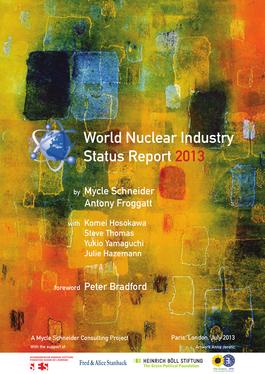
Scope and methodology
The report synthesizes information from publicly available government statistics, operator reports, industry publications and investigative reporting. Typical metrics include numbers of reactors operating or under construction, cumulative capacity, capacity factors, annual generation and the share of nuclear electricity in national and global mixes. WNISR also documents project delays, cancellations, lifetime extensions and decommissioning plans. Where data are uncertain, the report notes caveats and uses conservative assumptions to avoid overstating capacity or output.
Key findings and trends
Over recent decades the report has noted that the global share of electricity supplied by nuclear power declined in the 2000s as other sources, particularly renewables and some fossil fuels, expanded more rapidly. Recent editions report nuclear power supplying roughly 13 percent of world electricity and around 5.5 percent of primary energy. The report emphasises that these shares vary by country: some states continue to invest in new-build programmes while others pursue phase-outs, life extensions for ageing plants, or comprehensive decommissioning plans.
Regional patterns
WNISR highlights strong geographic variation. In parts of East Asia and certain other countries new construction has sustained or increased capacity, whereas several European countries and some others have implemented phase-out policies or postponed projects following safety and economic reassessments. The United States has seen a mix of life extensions and retirements, while developing economies may plan nuclear projects as part of long-term energy strategies.
Policy, economics and safety considerations
The report is often used to frame debates about the economics of new reactors versus alternatives, project cost and schedule risk, and the role of nuclear power in decarbonization strategies. It discusses safety, waste management and the implications of ageing fleets. WNISR does not itself prescribe policy but provides evidence that policy makers and stakeholders can use when weighing trade-offs between investment, reliability, safety and emissions goals.
Uses, audiences and limitations
Policy makers, utilities, investors, researchers, journalists and civil society groups use WNISR to inform energy planning, climate analyses and public debate. The report is a secondary source that compiles and interprets primary data; readers should consider it alongside other technical studies, industry reports and national statistics. Methodological differences between sources can lead to different estimates for the same indicators, so WNISR's value lies in its independent and systematic approach to tracking trends.
Access and further information
Full issues, data tables and supplementary materials are published annually by the report team and are made available through the report's website. For the most recent edition and archived reports, see the publisher's page at World Nuclear Industry Status Report.
Critical reception
WNISR is widely cited in public debates and academic work for its thorough compilation of operational and project-level information. Supporters value its independent perspective and long time series, while critics sometimes challenge particular interpretations or call for different methodological choices. As with any comprehensive review, its findings are most useful when considered alongside technical, economic and national studies.
Questions and answers
Q: What is the World Nuclear Industry Status Report?
A: The World Nuclear Industry Status Report is a yearly report about the global challenges facing the nuclear power industry.
Q: What do the reports show about the share of nuclear-generated electricity in global energy production?
A: The reports show that the share of nuclear-generated electricity in the overall global energy production has decreased in the 2000s.
Q: What percentage of the world's electricity generation does nuclear power account for?
A: Nuclear power now accounts for about 13 percent of the world’s electricity generation.
Q: What percentage of primary energy does nuclear power account for?
A: Nuclear power accounts for about 5.5 percent of primary energy.
Q: Is the share of nuclear-generated electricity increasing or decreasing?
A: The share of nuclear-generated electricity is decreasing.
Q: What are the global challenges facing the nuclear power industry?
A: The World Nuclear Industry Status Report is a yearly report about the global challenges facing the nuclear power industry, but the text does not provide specific information about those challenges.
Q: How often is the World Nuclear Industry Status Report published?
A: The World Nuclear Industry Status Report is published yearly.
Related articles
Author
AlegsaOnline.com World Nuclear Industry Status Report — annual assessment of global nuclear power Leandro Alegsa
URL: https://en.alegsaonline.com/art/109099
Sources
- thebulletin.org : 2008 world nuclear industry status report: Western Europe
- worldwatch.org : "World Nuclear Industry Status Report 2010-2011"