
West Fertilizer Plant explosion (April 2013)
A powerful industrial blast in West, Texas in April 2013 when stored ammonium nitrate detonated after a fire, killing at least 14 people, injuring many and destroying much of the town.
Overview
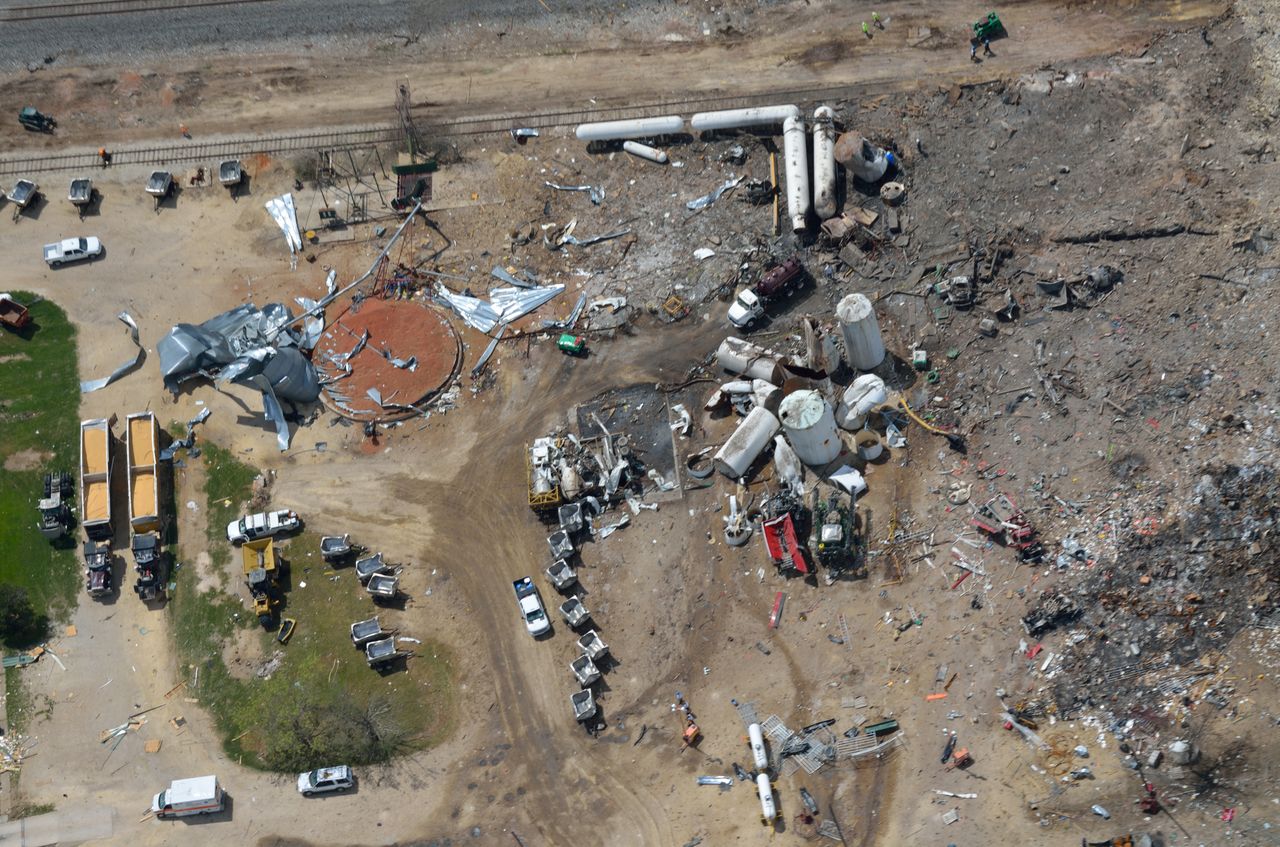
On the evening of April 17, 2013, a fire at a fertilizer storage and distribution facility in West, Texas, near Waco, culminated in a massive explosion just before 7:50 p.m. CDT. The detonation leveled nearby buildings, damaged homes and public infrastructure, and produced a large number of casualties. The incident occurred in the United States and became one of the most severe industrial accidents involving fertilizer in recent U.S. history.
Image gallery
5 Images


Cause and investigations
The blast was linked to a large stockpile of ammonium nitrate, a common agricultural fertilizer that can be highly explosive under certain conditions. According to official probes and public reporting, a fire preceded the explosion; investigators concluded the stored ammonium nitrate detonated, but the exact origin of the initial fire was not definitively determined publicly. Multiple federal and state agencies examined the site to establish the sequence of events and contributing factors.
Damage and human impact
The explosion caused extensive destruction across a residential neighborhood and damaged public buildings including a fire station and an apartment complex. At least 14 people were killed and over 160 were injured. Casualties included local residents and first responders who were on the scene attempting to control the blaze. The blast also dispersed debris across a wide area and generated an enormous cleanup and rebuilding task for the small community.
Aftermath, recovery and regulation
In the months and years after the incident, cleanup, demolition and support for victims were major priorities. The accident spurred reviews of how ammonium nitrate and other oxidizers are stored, labeled and regulated. Critics highlighted gaps in oversight, emergency planning, and local permitting practices. The event renewed attention to safety rules for chemical storage and for protecting communities located near industrial facilities.
What ammonium nitrate is and why it is hazardous
Ammonium nitrate is widely used in agriculture as a nitrogen fertilizer. Under normal agricultural use it is safe, but when confined, contaminated, or heated during a fire it can decompose violently and explode. The West explosion is often cited in discussions of industrial chemical risks, land use planning, and the need for clear hazard communication between facilities and emergency services.
Notable lessons and broader significance
- Emergency response to industrial fires requires information about stored materials and their hazards.
- Storage practices, quantity limits, and building proximity can change the scale of an industrial disaster.
- The West explosion prompted policy debates about inspection authority, reporting requirements and community right-to-know measures.
The West Fertilizer Plant explosion remains a reference case for emergency management, industrial safety, and community resilience planning. Further reading and official reports provide detailed technical analyses and recommendations for preventing similar tragedies.
Related articles
Author
AlegsaOnline.com West Fertilizer Plant explosion (April 2013) Leandro Alegsa
URL: https://en.alegsaonline.com/art/107369
Sources
- huffingtonpost.com : "Fertilizer Plant Explosion In Texas Levels Buildings, Claims As Many As 15 Lives"
- dallasnews.com : "Investigators blame ammonium nitrate in massive West explosion - The Dallas Morning News"
- reuters.com : "Ammonium nitrate was trigger for Texas blast, state agency says"