
Waco, Texas
Waco is a central Texas city in McLennan County known for Baylor University, the Brazos River, historic sites, and a mix of education, manufacturing and tourism. Population roughly 126,000 (estimate).

Waco is a city in McLennan County in the heart of central Texas. It serves as a regional center for education, health care and light industry. The city has an estimated population of about 126,000 residents and lies along the Brazos River near the Interstate 35 corridor between Austin and Dallas.
Image gallery
10 Images


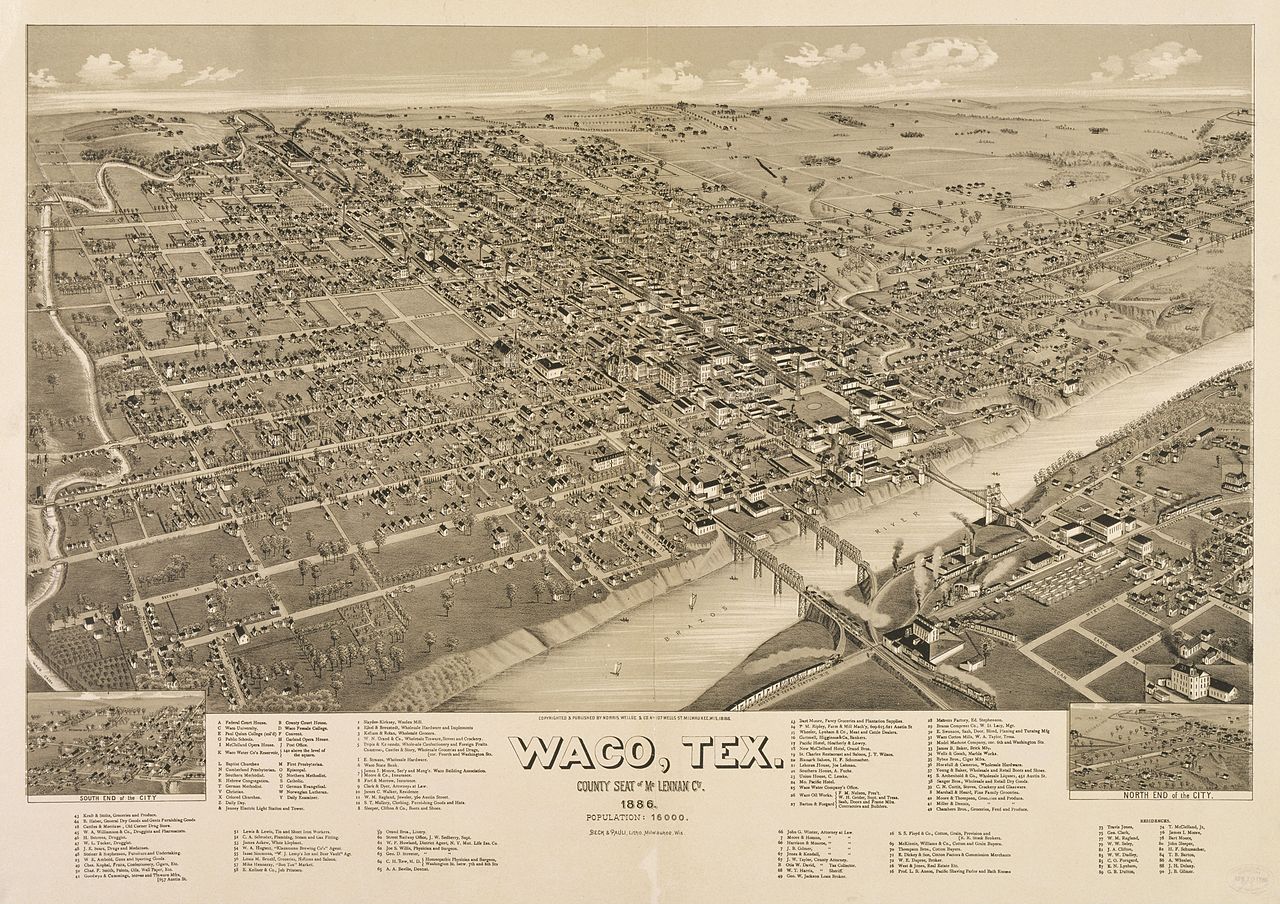


Geography and neighborhoods
Waco's urban area combines a historic downtown, residential neighborhoods and green corridors along the Brazos. Notable districts include the Baylor University campus area, the renovated downtown with cultural venues, and suburban growth to the north and west. The Brazos and nearby parks provide popular outdoor recreation.
History and development
Settled in the 19th century, Waco grew with river commerce, rail connections and cotton-related industry. Over time it diversified into education and manufacturing. The city is also known for events that drew national attention in the late 20th century; its past includes both civic milestones and controversial incidents that shaped later policies and community life.
Economy, institutions and culture
Higher education is a major local employer—most prominently Baylor University—alongside regional hospitals, manufacturing plants and retail. In recent years tourism has expanded, helped by cultural investments and attractions that draw visitors from across the state and beyond.
Attractions and notable sites
- Baylor University and university museums and athletic events
- Magnolia Market and revitalized downtown shopping and dining
- Cameron Park, Cameron Park Zoo and riverside trails
- Waco Mammoth National Monument and other historic sites
- Historic Suspension Bridge and the Texas Ranger Hall of Fame
Waco functions as a regional hub for central Texas, balancing historic preservation with economic development and tourism. Its location on major transportation routes keeps it connected to larger metropolitan areas while maintaining a distinct local identity.
Related articles
Author
AlegsaOnline.com Waco, Texas Leandro Alegsa
URL: https://en.alegsaonline.com/art/106089
Sources
- city-data.com : Waco at City Data
- wacomammoth.org : Waco Mammoth Site