
Welcome to Paradise (Green Day song)
A concise encyclopedia entry on Green Day's 'Welcome to Paradise', covering its releases on Kerplunk and Dookie, musical character, background, and cultural impact.
"Welcome to Paradise" is a song by the American rock band Green Day. It first appeared on their independent second album, Kerplunk (1992), and was later re-recorded for their major-label breakthrough, Dookie (1994). The song is widely associated with the band's rise in the 1990s and is often cited as an early example of the melodic, high-energy style that helped popularize modern punk rock.
Image gallery
1 Image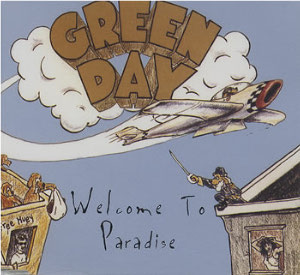
Background and recording
The track was written in the period when the band was transitioning from local punk scenes to wider exposure. The Kerplunk version was recorded on an independent budget and has a rawer production. For Dookie the band revisited the arrangement with a more polished studio approach, producing a faster, punchier take intended for radio and video outlets. The re-recorded version played a central role in introducing the group to mainstream alternative-rock audiences.
Musical style and lyrics
- Instrumentation: driven by distorted guitars, a steady bass line, and brisk drumming that emphasize forward momentum rather than intricate solos.
- Structure: compact verse–chorus form with a memorable hook and energetic bridge, typical of early 1990s pop-punk songwriting.
- Lyrical theme: expresses a mix of defiance, adaptation, and sardonic observation about moving into a new, rough environment and making it work.
These musical and lyrical elements combine to create anthemic choruses and an immediacy that works well in live performance. The song showcases the band's talent for pairing catchy melodies with punk-informed urgency.
Reception and legacy
Although the Kerplunk recording circulated mainly in underground scenes, the Dookie version received broader radio and television exposure and helped cement Green Day's commercial breakthrough. "Welcome to Paradise" has remained a staple of the group's concert setlists and has appeared on compilations and live albums, underlining its enduring popularity among fans. It is often referenced when discussing the band's role in bringing punk-influenced music to a mainstream audience in the 1990s.
Notable distinctions include its rare status as a song recorded for both an independent release and a later, higher-profile album, illustrating how material from a band's early catalog can be reshaped during a pivotal career moment. For more on the band, the genre, and the early albums mentioned here, see sources linked above and specialized music histories.
Related articles
Author
AlegsaOnline.com Welcome to Paradise (Green Day song) Leandro Alegsa
URL: https://en.alegsaonline.com/art/107178