
We Can't Stop (song)
2013 pop–R&B single by Miley Cyrus from the Bangerz era, noted for its party-themed lyrics, commercial success, provocative video and a widely discussed MTV VMA performance.
We Can't Stop is a 2013 single recorded by Miley Cyrus. Issued as the lead release tied to her Bangerz-era image shift, the song presented a looser pop and R&B sound and became one of the artist's most commercially successful and talked-about singles. It combined a chant-like chorus with minimalist, bass-driven production and a focus on nightlife and party culture.
Image gallery
3 Images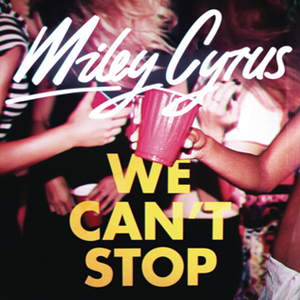


Background and production
The song marked a stylistic departure from the artist's earlier work and was produced with contemporary hip-hop and R&B influences in mind. Production was led by prominent contemporary producers and collaborators who helped craft the song's repetitive hook and stripped-back instrumental palette. The track was released amid extensive media attention for the wider Bangerz project and its collaborators, which included a mix of pop and urban producers and songwriters credited as contributing to the album and single, often discussed collectively as the songwriting and production team.
Composition and lyrical themes
Musically, the song blends pop structures with R&B rhythms and hip-hop-tinged beats. Its arrangement favors a steady groove and repetitive melodic phrases, creating a sing-along chorus that contrasts with verses containing more suggestive references. Lyrically, the song adopts a party-oriented perspective, speaking in the first person about late-night socializing, carefree behavior and recreational substance use. Critics highlighted the tension between its earworm chorus and the more provocative elements of the verses.
Release, promotion and commercial performance
Released in mid-2013 as the lead single, the song was promoted across radio, digital platforms and televised appearances. It sold strongly in several major markets, moving in excess of two million units in the United States, and reached number one on the UK Singles Chart. In North America it reached the top three in multiple countries, including a peak within the top three on Canadian charts reported by industry outlets (Canada chart reporting), and it reached the top tiers of the US singles chart.
Music video
The official music video premiered in June 2013 and employed a surreal, party-filled aesthetic emphasizing youth culture, visual excess and symbolic props. It featured stylized costume changes, choreographed sequences and scenes designed to provoke discussion about themes of freedom and excess. Critical reaction to the video was mixed: some commentators praised its bold visual choices and cinematic staging, while others criticized it as relying on shock value and questioned its artistic intent. For broader commentary on the video's reception and media coverage see general coverage and subsequent critical reaction.
Live performances and controversy
One of the most widely discussed live moments for the song occurred at the 2013 MTV Video Music Awards, when the singer performed a medley of "We Can't Stop" with Robin Thicke and his then-current single "Blurred Lines". The staging and choreography generated extensive media coverage and public debate about the boundaries of pop performance, with commentators and viewers weighing questions of artistic expression, taste and sensationalism. The televised appearance amplified public conversation about the artist's deliberate rebranding and the role of provocative imagery in pop promotion.
Critical reception and legacy
Critical responses to the single were varied. Reviewers commended its catchy chorus and contemporary production, while others found its lyrical content and visual presentation controversial. The song is often cited as a defining moment in the artist's early-2010s transformation and continues to be referenced in discussions of pop music, celebrity reinvention and how visual media can reshape a public image. Over time it has remained a notable example of how a single, its music video and a high-profile live performance can combine to produce both commercial success and cultural debate.
Formats and credits
The single was issued in multiple digital and promotional formats and credited to a team of writers and producers who worked on the album and single. Specific credits and track listings vary by release; for authoritative details consult official releases and liner notes provided by the record label and artist documentation.
- Primary artist and performer: Miley Cyrus
- Associated album project: Bangerz
- Notable live appearance: 2013 MTV VMAs medley with Robin Thicke and "Blurred Lines"
- Major markets: US sales, UK chart, Canada
- Further reading and media: video coverage, reviews and critical reaction, production credits
Related articles
Author
AlegsaOnline.com We Can't Stop (song) Leandro Alegsa
URL: https://en.alegsaonline.com/art/107012