
Way Down East (1920 film)
Silent melodrama directed by D. W. Griffith starring Lillian Gish and Richard Barthelmess, famed for its ice-river rescue scene and status as one of the highest-grossing silent films.
Overview
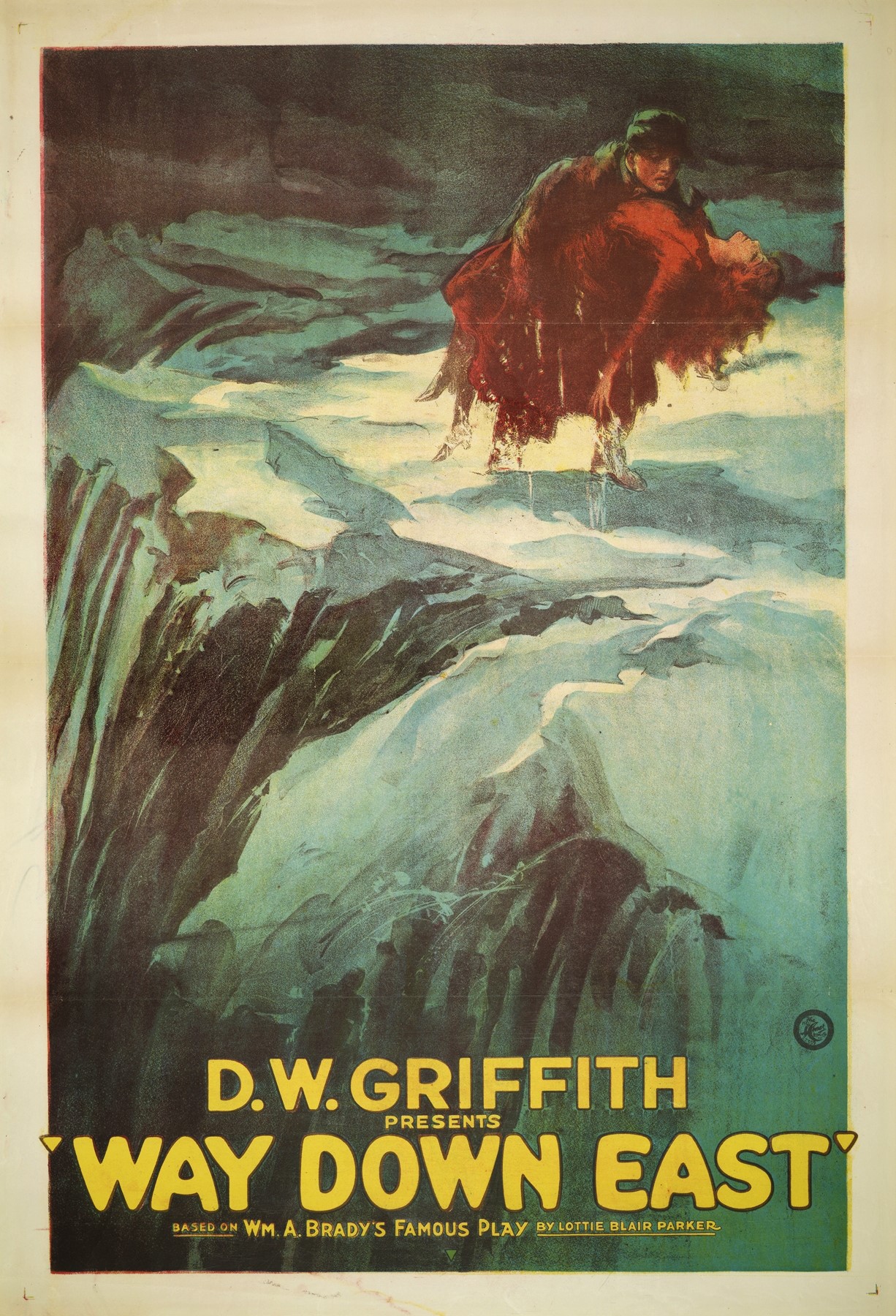
Way Down East is a 1920 silent motion picture directed by D. W. Griffith. Adapted from an earlier stage melodrama by Lottie Blair Parker, the film blends rural settings, moral conflict and romantic melodrama. Its best-known sequence features a dramatic rescue on an icy river, a scene that became emblematic of the silent-era spectacle and helped the film reach remarkable box-office success.
Image gallery
4 Images


Plot and themes
The narrative follows a young woman whose life is upended by social judgment and romantic misfortune; the story explores themes of innocence, social hypocrisy and redemption. The melodramatic structure focuses on character emotion and visual storytelling rather than dialogue, relying on expressive performances to convey complex moral dilemmas to contemporary audiences.
Cast and performances
The film stars Lillian Gish as the heroine, whose portrayal is often cited for its emotional clarity and physical commitment, and Richard Barthelmess as the male lead. Gish's work in the climactic rescue sequence — a physically demanding, tightly edited series of shots — remains one of the most frequently discussed performances of early American cinema.
Production and style
Produced during the late silent era, the film showcases techniques characteristic of D. W. Griffith’s filmmaking: large-scale staging, careful composition, and an emphasis on editing to build tension. Some sequences were photographed using an early color process, producing brief color effects in an otherwise black-and-white picture. Outdoor location photography and practical methods were used for the perilous ice-river sequence, contributing to its realism and audience impact.
Reception and legacy
At the time of its release the picture was a major commercial success and has been reported as one of the highest-grossing silent films. Critics and historians note its combination of mass appeal and technical showmanship, and the ice-rescue remains a frequently cited example in studies of silent-era stunts and audience spectacle. Over the years, restorations and retrospectives have kept the film in the view of scholars and silent-film enthusiasts.
Notable facts
- Based on a popular 19th-century play by Lottie Blair Parker.
- Famous for its climactic sequence on an icy river, staged with practical effects.
- Regarded as a high-grossing example of mainstream silent-era entertainment.
- Features moments filmed with an early Technicolor-like process, used sparingly.
Related articles
Author
AlegsaOnline.com Way Down East (1920 film) Leandro Alegsa
URL: https://en.alegsaonline.com/art/106946
Sources
- filmsite.org : Dirks, Tim in The Greatest Films, film review, 1996-2008
- silentera.com : SilentEra entry
- filmcritic.com : Brenner, Paul
- sover.net : Schwartz, Dennis. Ozus' World Movie Reviews, May 27, 2007