
WarGames (1983 film) — overview, plot, production, and legacy
1983 techno-thriller about a teenage hacker who accesses a military computer, risking nuclear escalation; directed by John Badham and starring Matthew Broderick and Ally Sheedy.
Overview
WarGames is a 1983 American science fiction techno-thriller that combines Cold War tension, early personal-computer culture, and teen coming-of-age elements. Directed by John Badham and featuring Matthew Broderick and Ally Sheedy, the film follows a high-school student whose curiosity about computer systems inadvertently triggers events at a U.S. military command center. The movie was a commercial success and earned three Academy Award nominations, helping to popularize computing and cybersecurity themes in mainstream entertainment.
Image gallery
3 Images

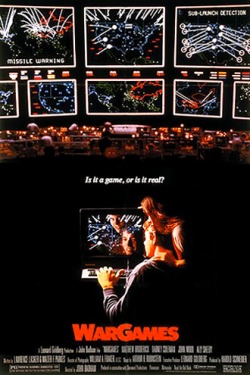
Premise and main characters
The story centers on David Lightman, a bright but bored teenager who enjoys exploring computer systems. While probing what he believes to be a game company's network, David connects to an automated defense simulation at NORAD. Mistaking its simulation for a game, he engages the system—later identified as WOPR (War Operation Plan Response)—and begins what appears to be a sequence of war simulations that could be taken as real by military decision makers. Ally Sheedy plays his friend Jennifer, who becomes involved in trying to stop the escalating crisis.
Production and release
John Badham directed the film with a script that drew on contemporary concerns over nuclear strategy, automation, and the newly visible world of hobbyist computing. The performances of the young leads and a supporting cast gave the film both teen energy and institutional credibility. For contemporary viewers the technical details were striking and helped bring discussions of hacking and network security into public conversation. For production notes and cast lists, see production information and full cast credits.
Reception and cultural impact
Upon release WarGames was widely reviewed and became influential beyond cinema: it raised public awareness of computer security risks and the potential consequences of automated military systems. The film is often cited in discussions of early hacker culture and is credited with stimulating debates among policymakers, technologists, and educators about access controls and safety protocols. For analysis and retrospectives consult critical essays and historical perspectives.
Themes and notable elements
- Cold War anxiety: The film uses nuclear war as a backdrop to explore miscommunication and the dangers of delegated decision-making.
- Human versus machine: A central theme is whether automated systems can be trusted to make life-or-death decisions.
- Popularizing computing: WarGames helped bring the idea of hacking into public imagination, complete with the now-iconic line "Shall we play a game?".
- Influence on policy: The film prompted greater attention to computer security among lawmakers and the military; for related hearings and policy responses see policy coverage and legislative archives.
Legacy and further resources
Decades after its release WarGames remains a reference point for discussions about cybersecurity, artificial intelligence in defense, and the cultural image of the hacker. It has inspired documentaries, articles, and classroom conversations about ethics and technology. For further reading and archival material see archival material, academic analyses, and fan and film resources.
Questions and answers
Q: What is WarGames?
A: WarGames is a 1983 American science fiction thriller teen movie directed by John Badham, starring Matthew Broderick and Ally Sheedy.
Q: Who is the main character in WarGames?
A: The main character in WarGames is a computer hacker named David Lightman, played by Matthew Broderick.
Q: What does David Lightman do in the movie?
A: David Lightman breaks into a NORAD war games simulation computer that he thinks is really the computer for a computer game company, which sets off a series of events that could start World War III.
Q: Who directed WarGames?
A: WarGames was directed by John Badham.
Q: Was WarGames a success at the box office?
A: Yes, WarGames was a big hit at the box office.
Q: Did WarGames receive any Academy Award nominations?
A: Yes, WarGames was nominated for three Academy Awards.
Q: Is WarGames still popular today?
A: Yes, WarGames continues to be popular.
Related articles
Author
AlegsaOnline.com WarGames (1983 film) — overview, plot, production, and legacy Leandro Alegsa
URL: https://en.alegsaonline.com/art/106535