
Warabimochi: Japanese jelly-like confection (蕨餅)
Warabimochi is a soft, jelly-like Japanese confection traditionally made from bracken starch. Served with kinako or syrup, it is a seasonal sweet with distinct texture and regional variations.
Warabimochi (蕨餅) is a traditional Japanese confection notable for its soft, springy, translucent texture. Originally its name referred to a sweet made from starch extracted from the roots of the warabi (bracken) fern, combined with sugar and water. Today the product called warabimochi can be made from several starches but retains the same chewy, gelatinous character that distinguishes it from rice-based mochi.
Image gallery
7 Images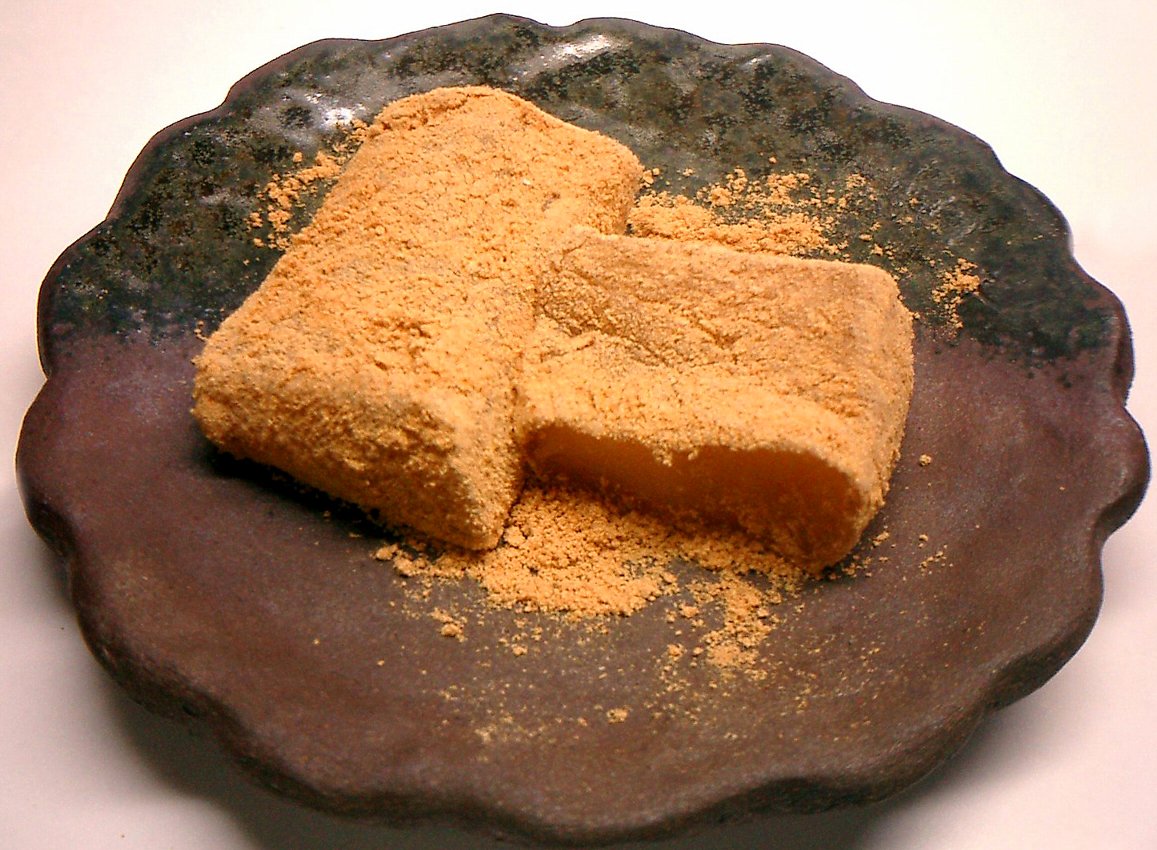


Characteristics and production
Warabimochi is prepared by dissolving starch and sugar in water, heating the mixture until it thickens, then cooling it to set into a tender, slightly bouncy gel. Unlike glutinous rice mochi, it has a lighter, more gelatinous mouthfeel. The classic appearance is pale and slightly translucent; the texture is often described as smooth, melt-in-the-mouth and slippery rather than sticky.
Serving, accompaniments and uses
This confection is commonly served chilled in summer and dusted with roasted soybean flour called kinako or drizzled with dark sugar syrup (kuromitsu). It also appears as part of anmitsu and other dessert plates. Street stalls and tea houses may present warabimochi on skewers or in small bowls. For more general context see confection or typical references to sweet foods, and for the common topping see kinako.
- Typical accompaniments: kinako, kuromitsu, matcha or red bean paste.
- Textural notes: jelly-like, springy, non-sticky.
- Common presentation: chilled, skewered, or in dessert bowls.
Regional variations and recipes differ: some areas prize authentic bracken starch for its subtle flavor and rarity, while many commercial versions use potato, tapioca or corn starch as economical substitutes. Authentic warabimochi made from true warabi starch is relatively uncommon and regarded as a specialty.
Because of its moisture content and delicate texture, warabimochi is best eaten fresh; refrigeration can change its consistency. It remains a popular seasonal sweet and a distinctive part of Japan's wide range of wagashi (traditional confections), appreciated for its delicate taste and unique mouthfeel.
Related articles
Author
AlegsaOnline.com Warabimochi: Japanese jelly-like confection (蕨餅) Leandro Alegsa
URL: https://en.alegsaonline.com/art/106512
Sources
- books.google.com : The Japan Journals: 1947-2004, p. 66