
Walloon language
A Romance language of the oïl group, spoken mainly in Wallonia (Belgium) and in some Belgian-American communities; notable for regional varieties, its own orthographies, and cultural literature.
Overview
Walloon is a Romance language historically spoken in the southern, French-speaking part of Belgium. Linguists place it within the group of oïl languages, alongside modern French and neighboring vernaculars such as Picard and Norman. It developed from the Gallo‑Romance branch of Vulgar Latin and exists as a set of regional varieties rather than a single uniform standard.
Image gallery
7 Images


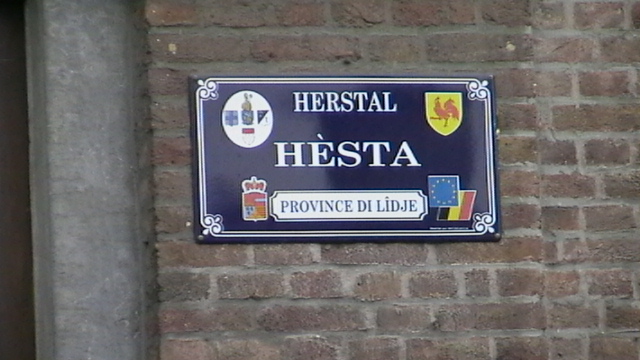

Characteristics
Walloon preserves many phonological and lexical traits distinct from standard French. It has its own vowel and consonant developments, idiomatic vocabulary, and traditional morphosyntactic patterns. Several orthographic conventions are in use, most famously systems derived from the work of local scholars that attempt to render local pronunciations in writing.
- Regional varieties named for provinces and towns (for example Liège and Namur).
- Conservative vocabulary and expressions absent from standard French.
- Literary and oral traditions including songs, tales, and theatre.
Walloon is primarily spoken in Wallonia in Belgium, and immigrant communities established speakers in parts of Wisconsin in the United States. Estimates of the number of speakers vary; while active daily use has declined since the 19th and 20th centuries because of schooling and administration in French, many people retain passive knowledge or cultural familiarity.
History and modern status
From medieval times Walloon formed part of the oïl continuum across northern France and Belgium. Industrialization, state education and mass media favored French, reducing intergenerational transmission of Walloon. During the 20th and 21st centuries, local associations, writers and broadcasters have promoted documentation, teaching and cultural projects to maintain the language and its traditions.
Today Walloon is regarded by scholars as a distinct Romance language with important regional identity value. Its study sheds light on Gallo‑Romance history, regional literature and the dynamics between minority languages and national standards.
Related articles
Author
AlegsaOnline.com Walloon language Leandro Alegsa
URL: https://en.alegsaonline.com/art/106306