
Violence in Ice Hockey: History, Rules, and Ongoing Debate
An overview of physical violence in ice hockey: common forms, historical development, rule changes, player safety, and cultural arguments for and against fighting and dangerous play.
Overview
Physical contact is an inherent part of ice hockey, but when contact crosses the line into aggressive or intentionally harmful conduct it is described as violence. This article examines how such behaviours appear at professional, amateur and youth levels, how leagues and authorities respond, and why the topic remains controversial among players, officials and fans.
Image gallery
6 Images

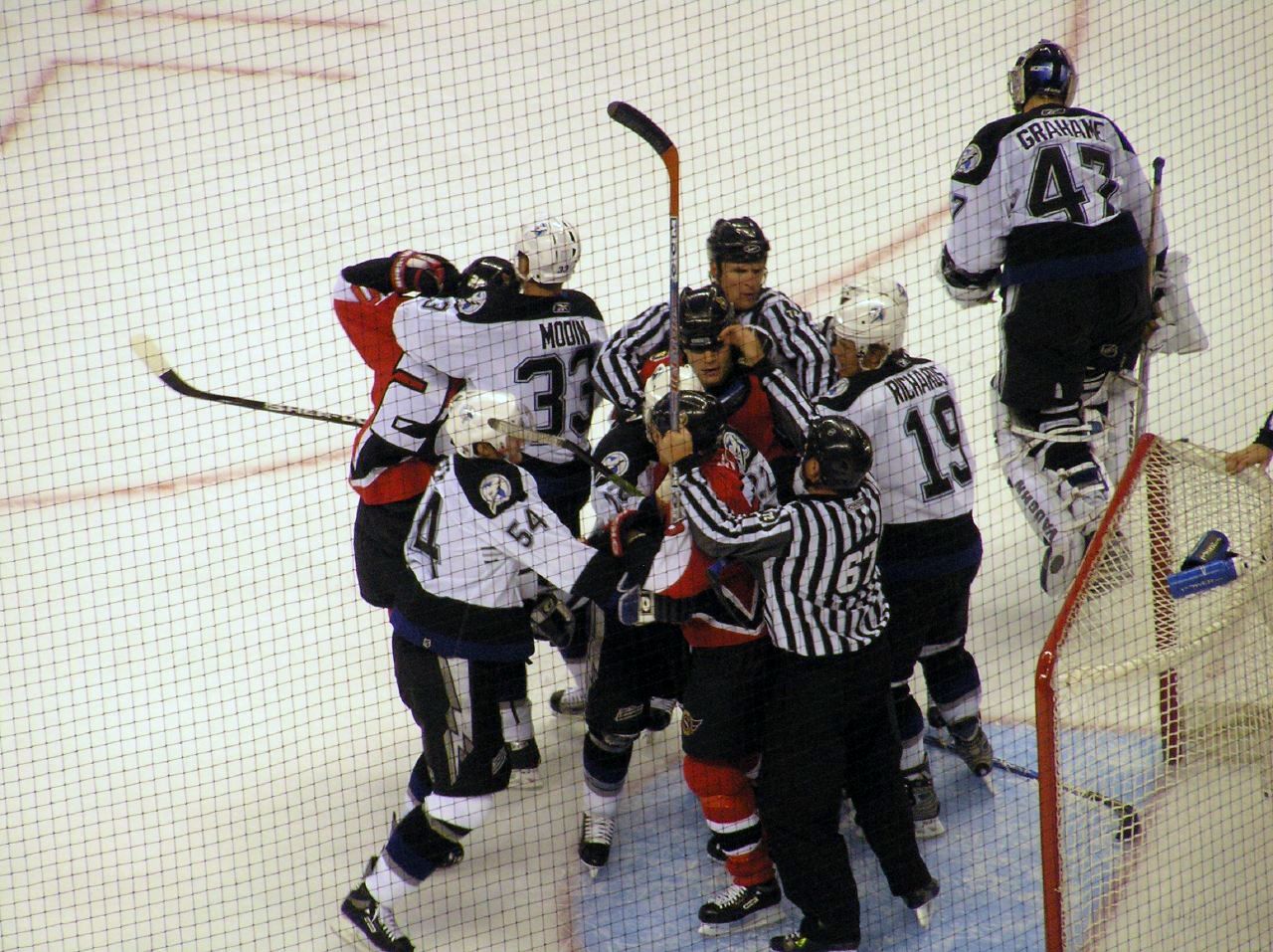


Common forms and characteristics
Violent acts in hockey range from legal body checks to deliberate infractions. Typical examples include:
- Fighting between players, sometimes resulting in major penalties;
- Checks from behind or boarding that send a player into the boards;
- High-sticking, slashing, and spearing with sticks used as weapons;
- Bench-clearing altercations and dangerous charging incidents.
Penalties, misconducts and suspensions are the usual sporting responses; in some cases criminal or civil consequences have been considered when actions cause serious injury.
History and development
As the sport grew from informal local games to organized leagues, rough play was more common and protective equipment was minimal. Serious injuries did occur in the early decades of organized hockey, and a small number of fatal incidents in the distant past prompted public concern. Over time, changing public attitudes, improved gear and formalized rules reduced many of the most dangerous practices.
Safety measures and rule changes
Leagues and governing bodies have adopted multiple measures to limit violence and protect players: mandatory helmets and visors at many levels, stricter penalties for hits to the head, concussion protocols, automatic reviews and longer suspensions for repeat offenders. Youth hockey typically emphasizes elimination of fighting and tighter enforcement to protect developing athletes.
Debate and distinctions
Supporters of permitting limited fighting argue it can police on-ice behavior and is part of hockey tradition; critics counter that it increases injury risk and has little place in modern sport. Regional and league differences persist: some professional leagues tolerate more physicality, while many European and international competitions enforce stricter non-violence norms. Research into brain injury and long-term health outcomes continues to influence rulemaking and public opinion.
Key takeaways
- Physical contact is central to hockey, but dangerous conduct is regulated.
- Historical incidents spurred equipment improvements and rule evolution.
- Contemporary trends favor player safety, concussion awareness and reduced fighting.
Related articles
Author
AlegsaOnline.com Violence in Ice Hockey: History, Rules, and Ongoing Debate Leandro Alegsa
URL: https://en.alegsaonline.com/art/105461