
Virgin Racing — Formula One team (entry and evolution)
Virgin Racing was a Formula One entrant launched in 2009 under Virgin sponsorship; it debuted in 2010 and later became Marussia F1 after a change of ownership and rebranding.
Overview
Virgin Racing was the name used by a new Formula One team that entered the FIA World Championship for the 2010 season. Backed at launch by the Virgin Group, the outfit was one of several new entries accepted to expand the grid. The team's public identity combined commercial branding with a small, independent engineering programme aimed at establishing a permanent presence in top‑level open‑wheel racing.
Image gallery
4 Images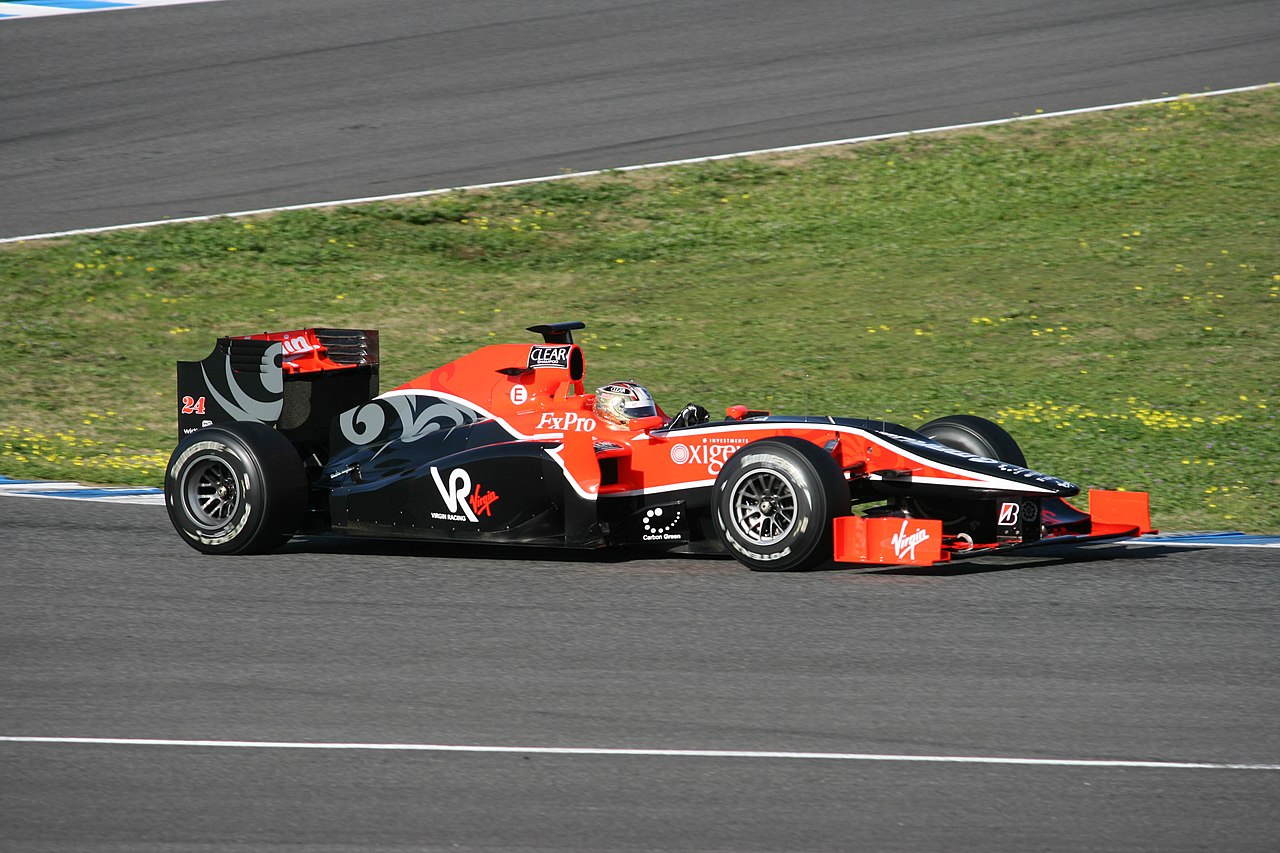


Origins and naming
The entry originally applied under the working name Manor Grand Prix and was formally accepted to join the sport in 2009. Later that year the team revealed a title partnership with the Virgin Group and adopted the Virgin Racing name for its first season. The partnership drew attention because of the high profile of Richard Branson and the consumer brand; the deal placed Virgin Group branding prominently on the team and its cars. The team's early public launches and technical briefings took place in late 2009 ahead of its 2010 debut.
Technical approach and organisation
As a new, limited‑budget entrant, Virgin Racing pursued unconventional cost‑efficient methods in car development rather than replicating the large factory programmes of established teams. The team emphasised digital design and computational fluid dynamics (CFD) as a central tool for aerodynamic development and attempted to minimise expensive wind tunnel time. This approach attracted interest as an alternative route for smaller teams, though it also carried performance risks when competing against teams with greater resources and proven testing infrastructures.
Racing history and performance
On track, Virgin Racing initially struggled to match the pace of long‑established teams and spent its early seasons toward the back of the field. Mechanical retirements, reliability challenges and the learning curve typical of new entries affected results. Over time the team sought incremental improvements through upgrades and partnership changes, and its successor organisation eventually recorded more notable results under a different identity.
Change of ownership and rebranding
Virgin Racing maintained a technical and commercial partnership with a Russian motor manufacturer and, following investment and share acquisitions, the team moved toward a different ownership structure. In November the Russian car firm became the majority shareholder, and the operation was rebranded to reflect the new principal backer while retaining Virgin as a sponsor. The evolution culminated in a full change of identity when the team raced under the Marussia name in later seasons, reflecting new management and commercial arrangements with the Russian company Marussia Motors and wider links to markets represented by Russian stakeholders.
Legacy and notable facts
Virgin Racing's brief independent life is remembered for its bold branding, its attempt to develop a competitive car with a low‑cost technical strategy, and its role in the consolidation of several small teams that entered Formula One around 2010. The team's story illustrates the challenges new constructors face in the modern sport: securing funding, developing reliable machinery, and competing against established manufacturers. Although the name Virgin Racing was used for only a few seasons before the Marussia takeover, the entry contributed to discussions about alternative development methods and the commercial relationships that keep small teams on the grid.
Timeline (high level)
- 2009: Entry accepted as Manor Grand Prix; title sponsorship announced and Virgin Racing launched.
- 2010: Team debuts in the FIA Formula One World Championship.
- Post‑2010: Investment from a Russian car company leads to majority ownership; Virgin remains involved as sponsor.
- Subsequent seasons: Rebranded and raced under the Marussia identity as ownership and commercial arrangements evolved.
For more on the Virgin brand and its broader activities see Virgin Group. Additional context about the Russian backer and its automotive activities can be found via Marussia and related summaries of the company's involvement in motorsport.
Questions and answers
Q: When did Marussia F1 make its debut in the Formula One season?
A: Marussia F1 made its debut in the 2010 Formula One season.
Q: When were they allowed to join F1 and under what name?
A: They were allowed to join F1 as Manor Grand Prix on 12 June 2009.
Q: How many new teams were selected to race in the 2010 season along with Marussia F1?
A: Marussia F1 was one of four new teams selected to race in the 2010 season.
Q: Who is the title sponsor of Marussia F1 team?
A: Richard Branson's Virgin Group is the title sponsor of the Marussia F1 team.
Q: When did Marussia Motors become the majority share owner in Virgin Racing?
A: Marussia Motors became the majority share owner in Virgin Racing on 11 November.
Q: When did Marussia fully buy the team and rebrand it as Marussia F1?
A: Marussia fully bought the team in 2012 and rebranded it as Marussia F1.
Q: Did Virgin remain as a sponsor after Marussia fully bought the team?
A: Yes, Virgin remained as a sponsor even after Marussia fully bought the team and rebranded it as Marussia F1.
Related articles
Author
AlegsaOnline.com Virgin Racing — Formula One team (entry and evolution) Leandro Alegsa
URL: https://en.alegsaonline.com/art/105530
Sources
- autosport.com : "autosport.com"
- formula-1.updatesport.com : "UpdateF1 >> Formula 1 News > FIA release 2010 entry list"
- autosport.com : "Russian car maker takes stake in Virgin"
- insideline.com : "Formula 1: Virgin, Renault, HRT Teams Changing Owners"
- autosport.com : "autosport.com"
- autosport.com : "Booth replaces Tai as Virgin Racing boss"
- willthef1journo.wordpress.com : "Virgin Racing to launch Driver Academy"
- news.bbc.co.uk : "Glock to lead new Manor F1 team"
- desporto.autohoje.com : "Virgin Racing com carro e sem Parente"
- news.bbc.co.uk : BBC news, retrieved 3 February 2010
- autosport.com : "Virgin to launch car online"
- autosport.com : "Virgin set for Silverstone shakedown"
- guardian.co.uk : "Virgin Racing admit their fuel tank may be too small to last the race"
- grandprix.com : "Turkish GP - Sunday - Race Notes"
- autosport.com : Virgin set for Manor GP move