
Adolphe Nourrit: French tenor, librettist and influential figure in early Romantic opera
Concise article on Adolphe Nourrit (1802–1839): his career as a leading Paris Opéra tenor, collaborations with Rossini, work as a librettist (including La Sylphide), salon activity, and musical legacy.
Adolphe Nourrit (3 March 1802 – 8 March 1839) was a prominent French operatic tenor, librettist and composer whose career intersected with major developments in early 19th‑century French opera and ballet. Renowned in his time for the purity and expressiveness of his voice as well as for his dramatic approach, he became one of the most influential singers at the Paris Opéra during the 1820s and 1830s. His professional life combined performance, literary work for the stage and advocacy for contemporary music.
Image gallery
4 Images


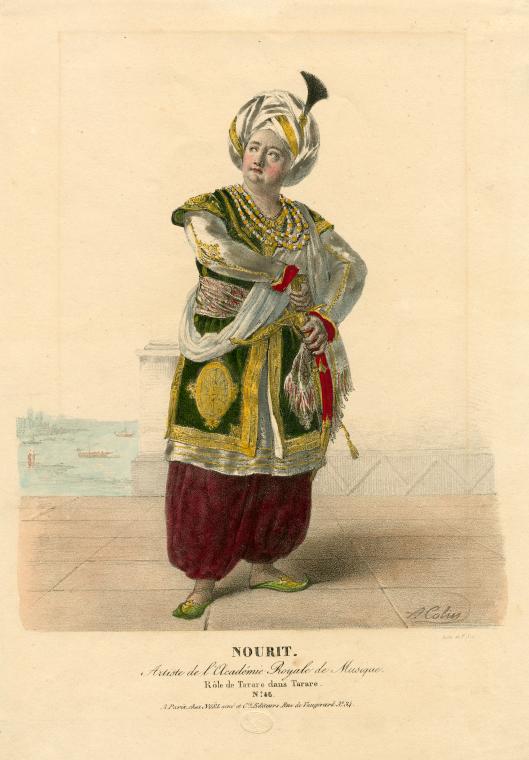
Early life and professional rise
Nourrit was born in Montpellier into a musical family and received early exposure to the operatic repertoire. He made his professional debut in 1821 in Christoph Willibald Gluck’s Iphigénie en Tauride and rapidly established himself for roles requiring both lyrical refinement and declamatory expression. In 1826 he succeeded his father as the principal tenor at the Paris Opéra, a post that made him a central figure in French operatic life for the next decade.
Collaborations and repertoire
Closely associated with Gioachino Rossini after becoming his pupil, Nourrit created the leading tenor parts in the French productions of Rossini’s operas and worked with several contemporary composers. His stage presence and musical judgment meant that composers and impresarios often sought his advice on casting and on revisions in progress. He excelled in roles that required a blend of bel canto technique and heightened dramatic delivery, helping to shape a French tenor style distinct from the Italian tradition.
Librettist, ballet work and the Conservatoire
Alongside his singing career Nourrit wrote libretti for the Paris Opéra’s ballets and theatrical works. Notably, he provided the libretto for the 1832 romantic ballet La Sylphide, a work now regarded as foundational to the Romantic ballet repertoire. In 1827 he was appointed to a teaching or advisory role at the Conservatoire de Paris, reflecting his standing within the French musical establishment and his influence on younger singers.
Later years and change of direction
From about 1836 Nourrit experienced vocal difficulties that limited his appearances at the Opéra. He subsequently turned toward salon performance, where he played a role in introducing German art song, including works by Franz Schubert, to Parisian private concerts. Seeking to restore his technique, he studied with Gaetano Donizetti in Naples and performed there in 1838, attempting a return to the operatic stage.
Legacy and notable points
Nourrit’s importance lies as much in what he embodied for French opera as in any single role. He helped to bridge the bel canto tradition and the emerging Romantic emphasis on dramatic characterization. His written contributions to ballet libretti and his championing of new music informed theatrical practice in Paris. Though his life ended in 1839, his influence persisted through the roles he premiered and through singers and composers who responded to his artistic ideals.
- Principal tenor at Paris Opéra: 1826–1836, succeeding his father.
- Teacher and counsellor: appointment at the Conservatoire de Paris (1827) and frequent consultant to composers.
- Librettist: wrote texts for ballets and stage works, including the libretto for La Sylphide.
- Champion of song: introduced Schubert’s lieder in Parisian salons during his later career.
Questions and answers
Q: Who was Adolphe Nourrit?
A: Adolphe Nourrit was a French operatic tenor, librettist, and composer born in Montpellier, Hérault.
Q: When did Nourrit make his professional operatic debut?
A: Nourrit made his professional operatic debut in 1821 in Gluck's Iphigénie en Tauride when he was almost 20 years old.
Q: What position did Nourrit hold at the Paris Opéra?
A: Nourrit succeeded his father as the principal tenor at the Paris Opéra in 1826, and he held the position until 1836.
Q: Who was Nourrit a pupil of and what did he achieve while studying with him?
A: Nourrit was a pupil of Rossini, and he created all the principal tenor roles in Rossini's French operas. He also gained considerable power at the Opéra and was consulted by composers, and his approval was sought for works in progress.
Q: What is notable about Nourrit's composition work?
A: Nourrit wrote many libretti for ballets at the Opéra, and in 1832, he wrote the libretto for La Sylphide, the seminal romantic ballet.
Q: What happened to Nourrit during a performance at the Opéra in 1836?
A: Nourrit went hoarse during a performance at the Opéra in 1836, and thereafter he turned to salon recitals, introducing Schubert's songs to the salon audiences.
Q: Where did Nourrit study with Donizetti, and when did he make his debut in that city?
A: Nourrit studied in Naples with Donizetti and made his debut in that city in 1838.
Related articles
Author
AlegsaOnline.com Adolphe Nourrit: French tenor, librettist and influential figure in early Romantic opera Leandro Alegsa
URL: https://en.alegsaonline.com/art/1054