
Adriaen Coorte — Dutch painter of intimate still lifes
Adriaen Coorte (c.1665–1707) was a Dutch artist celebrated for small, quietly composed still lifes. Active in Middelburg, he painted sparse, luminous arrangements of fruit, shells and vegetables.
Overview
Adriaen Coorte (born around 1665, died 1707) was a Dutch painter best known for his small-scale still life works. His paintings are notable for their restrained compositions, closely observed surfaces and a calm, intimate mood. Though he worked within the broader tradition of seventeenth-century Dutch still life, his approach is unusually spare and direct.
Image gallery
10 Images


Life and documented activity
Details of Coorte's life are limited. Surviving records indicate he was active in the late 17th and very early 18th century and that he signed paintings dated between 1683 and 1707. Many scholars place his practice in the town of Middelburg in the province of Zeeland. Because archival information is scarce, much of what is known about him comes from the paintings themselves and from later scholarly recovery of his work.
Style, subjects and techniques
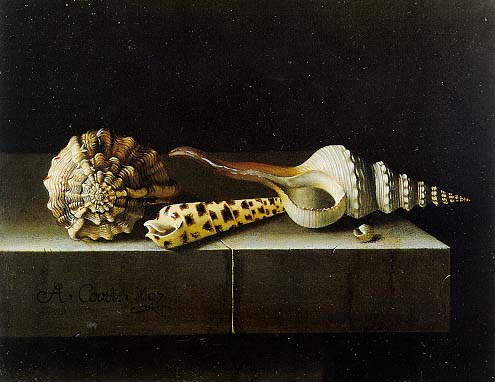
Coorte's paintings are typically small, cabinet-sized pictures intended for private viewing. They commonly depict one or a few objects — fruit, vegetables, shells, sprigs of flowers, insects or small glassware — set against a deep, dark background and placed on a low stone ledge or simple cloth. His use of a concentrated light source produces a clear, almost theatrical modelling of form and texture. Brushwork is economical and focused on rendering surfaces with a quiet precision rather than elaborate ornament.
Typical features
- Small, intimate scale suited to personal collections.
- Sparse compositions that emphasize a single subject or modest group.
- Dark, neutral backgrounds that isolate the motif and heighten contrast.
- Careful attention to texture and light on skin, shell, glass or leaf.
- Signatures on works dated between 1683 and 1707, which anchor his active period.
Context and reception
Coorte worked at the close of the Dutch Golden Age when still life painting had diversified into both large, lavish displays and smaller, more contemplative pictures. He is often regarded as one of the last exponents of the intimate cabinet still life tradition. After a long period of relative obscurity, his paintings attracted renewed interest among collectors and art historians in the 20th century and are now represented in museum collections and private holdings. His pared-back aesthetic continues to be admired for its quiet intensity and technical restraint.
Notable distinctions
Unlike contemporaries who favoured abundant tabletop displays or elaborate symbolism, Coorte preferred simplicity and directness. The modest scale and focus on everyday subjects give his work a distinctive character within Dutch still life, balancing natural observation with an almost meditative stillness.
Further research: For general background on Dutch still life painting and related artists, consult standard survey texts and museum catalogues that treat cabinet paintings and provincial studios.
Questions and answers
Q: Who was Adriaen Coorte?
A: Adriaen Coorte was a Dutch painter who specialized in still life painting.
Q: When did he sign his works?
A: He signed his works between 1683 and 1707.
Q: What is the size of most of his paintings?
A: Most of his paintings are small.
Q: What is the style of his paintings?
A: His style is typical of Dutch 17th century still life painting.
Q: How did Coorte's painting style differ from other Dutch painters of his time?
A: Other Dutch painters who lived at the same time had a different style of painting.
Q: What was Coorte known for in terms of his painting?
A: Coorte was "one of the last practitioners of this intimate category".
Q: What category of painting did Coorte specialize in?
A: Coorte specialized in painting still life.
Tags
Related articles
Author
AlegsaOnline.com Adriaen Coorte — Dutch painter of intimate still lifes Leandro Alegsa
URL: https://en.alegsaonline.com/art/1070
Sources
- cms.dordrecht.nl : Dordt's museum on Ode to Coorte