
Victoria River (Northern Territory)
Victoria River is the longest river in the Northern Territory of Australia, flowing northwest to the Timor Sea. It is notable for its gorges, floodplains, pastoral history, Indigenous significance and early European exploration.
The Victoria River is the longest river in the Northern Territory of Australia. Rising inland and running generally northwest, the river drains a large basin of savanna country and empties into the Timor Sea, opening toward the Joseph Bonaparte Gulf. Its length, seasonal flows and mixture of freshwater and tidal environments create a range of habitats from inland waterholes and floodplains to mangroves near the mouth.
Image gallery
5 Images


Course and physical features
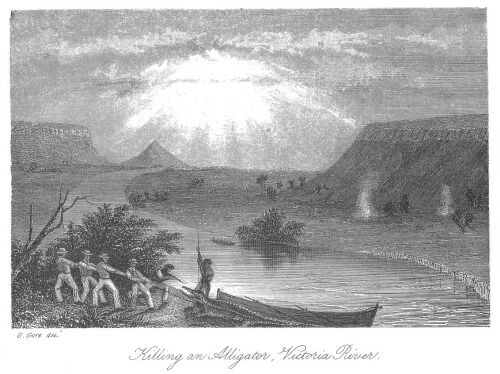
The river passes through contrasting terrain, including rocky gorges and broad alluvial plains that flood during the wet season. Upstream sections are primarily freshwater and support billabongs and permanent pools, while the lower reaches experience tidal influence and sustain mangrove systems. The Victoria River basin is home to freshwater and estuarine fish as well as populations of saltwater crocodiles in the lower, tidal parts.
History and exploration
Indigenous peoples have occupied the river corridor for thousands of years, relying on its resources and maintaining connections to country. European contact began in the early 19th century: the mouth was charted by Philip Parker King on 12 September 1819, and later parties continued upriver. In 1839 the crew of the HMS Beagle travelled more than 200 km upstream, and in 1854 explorer Augustus Charles Gregory reached the river after traversing northern Australia from Brisbane in Queensland.
Uses and cultural importance
The Victoria River region has been an important pastoral district since the 19th century and includes some of the continent’s large cattle stations. Pastoralism, alongside tourism related to fishing, scenic river cruises and wildlife watching, contributes to the local economy. For Indigenous communities the river remains culturally significant, supporting traditional practices and contemporary land management.
Conservation efforts in the basin aim to balance pastoral use and tourism with protection of riparian habitats and species. Seasonal flooding drives nutrient cycles and supports productive wetlands that are important for birds and marine life in the adjacent gulf.
Notable facts
- Longest river system wholly within the Northern Territory.
- Combines freshwater upper reaches with tidal estuary near its mouth.
- Historic exploration by early 19th-century European expeditions.
- Significant pastoral and Indigenous cultural landscapes within its basin.
Related articles
Author
AlegsaOnline.com Victoria River (Northern Territory) Leandro Alegsa
URL: https://en.alegsaonline.com/art/105000
Sources
- nt.gov.au : "Victoria River middle reaches and Gregory area"
- southaustralianhistory.com.au : "Victoria River Downs Station Northern Territory"