
Vibrio vulnificus: marine pathogen, disease, and prevention
Overview of Vibrio vulnificus: a Gram-negative marine bacterium that causes severe wound infections and sepsis, risk factors, clinical features, diagnosis, treatment, prevention, and historical notes.
Vibrio vulnificus is a Gram-negative, motile, curved rod-shaped bacterium found in coastal and brackish waters. It is a member of the genus Vibrio and a distinct species known for causing serious human infections after ingestion of contaminated seafood or exposure of wounds to seawater. While related to Vibrio cholerae, the organism does not cause cholera; instead it more commonly produces rapidly progressive wound infections and invasive bloodstream disease.
Image gallery
3 Images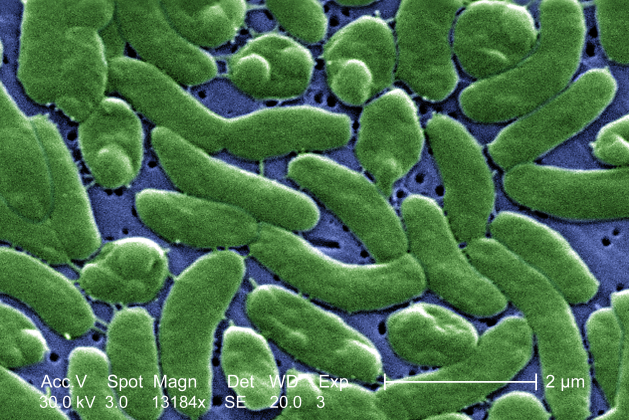


Characteristics and biology
V. vulnificus is Gram-negative, typically motile by a polar flagellum and often appears as a curved bacillus on microscopy. Many strains possess a polysaccharide capsule that reduces phagocytosis and contributes to virulence. The bacterium thrives in warm, saline or brackish environments such as estuaries and coastal ponds; its prevalence rises with increasing water temperatures and saline content. Environmental reservoirs and seafood, especially oysters, are important in transmission.
Clinical presentation and risk factors
In humans, infections range from gastroenteritis after eating contaminated shellfish to severe wound infections and primary septicemia. Typical clinical syndromes include rapidly expanding cellulitis that can progress to necrotizing soft-tissue infection, and invasive sepsis that may develop after ingestion. Certain conditions increase susceptibility and severity:
- Chronic liver disease and other causes of iron overload, which appear to enhance bacterial growth.
- Immunocompromised states and diabetes.
- Open wounds or skin breaks exposed to seawater or raw seafood.
Diagnosis and management
Diagnosis relies on clinical suspicion plus laboratory isolation from blood, wound swabs or stool. Selective culture media and biochemical tests identify the organism; rapid recognition is critical because disease can progress quickly. Treatment combines prompt antimicrobial therapy—regimens commonly include a tetracycline (for example, doxycycline) plus a third-generation cephalosporin or a fluoroquinolone—and aggressive surgical management when necrotic tissue is present. Early intervention reduces the risk of limb loss and death.
Prevention, public health and notable facts
Prevention focuses on avoiding raw or undercooked shellfish, thoroughly cooking seafood, and protecting wounds from seawater contact. Public health advisories often appear during warm months when Vibrio counts increase. The organism was first identified as a human pathogen in the 1970s; surveillance and seafood safety programs aim to reduce cases. Important points to consider:
- Wound exposure to seawater can lead to severe cellulitis and tissue necrosis.
- Ingestion can result in primary sepsis in susceptible persons.
- Associations with elevated serum iron and hepatic disease help explain some risk patterns.
Further reading and resources
For microbiological details, ecology and case guidance consult authoritative sources. Related topics include general information on bacterial pathogens, clinical management of cholera for contrast, and regional advisories about estuaries and seafood safety. Additional practical guidance is available from infectious disease references and public health agencies on wound care, seafood handling and risk reduction strategies (laboratory methods and species descriptions provide technical background).
Because risk varies by season and geography, health professionals and at-risk individuals should pay attention to local advisories and seek prompt care for suspected infections. Ongoing monitoring links environmental changes to incidence, and research continues into virulence factors, iron acquisition systems, and vaccine or preventive strategies.
Related links: bacteria overview, liver disease risks, Vibrio genus, V. cholerae relation, cholera comparison, cellulitis details, sepsis information, estuaries and habitats, gram-negative bacteria, species classification.
Questions and answers
Q: What is Vibrio vulnificus?
A: Vibrio vulnificus is a species of pathogenic bacteria of the genus Vibrio that is related to V. cholerae.
Q: Where is Vibrio vulnificus found?
A: Vibrio vulnificus is present in marine environments such as estuaries, brackish ponds, or coastal areas.
Q: What happens when a person is infected with Vibrio vulnificus?
A: Infection with Vibrio vulnificus leads to rapidly expanding cellulitis or sepsis.
Q: How long has Vibrio vulnificus been known to cause disease?
A: Vibrio vulnificus was first isolated as a source of disease in 1976.
Q: What is the function of the capsule of Vibrio vulnificus?
A: The capsule of Vibrio vulnificus, made of polysaccharides, is thought to protect against phagocytosis.
Q: Why are people with liver disease more susceptible to Vibrio vulnificus infection?
A: The observed connection of the infection with liver disease (associated with increased serum iron) might be due to the capability of more virulent strains of Vibrio vulnificus to capture iron bound to transferrin.
Q: How is Vibrio vulnificus transmitted to humans?
A: Vibrio vulnificus can be transmitted to humans through the consumption of contaminated seafood, particularly clams or oysters.
Related articles
Author
AlegsaOnline.com Vibrio vulnificus: marine pathogen, disease, and prevention Leandro Alegsa
URL: https://en.alegsaonline.com/art/104874
Sources
- doi.org : 10.1007/bf00416975
- pubmed.ncbi.nlm.nih.gov : 1015934
- doi.org : 10.1016/S0140-6736(79)92715-6
- pubmed.ncbi.nlm.nih.gov : 90993
- ncbi.nlm.nih.gov : "Wound infections caused by Vibrio vulnificus and other marine bacteria"
- doi.org : 10.1017/S0950268805003894
- pubmed.ncbi.nlm.nih.gov : 15962544
- jcm.asm.org : "Halophilic Vibrio species isolated from blood cultures"
- ncbi.nlm.nih.gov : 274318
- pubmed.ncbi.nlm.nih.gov : 1262454