
Veronica Mars
A neo‑noir teen drama following Veronica Mars, a sharp‑witted student who moonlights as a private investigator; noted for its serialized mysteries, sardonic voice, and later crowdfunding revival.
Overview
Veronica Mars is an American teen drama/neo-noir television series set in Southern California. It premiered on UPN in September 2004 and ran through the mid‑2000s, blending ongoing murder investigations with the daily pressures of adolescence. The lead role of Veronica Mars is played by Kristen Bell, who portrays a clever, cynical young woman balancing school and private detective work alongside her father, a former police investigator turned PI (detective).
Image gallery
7 Images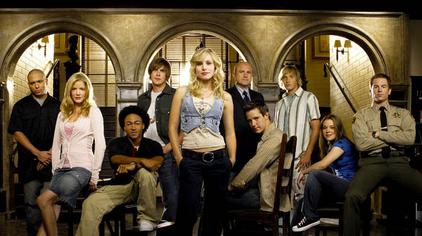


Style and themes
The series mixes crime drama conventions with coming‑of‑age storytelling: it uses a persistent season‑long mystery framework while also delivering stand‑alone cases. Critics and viewers often describe its tone as part Buffy-like teen soap and part classic film noir in spirit—sometimes likened to a modern Bogart detective story. Central themes include social class divisions, institutional corruption, friendship and betrayal, and the moral complexity of amateur sleuthing. The writing is known for sharp dialogue and dry, ironic humor often delivered in a voiceover; the show frequently hinges on a serious murder or major crime while remaining engaged with high school and later college life. Its tone is marked by a distinctive use of sarcasm and wry observation.
History and development
Created by Rob Thomas, the series aired its first seasons on UPN before moving to The CW in 2006. After the original television run concluded in the late 2000s, the show developed a devoted fanbase, which played a key role in its revival. In 2013 a crowdfunding campaign successfully financed a feature film that reunited many original cast members and resolved lingering storylines; that movie was released the following year. Later, a limited revival season arrived on a streaming platform, demonstrating the series' staying appeal and influence on fan‑driven revivals.
Format, characters and reception
The show alternates serialized mysteries with episodic investigations; this hybrid structure allowed it to explore character growth over time while giving viewers immediate plot resolution each episode. Alongside Veronica and her father, the ensemble includes friends, romantic interests, law enforcement figures and various antagonists from affluent families and local institutions. While the series earned praise for its lead performance, clever plotting and thematic ambition, it also inspired conversations about representation, gender in detective fiction, and the difficulties of sustaining network television for genre hybrids.
Notable facts and legacy
- Its fusion of teen drama with noir detective elements helped popularize serialized mysteries in adolescent settings.
- Fan support directly led to a crowdfunded film and later streaming revival, an early example of audience-backed continuation.
- Writers used long‑running arcs—often a central crime that unfolds across a season—alongside smaller case closures.
Why it matters
Veronica Mars remains cited as an influential show for its strong central performance, literate scripts, and willingness to tackle both genre and social themes. It opened paths for shows that blend teen concerns with darker, more adult storytelling, and it illustrated new models for how devoted audiences and creators can extend a series beyond traditional network life.
Related articles
Author
AlegsaOnline.com Veronica Mars Leandro Alegsa
URL: https://en.alegsaonline.com/art/104726
Sources
- usatoday.com : USATODAY.com - 'Veronica Mars': Intelligent life