
University of Sarajevo — public university in Bosnia and Herzegovina
Largest and oldest public university in Bosnia and Herzegovina, founded in 1949; comprehensive multi-faculty institution with wide academic programmes, research activities and international partnerships.
Overview
The University of Sarajevo (Bosnian: Univerzitet u Sarajevu / Универзитет у Сарајеву) is a public higher education institution serving the city of Sarajevo and the country of Bosnia and Herzegovina. Founded in 1949, it is widely regarded as the oldest and largest university in the country. The university combines undergraduate and postgraduate teaching with research, professional training and cultural outreach across a broad range of academic disciplines.
Image gallery
10 Images

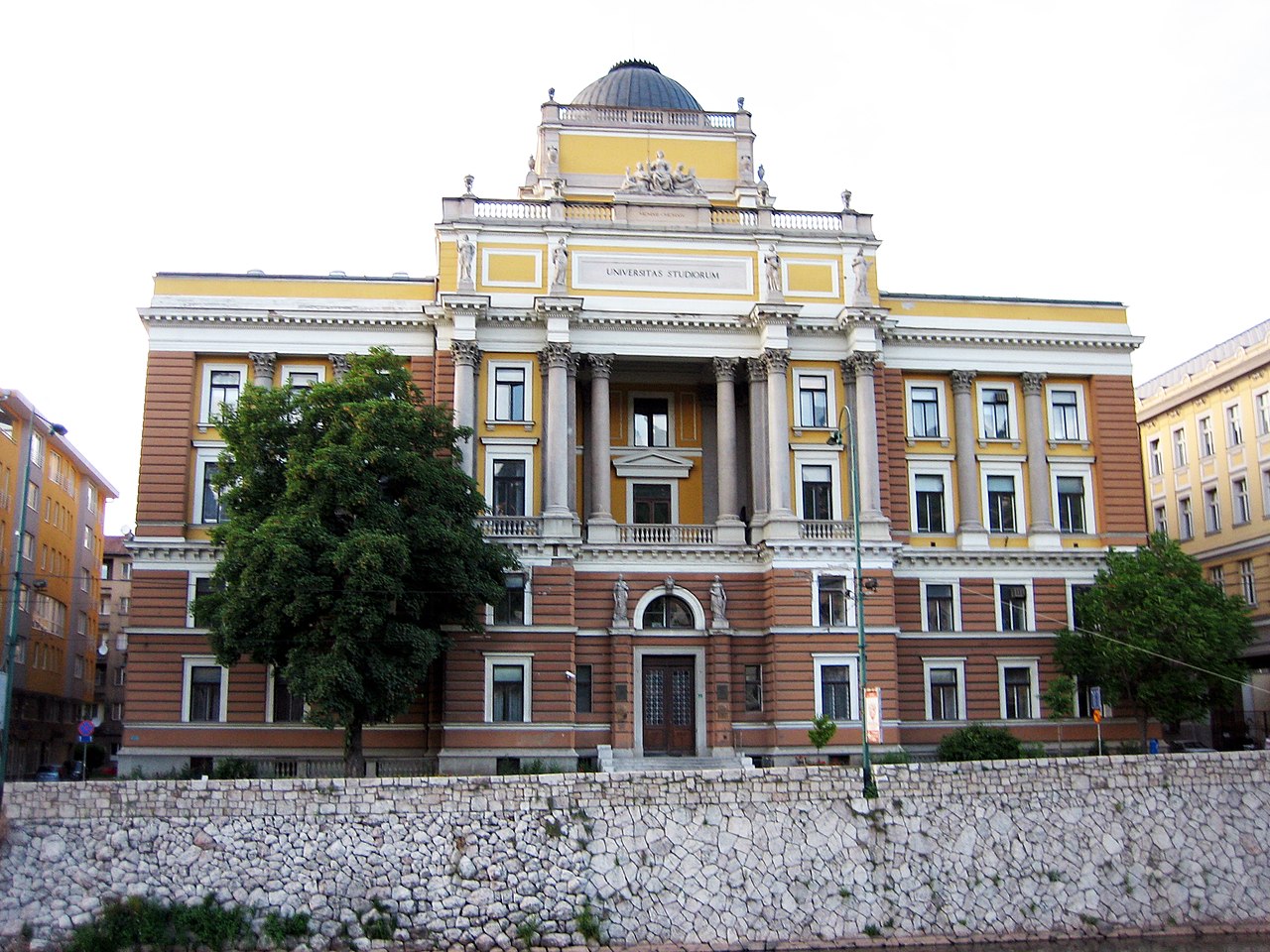


Organization and academic profile
The university is organized into constituent units that cover the full academic spectrum. Traditionally these include 20 faculties, three academies and three faculties of theology, which together offer programmes in the humanities, social sciences, natural sciences, engineering, medicine, fine and performing arts, and religious studies. Academic programmes lead to bachelor, master and doctoral degrees across roughly 45 fields of study.
- Undergraduate, graduate and doctoral programmes designed to meet national and regional professional needs.
- Professional and research-oriented curricula delivered through faculty departments, research centres and clinical units where relevant.
- As reported in institutional summaries, the university has awarded a substantial number of degrees over its history; summary reports note about 122,000 bachelor-level awards and further postgraduate qualifications (bachelor statistics, postgraduate statistics).
History
Established in the aftermath of World War II, the University of Sarajevo expanded steadily during the latter half of the twentieth century as higher education systems in the region developed. Throughout periods of social and political change, including the conflicts of the 1990s, the university adapted its teaching, research and administrative structures while continuing to serve students and the wider community.
Research and international cooperation
Research activity at the university spans basic, applied and interdisciplinary work. Faculties maintain laboratories, libraries and specialised centres that support scholarship in medicine, engineering, natural sciences, social sciences, arts and the humanities. The university participates in regional and international cooperation, student and staff mobility schemes, and collaborative research projects aimed at strengthening academic standards and innovation.
Campus and student life
Rather than being confined to a single closed campus, the university's faculties and departments are distributed across Sarajevo, integrating with the city's neighbourhoods, cultural institutions and public services. Student life includes academic societies, cultural groups, sports clubs and public events such as lectures, exhibitions and performances that contribute to Sarajevo's cultural scene.
Admissions, governance and services
Admission procedures, degree requirements and quality assurance follow national frameworks and internal regulations set by the university and its faculties. Governance typically combines central administration with faculty-level academic councils. Support services include libraries, career guidance, student counselling and clinical placements where applicable.
Significance and regional role
As the principal higher education institution in Bosnia and Herzegovina, the University of Sarajevo plays a central role in training professionals, advancing research and preserving cultural heritage. Its large alumni base, broad disciplinary coverage and partnerships across the Balkans and Europe make it an influential institution for education, research and public life in the region.
Statistics and references
Enrollment and staffing figures vary by year; institutional reporting cited an enrollment of about 30,866 students as of 2014 and more than one thousand academic staff members. Readers seeking current statistics, academic programmes or official statements should consult the university's official communications or authoritative institutional reports via the university's web presence (official site) or designated information pages (institutional overview, campus information, country context).
Further information
For details on faculties, admission requirements, research units and recent developments consult the university's official sources and academic catalogues. Statistical summaries and degree-award records are typically published in institutional reports and can be consulted for more precise figures (degree statistics, postgraduate records).
Questions and answers
Q: What is the University of Sarajevo?
A: The University of Sarajevo is a public university in Sarajevo, Bosnia and Herzegovina.
Q: How does the University of Sarajevo rank in terms of enrollment?
A: With 30,866 enrolled students as of 2014, it ranks among the largest universities in the Balkans in terms of enrollment.
Q: How many faculties and academies does the University of Sarajevo have?
A: The University of Sarajevo has 20 faculties, three academies, and three faculties of theology.
Q: When was the University of Sarajevo founded?
A: The University of Sarajevo was founded in 1949.
Q: How many students have received degrees from the University of Sarajevo?
A: Since opening its doors in 1949, a total of 122,000 students received bachelor's degrees, 3,891 received master's degrees, and 2,284 received doctorate degrees in 45 different fields.
Q: What is the reputation of the University of Sarajevo?
A: The University of Sarajevo is widely regarded as the most prestigious university in Bosnia and Herzegovina.
Q: How many faculty members does the University of Sarajevo employ?
A: The University of Sarajevo employs more than one thousand faculty members.
Related articles
Author
AlegsaOnline.com University of Sarajevo — public university in Bosnia and Herzegovina Leandro Alegsa
URL: https://en.alegsaonline.com/art/103335
Sources
- unsa.ba : "Univerzitet u Sarajevu - O Univerzitetu"
- sarajevo.ba : "A History of the University of Sarajevo"