
University of St Andrews
Scotland’s oldest university and one of the world’s oldest English‑speaking universities, known for its collegiate structure, historic coastal campus, small‑group teaching and distinctive student traditions.
The University of St Andrews is a public research university located in the town of St Andrews, in the council area of Fife, Scotland. Founded in the early 15th century, it is the oldest of Scotland’s four ancient universities and the third oldest institution of higher learning in the English‑speaking world. Its long history, compact campus woven through a small medieval town, and emphasis on undergraduate teaching combine to give it a distinct character among British universities.
Image gallery
10 Images
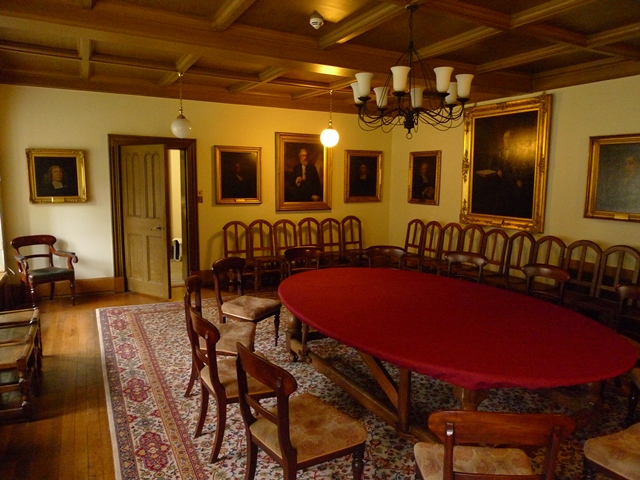


Academic structure and teaching
St Andrews is organised into three historic colleges — United College, St Mary’s College and St Leonard’s College — and around eighteen academic schools grouped into four faculties. Degree programmes span the arts, humanities, sciences and social sciences, with many courses valuing small‑group tutorials and supervision.[LINKS] The academic year is typically divided into two principal terms, Martinmas and Candlemas, with assessment and examinations arranged around those periods. The university consistently ranks highly for student satisfaction and several subject areas achieve top national places in league tables.
History and development
The institution traces its formal creation to papal authorisation issued by Antipope Benedict XIII in the early 1410s to a band of Augustinian clergy, after which teaching and degrees developed in the town. Over the centuries St Andrews transformed from a medieval centre of theology and canon law into a modern research university while retaining much of its ceremonial and collegiate heritage. It weathered religious and educational reforms and expanded its curriculum into natural sciences, modern languages and social sciences during the 18th–20th centuries. Today it balances historic architecture and chapel buildings with contemporary laboratories and libraries.
Campus, town and student life
The university occupies buildings dispersed through the town rather than a single enclosed campus. During term time students and staff make up a significant proportion of the local population; this close relationship shapes both town life and university culture. The student body is internationally diverse: a substantial share of entrants come from outside the United Kingdom, including a notable contingent from North America. Sporting clubs compete in national student leagues (BUCS), and many long‑standing customs continue, such as Raisin Weekend, the May Dip and the wearing of formal academic dress on ceremonial occasions.
Reputation, rankings and specialties
Within national rankings St Andrews is frequently placed among the very top UK universities, often listed behind only Oxford and Cambridge. Specific schools win recognition: the Schools of Physics and Astronomy, International Relations, Computer Science, Geography and Mathematics have each been highlighted in national league tables and specialist guides such as The Guardian and other league tables. The Complete University Guide and Times Higher Education also identify St Andrews for excellence in subjects including divinity, area studies and arts and humanities. The university reports consistently high levels of undergraduate satisfaction.
Notable alumni and distinctive facts
St Andrews has produced figures prominent in politics, diplomacy, sport, culture and science. Recent alumni include former Scottish First Minister Alex Salmond, former UK Secretary of State for Defence Michael Fallon, diplomats such as Barbara Woodward and Colleen Bell, the Olympic cyclist Chris Hoy, and members of the British royal family including Prince William and Catherine, the Prince and Princess of Wales. The university also counts several Nobel laureates among its former staff and graduates. Its combination of historic roots, compact coastal setting and emphasis on close teaching distinguishes it within the modern higher education landscape.
- Founding era: early 1410s with papal authorization — see primary historical references.
- Collegiate system: United College, St Mary’s College and St Leonard’s College.
- Academic calendar: Martinmas and Candlemas terms.
- Reputation: high national rankings and strong subject performance in arts, humanities and sciences — see subject guides and league tables.
For official information on courses, admissions and current research priorities consult the university’s own publications and authorised overviews of UK higher education policy: introductory and recruiting pages are available through institutional and national portals (examples: local town and university information, regional guides at Fife resources and national education summaries at Scottish education pages).
Further reading and institutional details can be found via dedicated resources and academic directories: institutional history outlines (biographical sources), subject rankings (press and ranking sites), and alumni relations pages (career and alumni networks) provide complementary perspectives on the university’s role in higher education.
Questions and answers
Q: What is the University of St Andrews?
A: The University of St Andrews (St Andrews University or St Andrews) is a public research university in St Andrews, Fife, Scotland. It is the oldest of the four ancient universities of Scotland and the third oldest university in the English-speaking world.
Q: When was it founded?
A: The University of St Andrews was founded between 1410 and 1413 when an Antipope issued a papal bull to a small founding group of Augustinian clergy.
Q: What does it consist of?
A: The University consists of three constituent colleges (United College, St Mary's College, and St Leonard's College) and 18 academic Schools organized into four Faculties. It also occupies historic and modern buildings throughout the town.
Q: How is its academic year divided?
A: The academic year at the University is divided into two terms, Martinmas and Candlemas.
Q: How diverse is its student body?
A: The student body at the University is very diverse; over 45% come from over 100 countries outside of the UK, with about one-eighth coming from other EU countries and another third coming from overseas – 15% from North America alone.
Q: How does it rank nationally?
A: National league tables currently rank St Andrews as third best university in the United Kingdom behind Oxbridge according to various rankings such as those by Guardian, Complete University Guide, Times Higher Education World Universities Ranking etc., while some Schools such as Physics & Astronomy are ranked first in their respective fields within UK itself.
Q: Who are some notable alumni/staff members associated with this university? A: Notable alumni/staff members associated with this university include former First Minister Alex Salmond; Secretary Michael Fallon; HM British Ambassador Barbara Woodward; US Ambassador Colleen Bell; Olympic gold medalist Chris Hoy; Prince William Duke Cambridge & Catherine Duchess Cambridge etc., along with six Nobel Laureates who have been awarded for Chemistry & Physiology or Medicine and Peace & Literature respectively
Related articles
Author
AlegsaOnline.com University of St Andrews Leandro Alegsa
URL: https://en.alegsaonline.com/art/103344
Sources
- st-andrews.ac.uk : "University coat of arms"
- st-andrews.ac.uk : "History of the University"
- st-andrews.ac.uk : "St Andrews financial statement 2014"
- st-andrews.ac.uk : "St Andrews financial statement 2012"
- ucas.ac.uk : "UCAS stats"
- st-andrews.ac.uk : "University of St Andrews"
- st-andrews.ac.uk : "The University today"
- st-andrews.ac.uk : "International"
- st-andrews.ac.uk : "Saint Sport"
- thesaint-online.com : "The low-down on our traditions"
- theguardian.com : theguardian.com/education/ng-interactive/2014/jun/02/university-league-tables-2015-the-co…
- thecompleteuniversityguide.co.uk : "University of St Andrews"
- timeshighereducation.co.uk : Top Universities for Arts & Humanities 2010–2011
- st-andrews.ac.uk : "National Student Survey"