
Ultimate Fighting Championship (UFC)
The Ultimate Fighting Championship (UFC) is the largest mixed martial arts promotion, based in Las Vegas. This article summarizes its structure, history, rules, events, weight classes and cultural impact.
Overview
The Ultimate Fighting Championship (UFC) is a U.S.-based sports promotion that stages professional mixed martial arts contests. It is widely recognized as the largest and most visible organization in the sport, producing regular events featuring fighters from around the world. The promotion is headquartered in Las Vegas, Nevada, and is credited with bringing MMA into mainstream sports media.
Image gallery
10 Images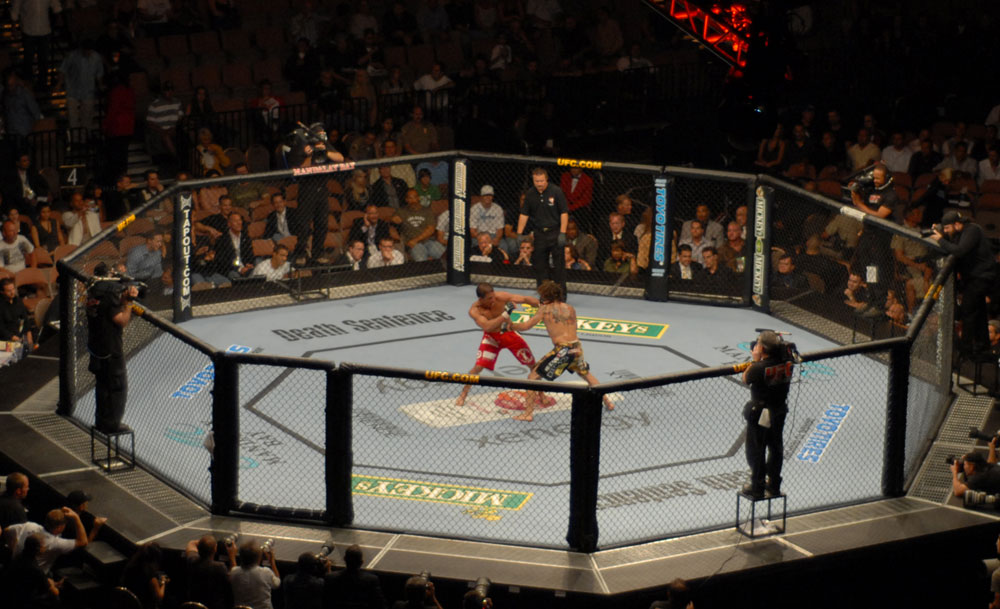



Organization and events
UFC organizes numbered pay-per-view cards, weekly fight nights, and special tournaments. Events typically include an undercard and a main card culminating in high-profile title fights. The promotion showcases a mix of veteran champions, rising prospects and international talent, often pairing fighters from different striking and grappling backgrounds to test diverse skills.
History and ownership
The company began in the early 1990s and evolved from a no-holds-barred tournament format into a regulated sport under unified rules. In 2001 a new ownership group, led by business figures and the promotion's longtime president, acquired the organization and invested in its restructuring. The promotion changed hands again in 2016 when a major talent and media investment group purchased the company. For more on the sport itself see U.S.-based combat sports and contemporary accounts of MMA development.
Rules, the Octagon and weight classes
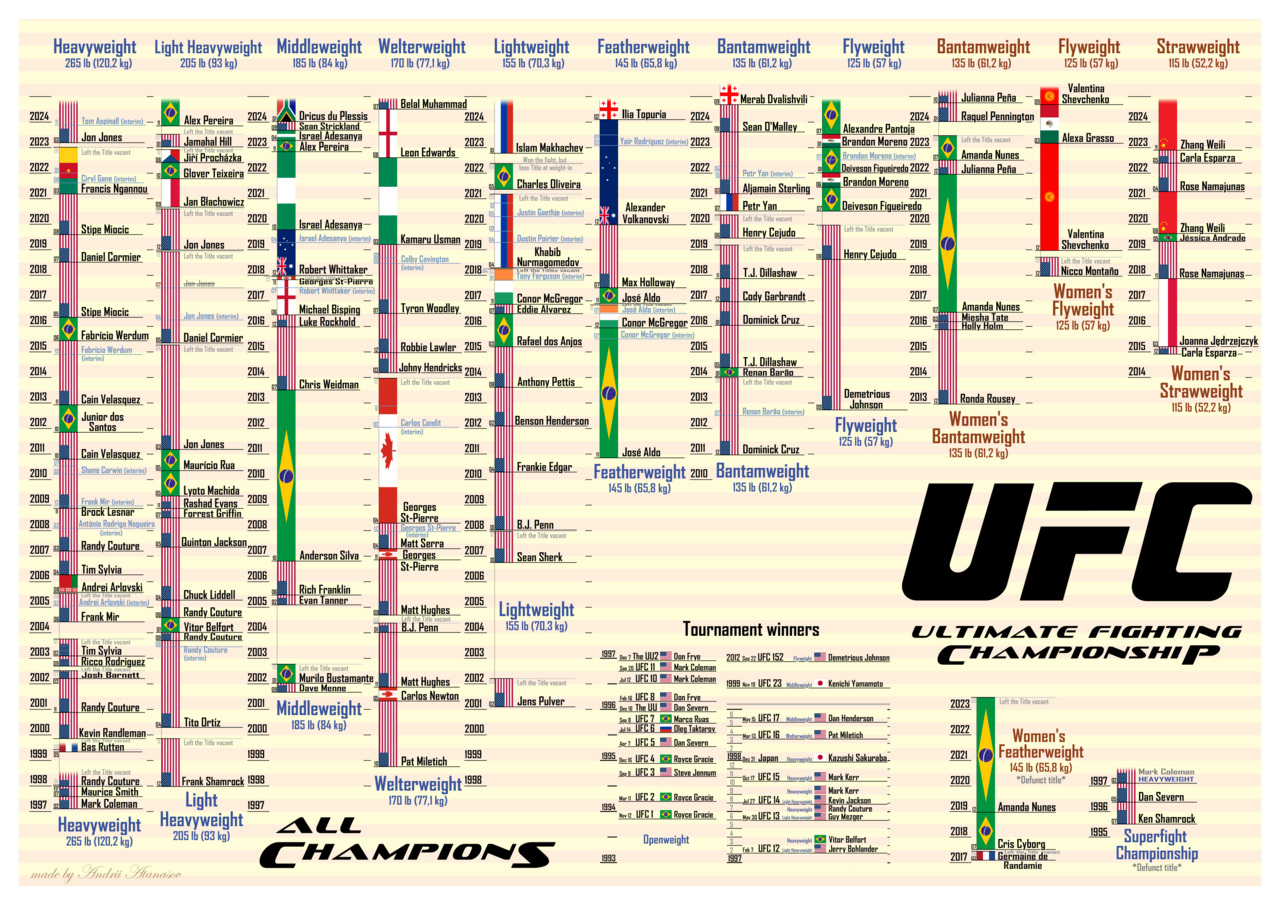
Modern UFC contests operate under the Unified Rules of Mixed Martial Arts, which define legal techniques, round structure, fouls and judging criteria. Bouts are fought inside the trademark eight-sided cage known as the Octagon. Competitors are organized by weight divisions to ensure fair competition; examples include flyweight, bantamweight, featherweight, lightweight, welterweight, middleweight, light heavyweight and heavyweight.
Competition formats and fighter roles
Fighters combine striking, wrestling and submission grappling. Styles vary from disciplined stand-up specialists to ground fighters who pursue submissions. The UFC has also expanded talent discovery through reality series and development programs, giving prospects televised exposure and a pathway to the main roster.
Business, culture and controversies
The UFC has grown into a global entertainment brand through international events, broadcast deals and sponsorships. Its business model mixes ticket sales, pay-per-view revenue, streaming contracts and merchandising. Along the way the promotion has faced debates over fighter pay, health and safety standards, and regulatory oversight — issues common to rapidly growing combat sports. For corporate history details see ownership history and for technical explanations of the sport see mixed martial arts rules.
- Headquarters: Las Vegas, Nevada.
- Typical events: Numbered pay-per-view cards, Fight Night shows.
- Key elements: Octagon cage, Unified Rules, weight divisions.
The UFC remains a central organization in modern MMA, influencing how the sport is regulated, promoted and consumed worldwide. Its combination of athletic competition, television exposure and global marketing has made it a reference point for mixed martial arts as both sport and entertainment.
Related articles
Author
AlegsaOnline.com Ultimate Fighting Championship (UFC) Leandro Alegsa
URL: https://en.alegsaonline.com/art/102692