
Ultimate (sport): overview, rules, equipment, and competitive play
Ultimate is a non-contact team sport played with a flying disc. This article covers its basic rules, field and equipment, history, Spirit of the Game, common variations, and competition structure.
Overview
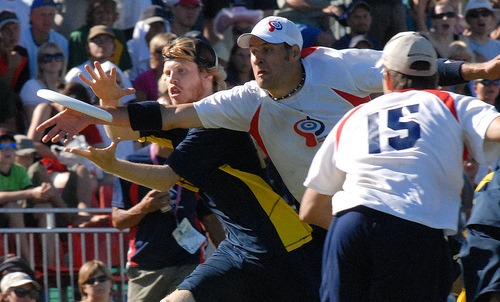
Ultimate, sometimes called Ultimate Frisbee, is a fast-paced, non-contact team sport played with a flying disc. Two teams try to advance the disc by passing to teammates and score by catching it in the opponent's end zone. Play emphasizes speed, reading of the disc in flight, accurate throws and quick transitions between offense and defense. Games are typically played on grass or turf, but beach and indoor versions are common.
Image gallery
10 Images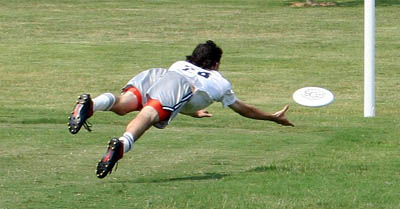



Field, equipment and players
The standard outdoor field is rectangular with scoring end zones at each end. Teams commonly field seven players in outdoor play; smaller-sided formats use fewer players. The sport uses a resilient plastic flying disc that conforms to an agreed weight and size; many organized events use a 175-gram disc. For information on disc specifications see official disc weight. Basic equipment otherwise consists of athletic clothing, cleats for turf or grass, and optional gloves for cold weather.
Basic rules and flow of play
Play begins with a pull (kickoff-equivalent) and continues while teams retain possession. The disc may not be carried; a player must establish a pivot foot and pass within a limited stall count. A point is scored when a player catches the disc in the opposing end zone. Common rule elements include:
- Turnovers: incomplete passes, drops, interceptions or out-of-bounds throws change possession.
- No contact: physical contact is discouraged and often penalized.
- Stall count: the defender guarding the thrower counts a stall to limit possession time.
- Self-officiating: players call their own fouls and resolve disputes on the field in many formats.
Spirit of the Game and officiating
A distinctive aspect of Ultimate is the "Spirit of the Game," a code that emphasizes sportsmanship, fair play and mutual respect. At recreational and many competitive levels players are responsible for making foul and line calls; higher-level tournaments may use observers or referees to speed play and handle contested decisions. The spirit concept remains a cultural core, encouraging players to resolve disagreements without hostility.
History, competitions and variations
Originating in the late 1960s, Ultimate evolved from informal disc games into an organized sport with national and international governing bodies. Competitive structures include local leagues, collegiate seasons, national championships and international events. Variations include mixed-gender (mixed), beach, indoor, and fast-paced tournament formats that alter team size and field dimensions. For links to governing organizations and resources see governing bodies.
Importance and notable facts
Ultimate is valued for its accessibility, low equipment cost and emphasis on inclusivity and athleticism. It blends aerobic running, strategic passing and aerial play, making it appealing to participants across age groups. The sport continues to grow in schools, recreational leagues and elite competitive circuits worldwide.
Related articles
Author
AlegsaOnline.com Ultimate (sport): overview, rules, equipment, and competitive play Leandro Alegsa
URL: https://en.alegsaonline.com/art/102693