
Œuf-en-Ternois — commune in Pas-de-Calais, northern France
Œuf-en-Ternois is a small rural commune in the Pas-de-Calais department of northern France, historically part of Nord-Pas-de-Calais and now within Hauts-de-France; known for agricultural land and local village life.
Œuf-en-Ternois is a small commune in northern France. The settlement is officially recognized as a commune and discussed in local administrative records and maps; further basic information is available at Œuf-en-Ternois. It exemplifies many small villages of the French countryside: compact, centered on a handful of houses and community buildings, and surrounded by farmland.
Image gallery
2 Images
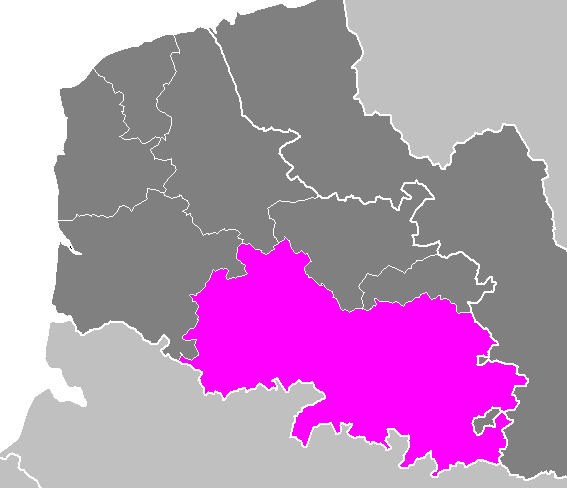
Region and administrative context
The locality lies within the historical region often called Nord-Pas-de-Calais, a designation commonly used in older descriptions. Since national territorial reforms, that area has been integrated into the larger administrative region known today; general regional references can be found via regional resources. At the departmental level Œuf-en-Ternois belongs to Pas-de-Calais, one of the departments that make up the northern French landscape.
As a commune it is governed by a municipal council and a mayor under the French communal system; local services, community events and small-scale planning are handled at this level. Formal department-level administration and services are described in department guides and databases accessible through departmental links.
Landscape, economy and daily life
The surrounding territory is largely agricultural: fields, pastures and hedgerows characterize the immediate environment. Farming and related rural activities form the backbone of the local economy, while artisans, small businesses and commuting to nearby towns complete the occupational picture. The commune typifies life in northern France, with seasonal rhythms and community festivals.
Architecturally, small communes like Œuf-en-Ternois usually feature a parish church or chapel, traditional stone or brick houses, and modest public buildings such as a mairie (town hall) and a war memorial. These elements serve as focal points for communal identity and local history.
Practical notes and further research
- Visitors should consult regional and departmental sources for up-to-date practical information and services.
- Local archives, municipal notices and regional heritage inventories are useful for historical or genealogical research.
- For official notices and contact details, the commune entry linked above is a primary starting point: commune information.
Related articles
Author
AlegsaOnline.com Œuf-en-Ternois — commune in Pas-de-Calais, northern France Leandro Alegsa
URL: https://en.alegsaonline.com/art/102570