
Typhoon Wutip (2019): early-season super typhoon in the western Pacific
Typhoon Wutip was a powerful early‑season western Pacific tropical cyclone in February 2019 that reached super typhoon strength and caused notable damage across parts of Micronesia and Guam.
Overview
Typhoon Wutip was an unusually intense tropical cyclone that developed in the western North Pacific in mid‑February 2019. Forming in an otherwise quiet part of the year for typhoon activity, it strengthened rapidly and became one of the strongest storms recorded so early in the season. Wutip affected several island communities in Micronesia and produced weather impacts as far as the Mariana Islands, including Guam.
Image gallery
10 Images






Meteorological development
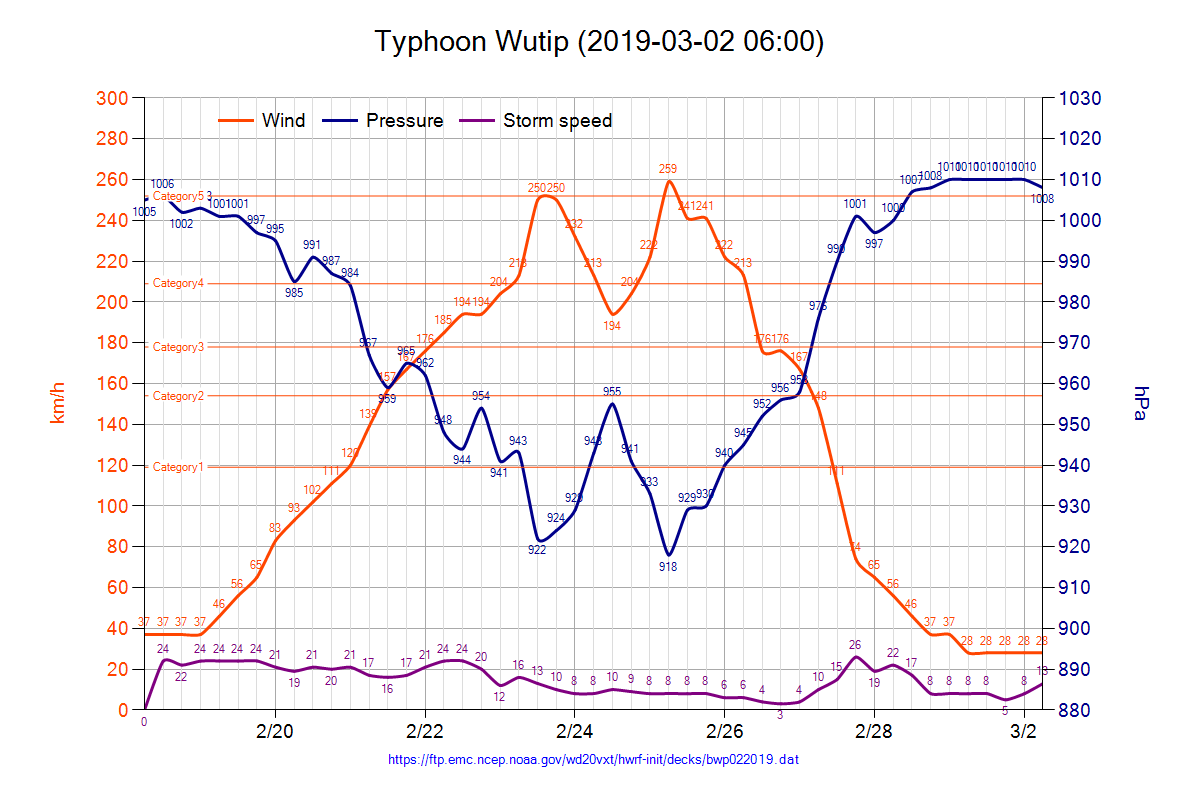
The disturbance that became Wutip consolidated into a tropical cyclone in late February and underwent a phase of rapid intensification. It reached its peak intensity around 24–25 February before gradually weakening as it moved through cooler or drier air and encountered increasing vertical wind shear. Unlike many late‑season storms, Wutip attained its greatest strength at a time when ocean and atmospheric conditions are normally less favorable for extreme intensification.
Track and timeline
- Formation: mid‑February 2019, from a tropical disturbance in the western Pacific.
- Rapid intensification: late February, reaching peak intensity around 24–25 February.
- Decline and dissipation: weakened through late February and into early March, dissipating by 2 March 2019.
Impacts and response
Wutip produced destructive winds, storm surge, heavy rains and high seas that affected low‑lying atolls and islands. The storm damaged homes, crops and infrastructure on several Micronesian islands and disrupted services in parts of the Mariana Islands chain. Local authorities and international assistance focused on restoring basic services, water supplies and food distribution where crops and storage facilities were harmed. Detailed assessments and recovery needs varied among affected jurisdictions; some communities experienced significant disruption to livelihoods and communications.
Records and significance
Wutip set climatological notes for its timing and intensity. Its peak central pressure and overall strength made it one of the most intense February tropical cyclones on record in the region, surpassing earlier February events such as Typhoon Higos (2015). Meteorologists highlighted Wutip as an example of how favorable pockets of ocean heat and atmospheric conditions can permit strong tropical cyclones to develop outside the typical peak season. For further meteorological background see the official storm summaries and post‑storm analyses at authoritative sources such as post‑event reports.
Notable distinctions
Wutip is remembered for its early‑season rapid intensification, its impacts on remote island communities in Micronesia, and for prompting emergency responses across multiple jurisdictions. The storm reinforced the importance of year‑round preparedness in the western Pacific, where even atypically timed tropical cyclones can reach high intensity and affect vulnerable coastal populations.
Related articles
Author
AlegsaOnline.com Typhoon Wutip (2019): early-season super typhoon in the western Pacific Leandro Alegsa
URL: https://en.alegsaonline.com/art/102370
Sources
- washingtonpost.com : "The strongest February typhoon on record packs 180 mph gusts, sideswiping Guam"
- phys.org : "Wutip now a depression, spotted on NASA-NOAA satellite imagery"
- guampdn.com : "Preliminary cost estimate of Wutip: More than $1.3 million"
- pacificnewscenter.com : "Post-Wutip damages to FSM cost at least $2M"
- weatherbug.com : "Super Typhoon Wutip Lashes Guam With High Winds"