
Trowel (hand tool)
A small handheld tool for digging, scooping, smoothing and applying materials. Used in gardening, masonry, tiling and archaeology; available in several blade shapes and materials for distinct tasks.
Overview
A trowel is a small handheld implement with a flat, pointed or curved blade fixed to a handle. It is designed to move, shape or smooth modest quantities of soil, mortar, plaster, adhesive or other pliable materials. The trowel is a simple but versatile tool found in gardening, bricklaying, tiling, plastering and archaeological excavation.
Image gallery
7 Images


Common types
- Garden trowel – typically has a pointed or rounded scoop-shaped blade for digging small holes, transplanting seedlings and removing weeds.
- Pointing trowel – a small, pointed blade used for precise mortar work, patching and finishing joints.
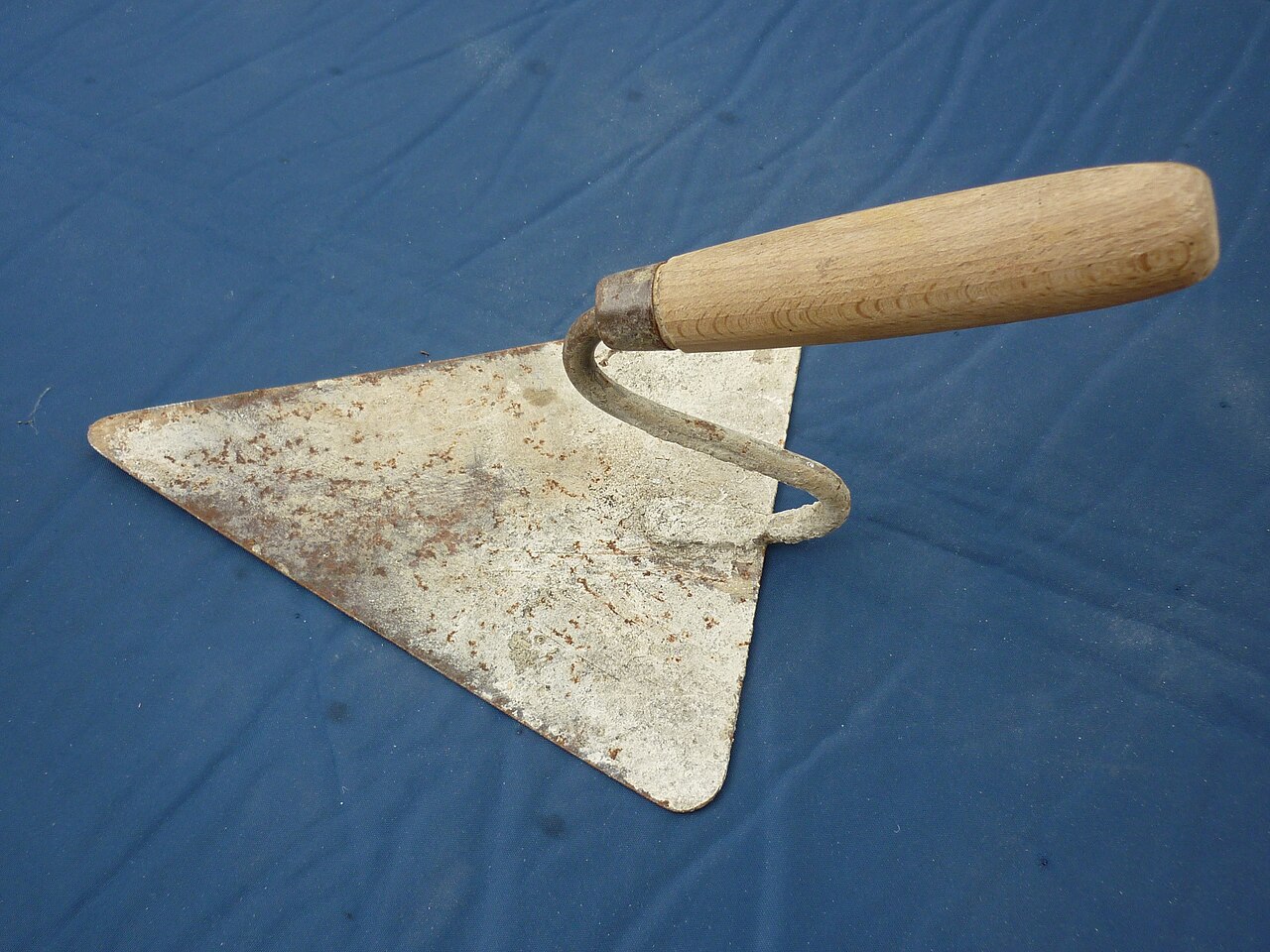
- Brick or mason's trowel – larger, triangular blades used to pick up, spread and shape mortar when laying bricks or blocks.
- Notched trowel – a flat blade with regularly spaced notches for spreading tile adhesive at a controlled thickness.
- Margin and tile trowels – narrow rectangular blades suited to tight spaces and edge work.
- Plastering trowel – wider, often rectangular or slightly rounded blades used to apply and smooth plaster or render.
Parts and materials
A trowel normally has three main components: the blade, a shank or tang, and the handle. Blades are commonly made of carbon steel, stainless steel or tempered alloys. Carbon steel is strong but can rust; stainless steel resists corrosion and is preferred where staining or rust is a concern. Handles are made from wood, molded plastic or rubberized grips and may be riveted or welded to the blade for durability.
History and development
Trowel-like implements appear in many historic contexts where people worked with earth, mortar or plaster. Over centuries the basic form evolved into specialized shapes for gardening, masonry, tiling and finishing trades, reflecting changes in materials, construction methods and horticultural practice.
Uses and technique
In gardening, a pointed trowel is useful for breaking soil and digging planting holes while a rounded blade suits scooping and moving soil. In masonry, the brick trowel is used to pick up mortar, deposit it on a joint and shape the bed for neat joints; a pointing trowel cleans and finishes tight areas. Tile installers use notched trowels to ensure an even layer of adhesive. Archaeologists commonly use small pointed trowels for careful scraping and exposing finds without damaging fragile layers.
Selection, care and safety
Choose a trowel with a blade shape matched to the task, a comfortable handle and good balance. After use, remove compacted soil or mortar, rinse and dry the tool to prevent corrosion. Light oiling protects carbon-steel blades in storage. Avoid using trowels as prying bars and wear gloves when handling heavy or sharp-edged tools. Store trowels safely to prevent injury or damage.
Cultural and ceremonial roles
Beyond practical use, the trowel appears in ceremonial contexts such as foundation-stone layings and as a symbol in some craft and fraternal traditions, where it represents spreading or unifying work.
Related articles
Author
AlegsaOnline.com Trowel (hand tool) Leandro Alegsa
URL: https://en.alegsaonline.com/art/101760