
Triple jump (athletics event)
A horizontal jumping event in track and field, the triple jump uses a hop-step-jump sequence. Athletes run, perform three linked take-offs, and land in a sandpit. Technique, rhythm and measurement define the sport.
The triple jump, also called the hop, step and jump or hop, skip and jump, is a horizontal jumping event in track and field. Competitors run down a runway, execute three continuous take-offs and land in a sand-filled pit; the aim is to produce the longest legal distance from the take-off line to the nearest landing mark. Performance is governed by a small set of technical rules concerning the take-off board, foot sequence and fouls.
Image gallery
4 Images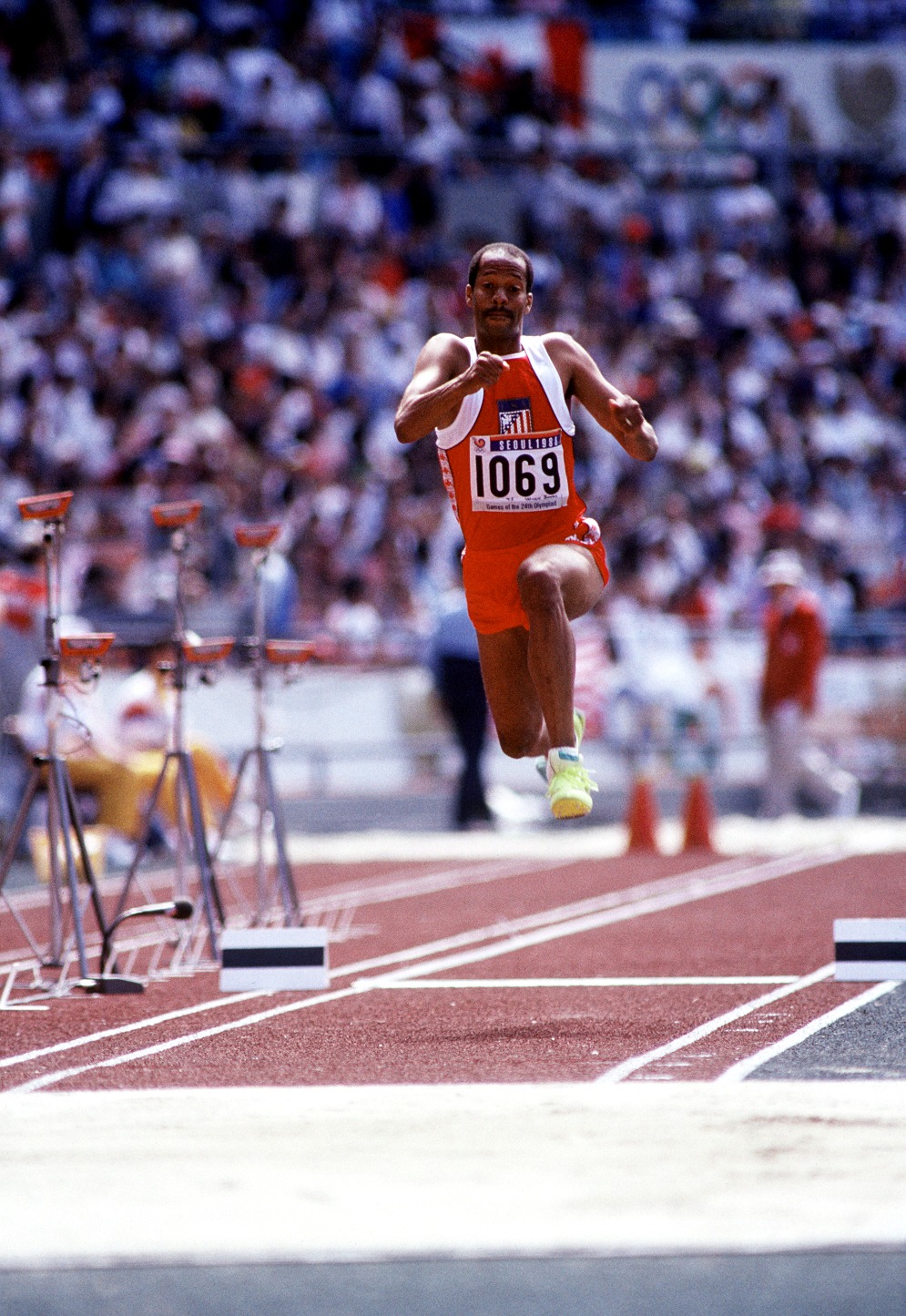


Phases and technique
The event is conventionally divided into three linked phases that must be performed in sequence. Each phase requires different emphasis on power, balance and preparation for the next element:
- Hop: the athlete takes off from the designated take-off board and lands on the same foot. This phase transfers horizontal speed into controlled airtime.
- Step (or skip): the athlete lands on the opposite foot, maintaining momentum while preparing the final jump.
- Jump: the final take-off propels the athlete into the sandpit; the landing is measured back to the take-off line from the closest impression.
Rules, measurement and equipment
A legal attempt requires the prescribed foot sequence and a valid take-off from behind the board; stepping beyond the board is a foul. Distance is measured from the take-off line to the nearest mark in the sand made by any part of the body. Typical equipment includes a firm runway, a take-off board set flush with the surface and a prepared sandpit. Athletes usually wear track spikes and adopt a rhythmic run-up to time the hop, step and jump.
History and competitive context
The triple jump has long roots in jumping contests and developed into a standardized event during modern athletics' growth. It is contested for men and women at national and international meets and appears on championship programs; the event has been included in major global championships in recent decades. For current technical rules and competition formats see the sport's governing documents, for example the official rules.
Training, variations and cultural notes
Coaches emphasize speed preservation, rhythm and controlled landings to maximize distance while avoiding fouls. Common training elements include plyometrics, sprint work and phase-specific drills. Outside formal competition the hop-step-jump sequence is familiar as a playground game; introductory information about each phase can be helpful, for instance hop phase, skip or step explanations, and safe landing practice around the sandpit.
Related articles
Author
AlegsaOnline.com Triple jump (athletics event) Leandro Alegsa
URL: https://en.alegsaonline.com/art/101563