
Tug of War (rope-pulling contest)
A rope-pulling contest in which opposing teams pull to move a marker or force rivals across a line; played informally, in festivals, and as a regulated competitive sport worldwide.
Tug of war is a simple, widely known contest in which two opposing teams pull on opposite ends of a single rope with the aim of moving the other team across a central line or into a designated area. The game is popular among children and adults, and appears in many cultures as both a casual pastime and an organised sport. For a general introduction to similar recreational activities see this overview.
Image gallery
10 Images




Characteristics and equipment
At its core the event requires little more than a strong, flexible rope and a marked centreline or boundary. Competitive rules may specify rope length, diameter, surface (indoor mat or outdoor ground), a centre marker, and anchor points where team members hold. Standard competitive teams often consist of a fixed number of pullers, and events can be staged for men, women, mixed teams, juniors and masters categories.
How it is played
A match begins with the rope's centre placed over the line or a marker aligned with a central reference. On the start signal teams pull, attempting to drag the opposing team past the designated line. Success depends on coordinated effort, footwork, grip, body posture and rhythm rather than pure individual strength. Common strategic roles include the "anchor" at the rear, who provides stability, and a front or caller who sets the cadence.
Rules, strategy and safety
- Objectives: move a marker past a boundary or pull the other team a set distance.
- Winning: achieved by dragging opponents over a line, into a pit, or by measuring rope displacement.
- Strategy: synchronized leaning, short steady pulls, and maintaining traction are key.
- Safety: proper footwear, warm-up, supervision and nonabrasive rope are recommended to prevent falls and rope burns.
History and organized sport
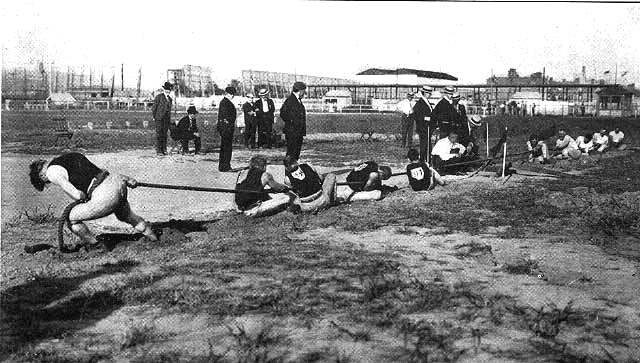
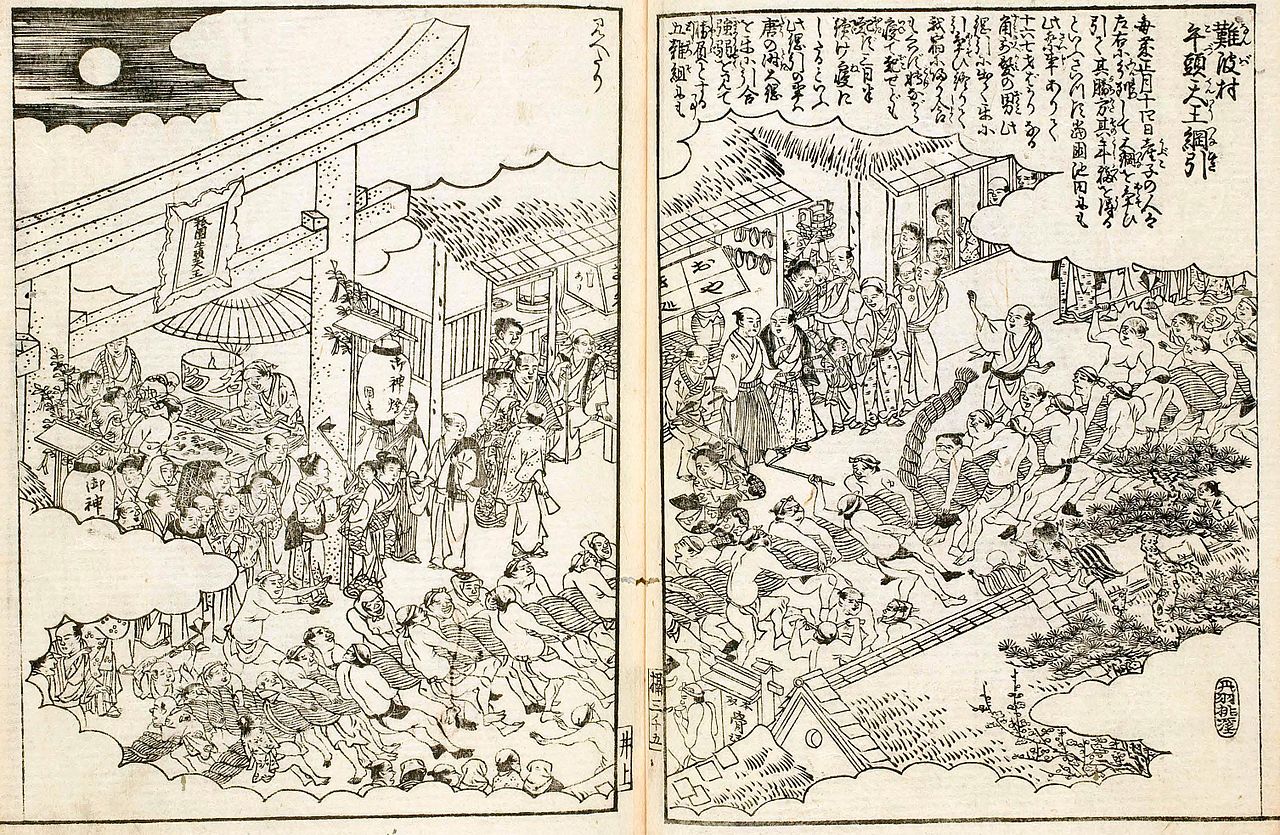
Tug of war has ancient roots and appears in folk traditions worldwide, from harvest festivals to military training. It was codified as a competitive sport in the modern era and featured in international multi-sport programs; it was also present at the Olympic Games in the early 20th century. Today, international governing bodies maintain standardized rules and host championships that attract teams from many countries.
Variants and cultural significance
Variants include mud-pit pulls, truck- or boat-towing demonstrations, indoor mat competitions and adapted contests for people with disabilities. Beyond competition, tug of war functions as a team-building exercise, a staple of school sports days and a ceremonial component at some traditional festivals. Its enduring appeal lies in its clear rules, spectator-friendly drama and the way it showcases teamwork and timing as much as strength.
Notable facts: although straightforward to set up informally, competitive tug of war involves specific equipment, tactical training and officiating to ensure fairness and safety. For more on organized formats and international events consult the sport's regulatory sources and championship records maintained by specialised federations.
Related articles
Author
AlegsaOnline.com Tug of War (rope-pulling contest) Leandro Alegsa
URL: https://en.alegsaonline.com/art/101957